
Stand up straight. Pull your shoulders back. Set a reminder to check your posture every hour. If you have a rounded mound building at the base of your neck, you have probably tried some version of this advice, and it probably helped for exactly as long as you remembered to think about it. The moment your attention moved back to the meeting, the errands, or the phone in your hand, your body slid right back into the same shape.
Why Willpower Cannot Hold a Posture Pattern
Posture is not something you consciously operate all day, the way you operate a steering wheel. It is something your nervous system runs in the background, based on where it believes your spine actually sits and how much tension it is holding in a given area. If several vertebrae and their attached ribs have genuinely shifted forward and are being held there, no amount of remembering to sit up straight changes that underlying position. You can override it for a minute. You cannot override it for a day, because the moment your attention goes elsewhere, the body returns to the pattern it has been practicing.
What Is Actually Happening at the Base of the Neck
The rounded mound most people notice at the base of the neck usually is not one single spot. It typically involves a group of upper back vertebrae that have shifted forward together, along with the ribs attached to them, and often segments further down the spine that have quietly been compensating for a long time. This pattern is not hereditary, and it is not simply something that comes with age. Long hours of sitting, looking down at a phone or a screen, old injuries, and years of accumulated stress all play a role, which is why this shows up in people in their twenties and thirties just as often as people decades older.
Why the Pattern Involves More Than the Visible Spot
Because it is a genuine pattern rather than a single point of tension, correcting it usually means addressing more than the one mound a person can see in the mirror. A brace or a posture corrector works on the outside of the pattern, pulling the shoulders into a better position temporarily, while the segments actually holding the shape underneath stay exactly where they were. That is a large part of why these tools tend to disappoint over time. They manage the appearance without touching what is driving it.
Why This Deserves Attention Beyond How It Looks
The earliest sign most people notice is not the visible rounding itself but shoulders and an upper back that feel tight no matter how much stretching gets added to the week. From there, the pattern can bring pain into the neck, mid back, low back, and hips, sometimes reaching along the sciatic nerve, along with numbness or tingling into the arms and hands as nerves come under more pressure. Two things tend to surprise people. One is tenderness at the front of the chest, where the upper ribs attach to the breastbone, a companion pattern that shows up often in people who have carried this shape for a while. The other is breathing that has quietly become shallower, since a rounded upper back limits how freely the rib cage is able to move.
What a Different Approach Looks Like
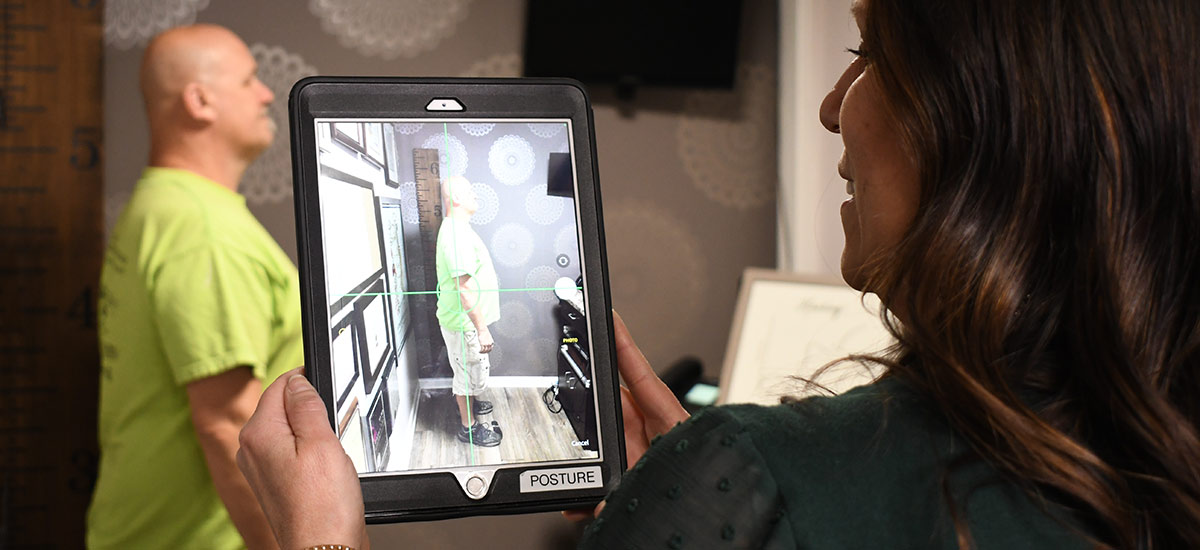
Addressing this pattern starts with knowing exactly which segments have shifted and in which direction, rather than guessing based on how the shape looks from the outside. Our doctors begin with INSiGHT scanning and a thorough history so the plan reflects what is actually happening in your spine and ribs. From there, using Koren Specific Technique (KST) and Talsky Tonal Chiropractic (TTC), each part of the pattern gets addressed with light, nervous system focused contacts, no cracking, popping, or twisting. Because each correction targets the exact segment and direction involved, adjustments tend to hold, and less force is needed as care continues. Massage therapy is sometimes paired in as well, to help release the surrounding muscle tension and support the change taking hold.
What to Expect Along the Way
For some people, the visible shape begins to change within the first few adjustments and may look noticeably different within days. For others, shaped by age, lifestyle, and history of trauma, the change builds more gradually. As long as the full pattern is being addressed rather than just the visible spot, that gradual change tends to keep moving forward rather than stalling out the way a posture reminder alone eventually does.
A Few Things That Help Between Visits
- Set up your monitor and phone at eye level rather than tilting your chin down toward them for hours at a time
- Take a real break from sitting every thirty to forty minutes, even just to stand and reach overhead briefly
- Notice whether the tightness in your upper back tends to worsen on your busiest, most sedentary days, and mention that pattern at your next visit
- Avoid relying on a brace as the main strategy, since it manages the shape without addressing what is holding the segments in place
- Keep moving through a full range of motion in your shoulders and upper back rather than staying still for long stretches
Where to Go From Here
If posture reminders and stretching have not changed the shape you see building at the base of your neck, our doctors would be glad to take a careful look at what your upper back and ribs are actually doing. You can read more on our upper back hump page. When you are ready, you can book online with our doctors in Royal Oak, or call us at (248) 616-0900 with any questions first.