
You technically recovered from COVID months ago. The test came back negative a long time ago. But the fatigue never really lifted, your brain still feels foggy by early afternoon, and your heart pounds if you stand up too fast. You've been to your primary doctor, maybe a cardiologist, maybe a specialist clinic. The bloodwork looks fine. The imaging looks fine. And you're left wondering if you're the only one whose body just never got the memo that the virus is gone.
You're not. And you're not imagining it. What's becoming clearer in the research is that long COVID often has less to do with lingering infection and more to do with a nervous system that's still running the stress response from an illness that's already passed.
What Long COVID Often Looks Like
Long COVID rarely shows up the same way for two people. Fatigue is the most common thread, but it's a specific kind, the kind that doesn't respond to rest the way ordinary tiredness does. Brain fog often follows, showing up as trouble concentrating, losing your train of thought mid-sentence, or a general mental slowness that wasn't there before. Many people also deal with a racing or irregular heartbeat, especially when standing up, along with shortness of breath that doesn't line up with anything a pulmonary test can find. Digestive changes, disrupted sleep despite exhaustion, and a body that crashes for days after modest activity round out the picture for a lot of people.
An estimated 1 in 5 adults who had COVID go on to develop these kinds of long-term symptoms, and researchers estimate the number of people living with long COVID worldwide is somewhere around 65 million. That scale matters, because it means the strange, hard to pin down symptom list you're dealing with isn't rare or unusual. It's a recognized pattern that a lot of people are living through at the same time you are.
Why It's Not Just Anxiety or Deconditioning
If you've been told your labs look normal, or that this might be anxiety, or that you just need to get back to exercising, you're far from alone. But normal bloodwork and normal imaging don't rule out autonomic nervous system dysfunction, because standard testing generally isn't built to measure that system directly. One published study found that 82 percent of long COVID patients met criteria for measurable autonomic dysfunction, sometimes called dysautonomia. That's not a fringe finding. It's the majority pattern researchers are seeing, and it lines up with what a lot of long COVID patients have been describing for years before the research caught up to them.
One Root, Several Symptoms
The vagus nerve regulates your heart rate, breathing, digestion, and immune response, essentially acting as the brake pedal for a nervous system that's otherwise stuck in gas pedal mode. Viral illness can inflame or disrupt this nerve directly, and when that happens, the brake pedal doesn't fully engage. Fatigue, brain fog, heart palpitations, gut trouble, and restless sleep can look like five different problems, but they tend to trace back to the same source. That's part of why fixing one symptom in isolation, say, a medication for heart rate, rarely resolves how you feel across the board.
Why Standard Approaches Manage Symptoms One at a Time
Beta blockers can steady a racing heart, sleep aids can help you fall asleep, and supplements might support energy at the margins. Each of those has real value, and we wouldn't suggest dropping anything that's genuinely helping, but none of them reach the underlying autonomic pattern, the nervous system layer that's keeping all of these symptoms connected. That's the piece that tends to get missed in a symptom by symptom approach.
How We Support Recovery at Van Every
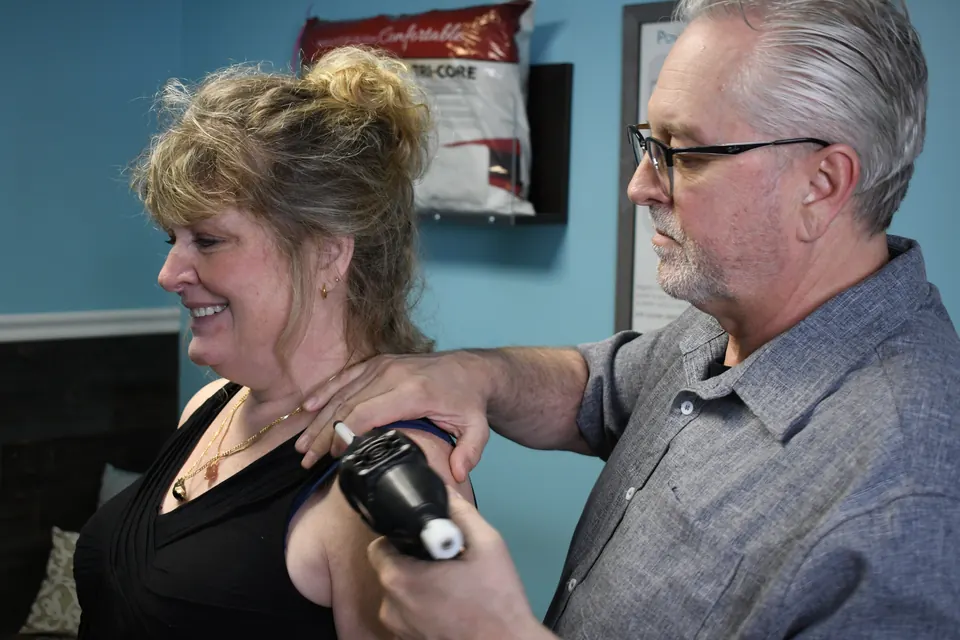
We begin with a full history and INSiGHT scans, including heart rate variability testing, so we're working from a measurable picture of your autonomic nervous system instead of guessing from whichever symptoms happen to stand out that day. Using Koren Specific Technique (KST) and Talsky Tonal Chiropractic (TTC), our doctors use gentle, nervous system-focused contacts, no cracking, twisting, or forceful movement, and we pace everything to your current capacity rather than pushing past it. Long COVID patients are often quite sensitive, so early visits stay conservative, and we adjust intensity based on how your body responds. We coordinate with your medical team throughout, and this care works alongside the rest of your recovery plan.
What Patients Often Notice
Recovery from long COVID tends to be non-linear, often two steps forward and one step back rather than a straight line. That said, many patients notice their fatigue becomes more manageable before it fully resolves, and mental clarity often returns in small windows that gradually widen. Heart rate stability frequently improves, with fewer palpitations on standing, and sleep often deepens as the nervous system settles. We track changes with follow-up HRV scans so progress is visible even during weeks when it doesn't feel obvious day to day.
People with overlapping diagnoses, like POTS or other forms of dysautonomia, often find that this same nervous system approach fits their picture too, since the underlying autonomic pattern tends to be shared across those conditions. If that overlaps with what you're dealing with, mention it at your first visit.
A Few Things That Help Between Visits
- Pacing activity deliberately, stopping before you hit a wall rather than pushing through and crashing afterward
- Keeping a simple symptom log, since patterns in fatigue and heart rate are often easier to see in writing than in memory
- Protecting a consistent sleep and wake time, even on days when sleep itself feels unrefreshing
- Staying in touch with your medical team about any new or worsening symptoms as your recovery continues
If You're Ready to Look at the Nervous System Piece
If long COVID has been running your days longer than it should, our long COVID and post-viral recovery page covers more of how we approach care, and our free guide on the autonomic nervous system and long COVID goes deeper into the research behind it. You can book online or call our office at (248) 616-0900 whenever you're ready to talk.
