
Somewhere in a baby book or an old pediatrician's note, a lot of adults carry a phrase they have mostly forgotten: hip click, watch and wait, mild dysplasia. Maybe a harness was involved for a few months. Maybe it resolved on its own and nobody ever mentioned it again. Decades later, that same person shows up with hip pain, groin pain, or low back pain that never quite made sense given how they were living, and the connection to that infant hip note rarely comes up, because nobody thought to ask.
Hip dysplasia does not always announce itself loudly in infancy, and it does not always finish its story there either. Some people grow into adolescence and adulthood with a hip socket that never fully covered the ball of the joint, and go on to develop pain and early wear that traces back decades, long before anyone uses the word dysplasia again.
How the Original Pattern Forms
The hip is built for stability more than free range of motion, and before birth the socket depends on the head of the femur sitting snugly inside it to finish shaping correctly. A breech position, a tight uterine fit from twins or a larger baby, or a family history of loose ligaments can all leave that socket shallower than it should be at birth. Some of these cases get caught early through a hip click, uneven thigh folds, or a screening prompted by breech position or family history. Others are missed, particularly milder cases that do not produce an obvious clinical sign in the first year.
Why It Resurfaces Decades Later
A shallow hip socket changes how weight travels through the hip, low back, and knees for years afterward, and the body compensates so gradually that the compensation itself becomes invisible until it eventually cannot keep up anymore. The opposite hip picks up more load. The low back rotates slightly to accommodate an uneven gait pattern that started so early it was never consciously learned any other way. The knee on the affected side absorbs stress it was not built to carry alone. None of this hurts in year one, or year five, or sometimes even year twenty. It tends to surface once cumulative wear, a growth spurt, a pregnancy, a new fitness routine, or simply enough decades of compensation finally exceeds what the body can quietly absorb.
What This Looks Like in Adults
Adults carrying an old hip dysplasia pattern often describe hip or groin pain that flares with certain activities, a low back that seems to ache on one side more than the other, or knee discomfort that physical therapy for the knee alone never fully resolves. Early hip arthritis sometimes gets diagnosed on imaging that finally explains years of unevenness nobody connected to anything specific. For many people, hearing the word dysplasia again for the first time since infancy reframes a pattern they had chalked up to just how their body is.
What We Look At
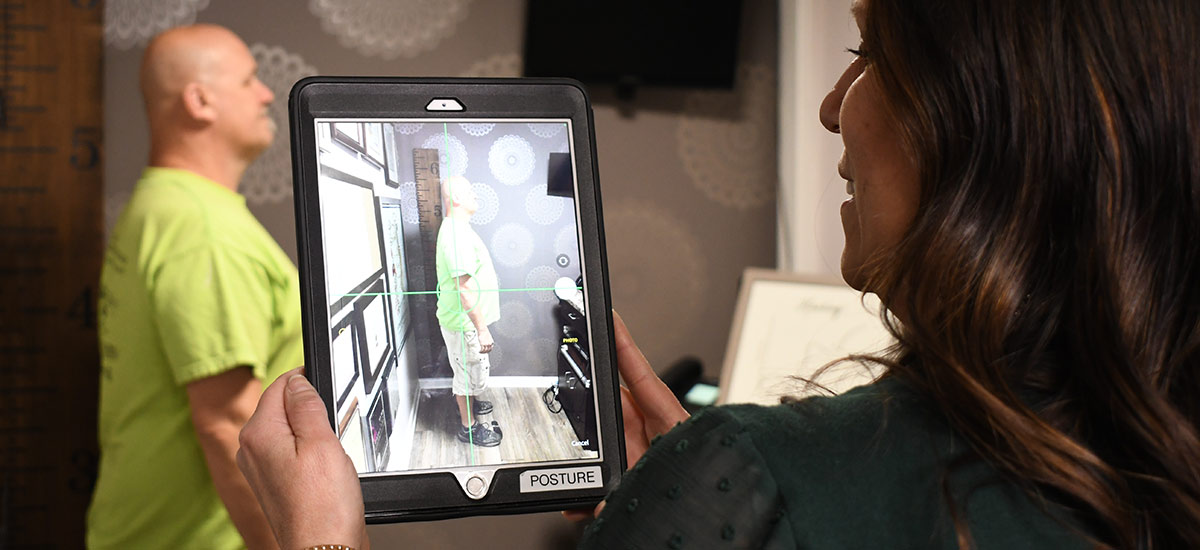
We ask about prior diagnoses, imaging, and how the pain has changed over time, alongside any early history you have, a hip click, a harness, a family story about a tight fit in the womb. From there, an INSiGHT scan, thermal, heart rate variability, and muscle sEMG readings, shows us where the nervous system is under stress around the hip, pelvis, low back, and opposite side, since compensation rarely stays confined to the original joint.
How Care Approaches a Longstanding Pattern
Using Koren Specific Technique (KST) and Talsky Tonal Chiropractic (TTC), our doctors assess and adjust the whole pelvis and spine, not only the joint that is symptomatic, with gentle, nervous system focused contact and no cracking or twisting. Adults with a longstanding hip difference typically need more time than a recent injury would, since the spine, opposite hip, and knees have been compensating for years or decades, but it is rarely too late to start addressing the underlying pattern rather than only the symptom it eventually produced.
Working Alongside Orthopedic Care
We coordinate with an orthopedic surgeon when one is already part of the picture, supporting recovery if surgery is involved and working alongside physical therapy already underway. If imaging or a specialist referral is warranted, we would rather point you toward it than guess.
Why the Timeline Matters
Knowing roughly when a pattern started changes how we think about a case. Someone who has been compensating since infancy has had decades for the opposite hip, the low back, and the knees to build their own secondary patterns on top of the original one, which is different from a hip that started bothering someone after a single fall or a new running routine. Neither timeline is too late to address, but understanding which one you are working with helps set realistic expectations for how care unfolds and how many layers there are to work through.
What Patients Notice
- Less hip and groin discomfort during activity that used to reliably bring it on
- Less compensation pain in the low back, opposite hip, or knees as the whole pattern gets addressed together
- A gait that feels steadier and less effortful over longer distances
- Finally having a name and an explanation for a pattern that had felt unexplainable for years
Where to Go From Here
If a hip note from your baby book has turned into hip, groin, or low back pain decades later, that connection is worth mentioning at your first visit. Learn more on our hip dysplasia page, or download our free guide. When you are ready, book online with our doctors in Royal Oak, or call us at (248) 616-0900 with any questions first.