
You have marked the calendar for the week before your period arrives, because you already know what it holds: the tender breasts, the irritability that shows up like clockwork, the bloating that makes your own clothes feel wrong. Or maybe your cycles have gone unpredictable, or you are somewhere in perimenopause, waking up soaked at 3am and wondering where your patience went.
You have probably had the labs drawn more than once. They keep coming back normal, and the appointment ends with some version of "everything looks fine." But nothing about how you feel is fine, and being told your numbers are within range does not make the exhaustion, the mood swings, or the painful cramps any easier to live with.
How Hormone Struggles Actually Show Up
Hormonal symptoms wear a lot of different costumes. Cramps that keep you home from work. Cycles that are heavy, irregular, or nearly impossible to predict. Breakouts that track your cycle, anxiety and irritability that seem to arrive on a schedule, and for women in perimenopause, the hot flashes, night sweats, and brain fog that make ordinary days harder than they should be. Many women bounce between specialists collecting the same normal results while feeling anything but normal.
What ties all of this together is regulation, not any single hormone number. Cortisol, your body's main stress hormone, is built from the same raw materials as your reproductive hormones. When your body believes it is under threat, whether from a stressful season, disrupted sleep, or old tension carried in the spine, stress wins that budget fight, and hormone balance is one of the first things sacrificed.
The Nervous System Runs the Show
Here is what usually gets skipped in a standard workup: lab ranges measure the amount of a hormone at one moment in time. They do not measure regulation, the timing and coordination that make hormones actually function the way they should. That regulation is directed by the hypothalamus and pituitary, two command centers in the brain that decide what gets released, when, and how much, based on information flowing up the spinal cord about the state of your body.
Picture the nervous system as running two settings, one that gears the body up to handle a threat and one that lets it settle, rest, and repair. When life keeps that first setting engaged, deadlines, broken sleep, caregiving, old stress stored in the spine, the body reads it as ongoing threat. A body that believes it is under threat is not going to prioritize a smooth cycle or a calm transition through perimenopause. It prioritizes survival, and everything else gets pushed down the list. When stored spinal stress distorts the information reaching those brain command centers, they respond to a threat that is not actually there, and cycles get erratic, PMS gets louder, and sleep and mood ride a rollercoaster that has nothing to do with willpower.
Why the Usual Answers Only Go So Far
Tracking symptoms, trying an elimination diet, adjusting a birth control prescription: these can all genuinely help some women, and none of them are wrong to try. But if the nervous system is still stuck reading the body as under threat, the underlying pattern tends to keep resurfacing even when one symptom quiets down for a while. That is often why women describe feeling like they are managing hormone chaos rather than actually resolving it.
Our Approach at Van Every
We do not chase individual hormone numbers. We start with a gentle INSiGHT scan, thermal imaging, heart rate variability, and surface EMG readings, to get an objective picture of how much stress your nervous system is actually carrying, and heart rate variability in particular offers a real window into the same regulation capacity your hormonal rhythm depends on.
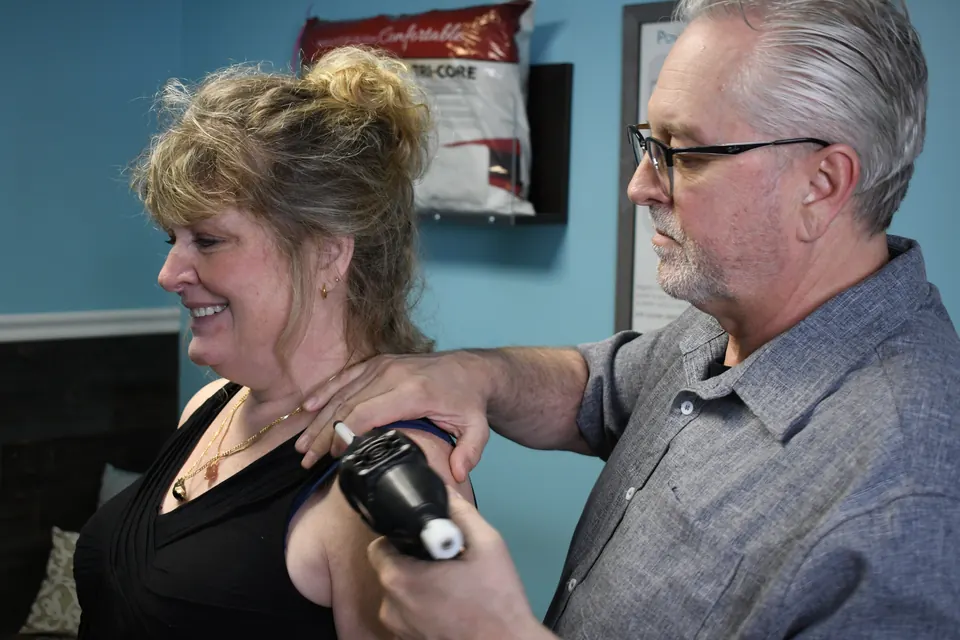
From there, our doctors use Koren Specific Technique (KST) and Talsky Tonal Chiropractic (TTC), light, nervous system focused contacts with no cracking or twisting, to release the stored stress that may be distorting the signals reaching your brain's command centers. Every plan starts by listening to your story and your season of life, whether that is cycle and PMS struggles in your twenties or thirties, preconception preparation, postpartum recovery, or the perimenopause transition, and building care around what your body is actually doing rather than a one-size-fits-all template. Our doctors also make professional grade nutritional support available through our Fullscript online dispensary, where our patients save on the raw materials hormone production relies on most.
What Women Often Notice
Many women in our care describe cycles that arrive more predictably and pass with less drama, milder cramps, steadier moods, and premenstrual weeks that no longer swallow a quarter of the month. Sleep tends to deepen, and energy stops swinging so hard from one day to the next. For women moving through perimenopause, better regulation often means the transition feels less like a cliff and more like a slope, with calmer nights and a body that adapts instead of lurching from one symptom to the next. Because it is the whole nervous system settling, benefits often show up outside the categories you came in expecting.
Supporting Your Rhythm at Home
A few habits tend to support this kind of regulation between visits:
- Keep a simple log of your cycle alongside your sleep, mood, and energy, so patterns are easier to see over a few months rather than guessed at in the moment
- Protect a consistent bedtime, since irregular sleep timing works directly against the nervous system's ability to settle
- Build in short breaks during high-demand days rather than pushing straight through, since sustained stress is exactly what keeps the body reading threat
- Notice whether symptoms shift with major life stress, travel, or illness, since that connection often points straight at nervous system regulation
- Talk to our doctors about nutritional support through Fullscript if you want help identifying where to start
Next Steps
If any of this sounds like the month you keep living through, you can read more on our women's hormone balance page, where you can also request our free guide on what the nervous system has to do with hormonal rhythm. When you are ready, book online with our doctors, or call (248) 616-0900 if you would rather talk it through first. You can also learn more about KST and Talsky Tonal Chiropractic before your first visit.
