The tags get cut out of every shirt. Certain foods are refused because of how they feel in the mouth, not how they taste. A birthday party that should be fun turns into a meltdown by the second hour, or your child seems to need the noise and the crashing and the spinning just to feel okay. You have heard the words sensory processing disorder from a teacher or a therapist, and you are trying to understand what it actually means for your child, and what, if anything, gets at the reason it is happening.
What Sensory Processing Disorder Is
Sensory processing is the way the brain takes in information from the body and the environment, sound, light, touch, movement, and turns it into something usable. For most kids that sorting happens automatically and quietly in the background. For a child with sensory processing disorder, the sorting system itself struggles, so ordinary input, a scratchy sock, a crowded hallway, a dog barking two rooms away, arrives feeling too loud, too sharp, or too much.
Occupational therapists generally describe three patterns. Over-responders are easily overwhelmed by input that would not bother most kids, covering their ears at the vacuum, refusing certain textures, reacting strongly to a light touch on the arm. Under-responders take in less than expected, seeming unaware when called, tolerating pain that would stop another child cold, or looking clumsy because they are not registering where their body is in space. Sensory seekers go looking for more input than usual, crashing into furniture, spinning, chewing on everything, craving movement and pressure in a way that can look like restlessness but is really the nervous system asking for input it is not getting enough of on its own.
A related pattern, sensory discrimination difficulty, shows up as trouble telling sensations apart rather than reacting too much or too little to them, dropping items often, struggling to find something in a backpack by feel, or not being able to say where on the body they were touched without looking.
How It Shows Up Day to Day
Sensory processing challenges touch far more of daily life than most parents expect going in.
- School and learning: trouble focusing with background noise, avoiding handwriting or messy art projects, getting distracted by things other kids filter out automatically
- Friendships and play: wanting to join in but finding a birthday party or crowded playground physically overwhelming rather than fun
- Mood and behavior: meltdowns that build from sensory overload rather than defiance, and a shorter fuse by the end of a loud, bright day
- Coordination: clumsiness, trouble with stairs or bikes, or difficulty with the kind of body awareness other kids pick up without thinking about it
Sensory processing challenges and autism often overlap, since a large share of autistic children also process sensory input differently. They are not the same thing. A child can have significant sensory needs without the social and communication differences that define autism, and many kids with sensory processing disorder want very much to join in with peers, they just find the sensory demands of doing so genuinely hard on the body.
The Nervous System Behind the Behavior
Underneath the day to day picture is the autonomic nervous system, which runs on two settings. One is the alert, fight or flight setting. The other, largely run by the vagus nerve, is the calm, rest and digest setting that lets a child settle, focus, and take in the world without feeling flooded. In many kids with sensory processing challenges, that calming brake is not engaging fully, so the alert setting stays a little too active a little too often. Ordinary input then registers as bigger than it is, because the nervous system has less capacity to filter and settle it.
Sensory input actually travels through eight systems, not the five most people learned about in school, adding vestibular (balance), proprioceptive (body position), and interoceptive (internal signals like hunger or a full bladder) to sight, hearing, touch, taste, and smell. Interoception is easy to overlook and it matters a lot. Kids who struggle to sense hunger, a full bladder, or a rising wave of frustration from the inside often cannot ask for help before they are already overwhelmed, which is part of why meltdowns can seem to come out of nowhere.
Tension held in the upper neck and spine, often going back to a stressful pregnancy, a difficult delivery, or an early illness or fall, can add static to that signaling between the body and brain. The messages are still being sent. They are just arriving distorted, the way a phone call sounds when the line is bad.
What Actually Helps
Occupational therapy remains a genuinely valuable piece of support for many kids with sensory processing disorder, teaching coping strategies and building tolerance for difficult input over time. Where nervous system focused chiropractic care fits in is upstream of that work, supporting the underlying regulation so the strategies a child is learning have a calmer system to work with.
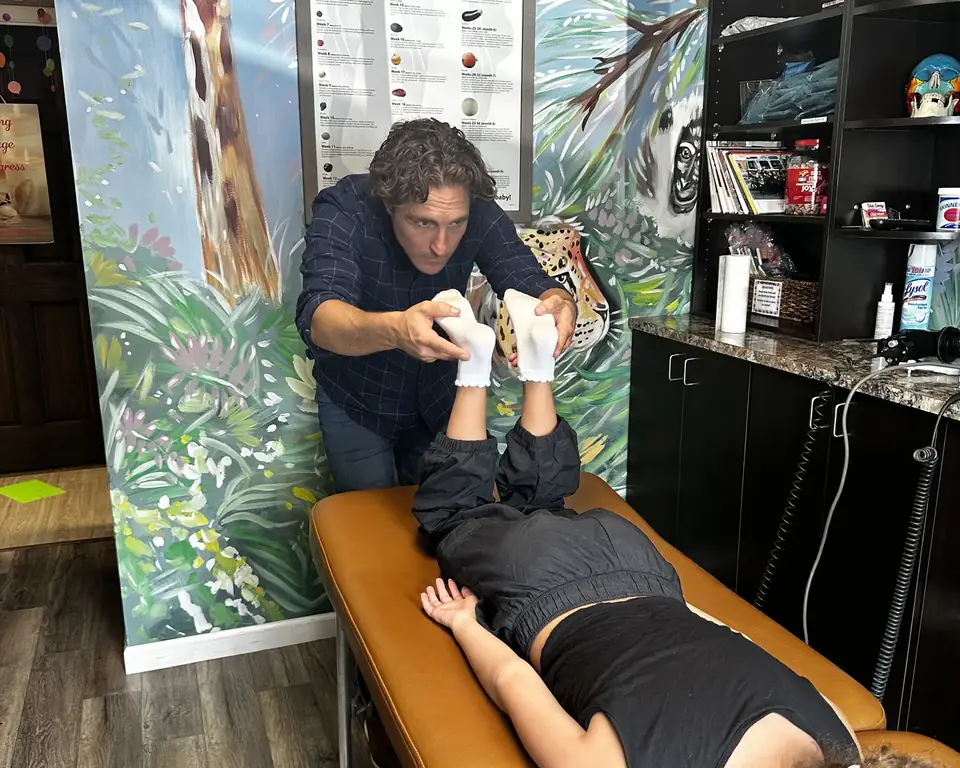
Our doctors start by hearing your child's history, including pregnancy, birth, and how the sensory patterns have shown up and changed over time. From there we use a gentle exam and INSiGHT neurological scanning, thermal, heart rate variability, and sEMG, to see how your child's nervous system is actually regulating rather than guessing from behavior alone. Using Koren Specific Technique and Talsky Tonal Chiropractic, our doctors deliver light, nervous system focused adjustments, no cracking or twisting, aimed at easing that tension in the upper neck and spine so the calming half of the nervous system has an easier time doing its job.
A few things tend to help between visits too:
- Movement breaks built into the day rather than only at recess, since proprioceptive input is naturally calming and organizing
- Predictable routines and a heads up before transitions, since surprise is one of the harder things for an overloaded system to handle
- Simple sensory tools that fit your child, noise reducing headphones, a weighted blanket, a quiet corner to retreat to when a room gets loud
- Watching for the early signs of overload, before the meltdown, so you can step in with less struggle
Where to Go From Here
If sensory challenges are shaping your family's daily life more than you would like, our doctors in Royal Oak would welcome the chance to take a look. You can read more about how we support sensory processing disorder, or get our free guide on the nervous system side of sensory regulation. When you are ready, book online, or call us at (248) 616-0900.