The hearing test came back fine. Every number was where it should be. And yet your child still struggles to follow instructions in a loud classroom, still asks you to repeat things in a noisy restaurant, still seems to catch only half of what was said when several people are talking at once. If a normal hearing test does not match what you are seeing day to day, auditory processing disorder is worth understanding, because it has almost nothing to do with the ears themselves.
What Auditory Processing Disorder Actually Is
Auditory processing disorder, sometimes called central auditory processing disorder, is a breakdown in how the brain interprets sound, not a problem with how the ears detect it. Sound travels through the outer ear, middle ear, and inner ear normally, where it gets converted into an electrical signal and carried up the auditory nerve. From there, though, the brain has to do the harder work: sorting, filtering, and making sense of that signal fast enough to keep up with speech and conversation in real time. In a child with APD, that part of the process does not run smoothly, even though the ears themselves are working exactly as they should.
This is genuinely confusing for a lot of parents at first, since it can look identical to a hearing problem from the outside. A useful way to think about it: imagine trying to follow a radio broadcast with heavy static running underneath it the entire time. The words are technically there. Picking them out from the noise takes far more effort than it should.
How It Shows Up Day to Day
Kids with auditory processing challenges often struggle to follow multi-step verbal directions without something visual to anchor them, get easily thrown off by loud or sudden sounds, and have real trouble concentrating through a long verbal explanation. Background noise is a particular problem, since a classroom, a restaurant, or a crowded family gathering can make speech nearly impossible to isolate. Reading, spelling, and remembering something they were told rather than shown often lag behind peers as a result, and figurative language or jokes can land confusingly literal.
Why the Nervous System Is the Real Story
The autonomic nervous system coordinates the entire process of turning sound into meaning, and when that system is dysregulated, sound processing is often one of the first things affected. A nervous system that is already running in a heightened, alert state has less capacity left over for the fine-grained work of sorting speech from background noise. This is also why APD shows up so often alongside ADHD, autism, and other sensory processing differences. They tend to share the same underlying nervous system pattern rather than being coincidental.
Birth trauma is one factor increasingly recognized as connected to auditory processing difficulties. A difficult delivery, whether from a breech position, vacuum or forceps assistance, or a C-section, can place physical strain right where the brainstem meets the upper neck. That is the exact junction responsible for coordinating sound signals as they travel from the ear toward the parts of the brain that make sense of them.
What Actually Helps
A few things tend to make daily life easier for a child working through auditory processing challenges:
- Giving instructions one step at a time rather than stacking several together, and pairing them with a visual cue when possible
- Reducing background noise during homework or important conversations, rather than assuming your child should be able to tune it out
- Facing your child directly and getting their attention before speaking, since lip reading cues help more than people realize
- Allowing extra processing time after a question before expecting a response
- Noise-reducing headphones for genuinely loud environments like assemblies or sporting events
Our Approach
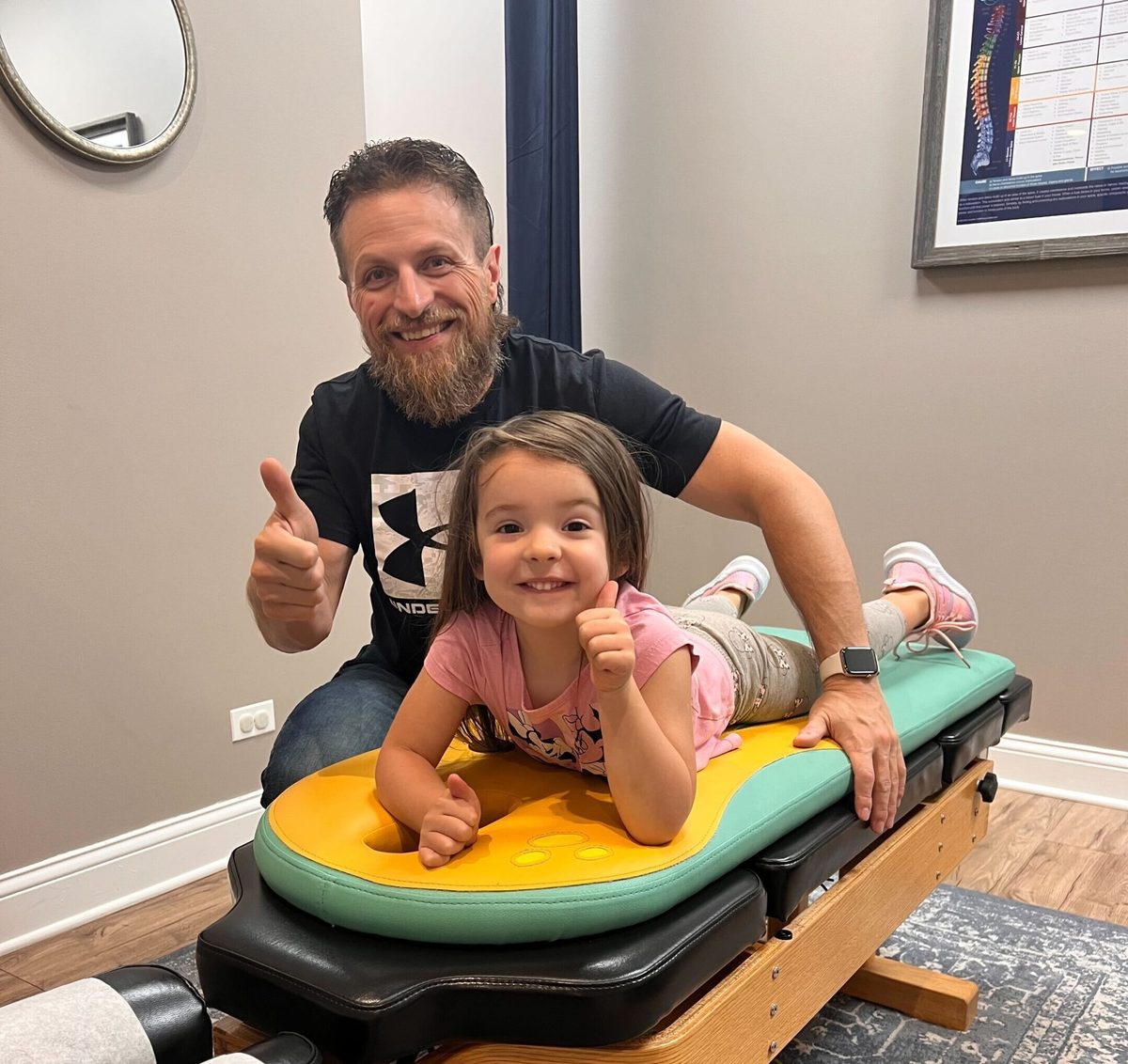
Speech therapy and auditory training are the most common paths families are offered, and they can help meaningfully. Our doctors add a different piece to that picture: restoring balance to the autonomic nervous system itself, so a child has more baseline capacity to process sensory input of every kind, sound included. We start with your child's full history, birth story, developmental patterns, and the specific listening struggles you have noticed. From there, INSiGHT neurological scanning gives us objective data on how your child's nervous system is regulating, rather than guessing from behavior alone. Using Koren Specific Technique and Talsky Tonal Chiropractic, our doctors provide light, nervous system focused adjustments aimed at the upper neck and brainstem, working to ease tension that may be interfering with sensory signaling.
Many parents notice their child following directions more easily, tolerating noisy environments with less distress, and engaging more comfortably in group settings as care progresses. Progress tends to build over a series of visits rather than all at once, and it often complements whatever speech or auditory training your child is already doing well. Our doctors track each child's own scans and reported changes over time, since two kids with a similar diagnosis rarely respond on exactly the same timeline.
It is also worth knowing that auditory processing difficulties rarely travel alone. A child who struggles to filter sound often has some degree of difficulty with other sensory input too, crowded rooms, bright lighting, certain textures, which is one more sign that the root pattern is a nervous system running short on filtering capacity rather than a single, isolated glitch in how sound gets handled.
Where to Go From Here
If normal hearing test results have not matched what you are seeing at home or school, it is worth learning more about how we support sensory processing disorder. We also have a free guide on the nervous system side of sensory challenges. When you are ready, you can book online with our doctors in Royal Oak, or call us at (248) 616-0900 with any questions before your first visit.