A gentle chiropractic visit for a child with recurring ear infection concerns starts with the pattern, not an automatic adjustment. At Van Every Family Chiropractic Center in Royal Oak, our doctors ask about the child's history, complete an age-appropriate examination, and use INSiGHT scans when appropriate. Parents can understand what was found before deciding whether care fits their family.
What will the doctor ask about first?
The doctor begins by asking when the ear concerns started and what tends to happen before, during, and after an episode. Bring a simple timeline if you have one. Note which ear is involved, whether the pattern follows a cold, how sleep and feeding change, and what care your child has already received. That history helps the doctor look for a repeated pattern instead of focusing on one difficult night.
Birth history and early movement also matter in a pediatric chiropractic evaluation. The doctor may ask about labor and delivery, a consistent head-turning preference, feeding position, tummy time, falls, and how comfortably the child turns in each direction. These questions provide context for examining the upper neck and nervous system.
What does the examination look like?
The examination is adapted to the child's age and comfort. For a baby or toddler, the doctor may watch how the child rests in a parent's arms, turns toward a voice, or follows an object. For an older child, the visit may include posture, comfortable range of motion, balance, and a gentle check of the neck and spine.
The doctor explains each step and can pause when the child needs a break. A child can stay close to a parent, change positions, or take time to settle. The purpose is to collect useful information without forcing the child through a rigid routine.
Are INSiGHT scans part of the visit?
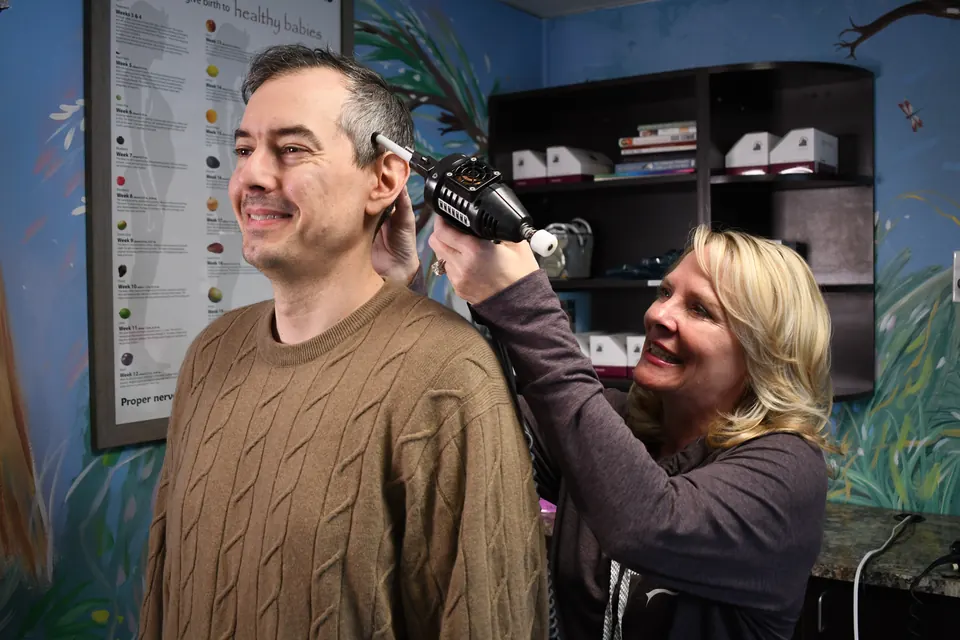
INSiGHT nervous-system scans can be part of the first visit when they are appropriate for the child's age. The office uses thermal scanning, surface electromyography, and heart rate variability to add objective information about nervous-system function and muscle activity. The scans are non-invasive and are reviewed alongside the history and hands-on examination.
A scan is not used by itself to label an ear problem. It gives the doctor another way to understand where stress patterns are showing up and creates a baseline that can be compared with later findings. Parents see the information and can ask what each part means.
Will my child be adjusted on the first visit?
No. Van Every follows a two-visit intake process. Visit one includes the detailed history, examination, and scans. The doctor then reviews all of the information rather than rushing into care that day.
Visit two is the Report of Findings. The doctor explains the findings, answers questions, and presents an individualized care plan when appropriate. If the parent chooses to continue, the second visit includes the opportunity for the first adjustment. The new patient center walks through both visits in detail.
What does a gentle pediatric adjustment feel like?
A pediatric adjustment uses light, specific contact chosen for the child's size, position, and examination findings. Our doctors use Koren Specific Technique and Talsky Tonal Chiropractic, with no forceful cracking, popping, or twisting. The doctor can show the parent the position and explain the contact before beginning.
KST is an instrument-assisted technique that can deliver quick, precise impulses. Talsky Tonal Chiropractic is a hands-on approach that evaluates the NeuroSpinal system as a connected whole. The technique and position are selected for the individual child rather than applied as one routine to everyone.
Which questions should parents bring?
Useful questions are practical and specific to the experience your child will have. Consider bringing this short list:
- What did you notice in the history, examination, and scans?
- Which technique and position would you consider for my child?
- How will you adapt the visit if my child is tired or sensory-sensitive?
- What will you recheck as care continues?
- How will you explain progress to us?
You can also share any preferences that help your child feel comfortable, such as seeing an instrument first, staying near a parent, or hearing each step before it happens.
How is this article different from an ear infection guide?
This article explains the local visit and evaluation rather than offering another list of ear infection causes or home comfort measures. The ear infections page covers the office's broader approach, and the pediatric chiropractic page explains how visits are adapted from infancy through the teen years.
Those pages can help you prepare questions before scheduling. The first appointment then gives the doctor the individual history and findings needed to discuss your child's situation.
How can I prepare my child for the office?
Use simple, concrete language before the appointment. You can tell your child that the doctor will ask questions, watch how they move, and use gentle scanning tools. Avoid promising that every part will happen in one exact order because the doctor may adapt the pace to the child's needs.
Bring a comfort item if it helps, and choose clothing that allows easy movement. Let the team know about sound, touch, or communication preferences when you arrive. Those details help the visit feel predictable while still allowing the doctor to gather useful information.
How can Royal Oak families get started?
Families from Royal Oak and nearby communities can begin with the two-visit new patient process at Van Every Family Chiropractic Center. Bring the history you already have, including dates or patterns you have noticed, and tell the team what would make the visit easier for your child.
To take the next step, book online with our Royal Oak doctors. To ask about the visit before scheduling, call or text us at (248) 616-0900.