A lot of the parents who bring their child in for wheezing or a chronic cough mention something almost in passing: this same kid went through a rough stretch of ear infections a few years earlier. Round after round of the same ear, sometimes both, sometimes antibiotics that worked for a while and then stopped holding. By the time asthma enters the conversation, the ear infections feel like old news, a separate chapter nobody thinks to connect to the breathing trouble in front of them now.
We see that pattern often enough that it is worth naming out loud. The ears and the lungs are different organs, but they are wired through the same nervous system, and a system that struggled to regulate one area early on does not always stay contained to that area as a child grows.
How This Shows Up
The early piece usually looks like recurring ear infections, sometimes fluid that never fully clears between illnesses, sometimes a toddler who seems to catch every cold that comes through daycare and always ends up with an ear involved. A few years later, a different pattern appears: a cough that lingers well past when classmates have recovered from the same bug, wheezing during a soccer game or a bout of running around the yard, shallow breathing that never quite fills the chest, or one respiratory illness rolling straight into the next without much of a gap in between. Parents often describe it as their child catching everything, when what is actually happening is a system that has trouble settling back down once it gets triggered.
Why the Same Nervous System Shows Up Twice
Breathing depends on nerve signals. The phrenic nerve, which drives the diaphragm, exits the spinal cord in the mid neck around C3 through C5. The nerves supplying the lungs and bronchial tubes come from further down, in the thoracic spine. The middle ear, meanwhile, relies on the eustachian tube to drain properly, a structure influenced by nearby muscle tension and by how well the autonomic nervous system is regulating drainage and inflammation in that area. Different structures, but both are downstream of the same regulatory system, and both are vulnerable when that system is stuck running the stress response instead of the calm, restorative one.
Think of the nervous system as having a gas pedal and a brake. When the gas pedal stays down, inflammation runs a little hotter everywhere it shows up, whichever organ happens to be under the most load at that stage of a child's development. Early on, that load often lands in the ears, since the eustachian tubes in a young child are shorter and more horizontal, and drainage is already working against gravity. As a child grows and those tubes mature, the same underlying pattern can shift its expression toward the airways instead, especially once triggers like allergens, exercise, or a respiratory illness start testing that system in a new way.
Two Different Kinds of Asthma Need Two Different Kinds of Attention
Not every child's asthma looks the same, and the care our doctors provide reflects that. For a child whose breathing trouble shows up mainly during exercise, more attention goes toward the chest, sternum, and ribcage, since that area directly innervates the lungs and takes on extra strain with every twist of the shoulders during a run or a game. For a child whose asthma does not have an obvious trigger, more of the focus shifts toward the neck, along with a diaphragm release to support that specific piece of the breathing mechanism. Recognizing which pattern is in front of us matters, because a plan built for exercise-induced symptoms is not the same plan that helps a child whose flare ups seem to come out of nowhere.
What We Look At First
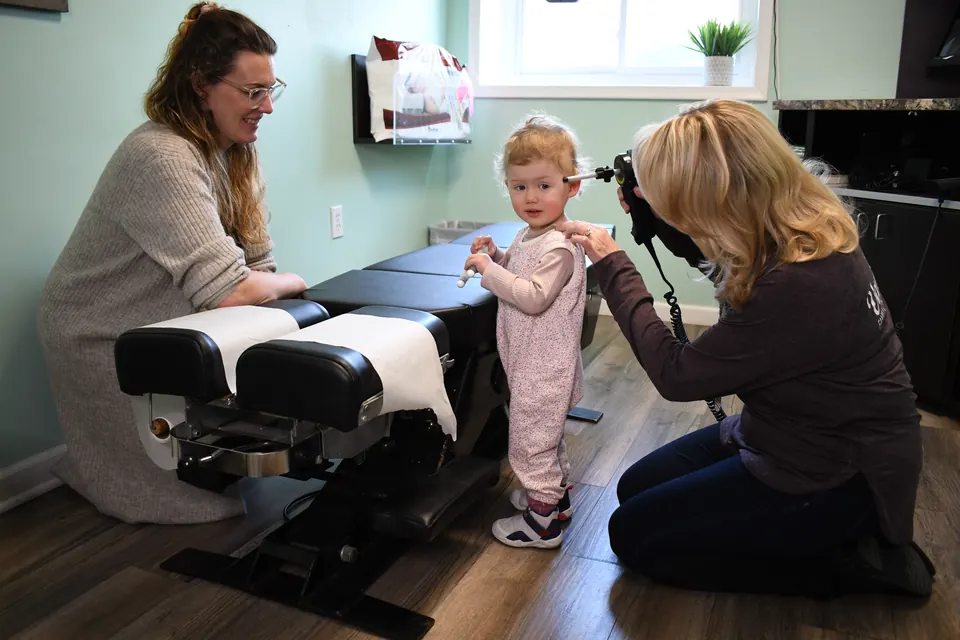
We start with a full history, including how the ear infections played out years earlier if that is part of your child's story, along with the timeline of the current breathing symptoms. From there, INSiGHT neurological scanning, thermal, heart rate variability, and sEMG readings along the spine, gives us an objective look at where your child's nervous system is carrying stress right now, rather than guessing from the symptom pattern alone.
Using Koren Specific Technique (KST) and Talsky Tonal Chiropractic (TTC), our doctors work with light, nervous system focused contacts, no cracking or forceful manipulation, calibrated to whatever a child's body and comfort level call for. We coordinate with your pediatrician, pulmonologist, or allergist along the way, since this kind of care is meant to sit alongside that guidance, not replace it.
What Parents Often Notice
Families who came in originally for the ear infections and later returned for asthma often tell us the two chapters felt connected the whole time, even before anyone put a name to it. As care continues, many parents report fewer respiratory illnesses overall, easier breathing between flare ups, and a child who seems to bounce back faster instead of sliding from one cold straight into the next. None of that happens overnight, and every child's timeline looks a little different, but the pattern tends to loosen gradually rather than staying locked in place.
A Few Things Worth Tracking at Home
- Keep a simple timeline of ear infections and respiratory illnesses, including approximate ages, so a pattern is easier to spot if one exists
- Notice whether your child's breathing sounds different at rest, not only during a cold or a flare up
- Watch how quickly your child recovers between illnesses compared to siblings or classmates
- Bring any old ENT or pediatrician notes about the ear infections to your first visit, since that history helps us understand the fuller picture
- Keep your child's pulmonologist or allergist informed of anything that changes as care continues
Where to Go From Here
If your child's asthma feels like it came out of nowhere but you remember an earlier stretch of ear infections that never quite made sense, that connection is worth mentioning at your first visit. You can learn more on our asthma and breathing support page, or download our free guide on the nerve pathways behind breathing. When you are ready, book online with our doctors in Royal Oak, or call us at (248) 616-0900 with any questions first.