The milestone chart your pediatrician hands you at every well-baby visit is a useful starting point. Rolling by this age, sitting by that one, crawling, then walking, each box checked or not. What that chart cannot do is tell you what to do next once a box goes unchecked for a few visits in a row, or why your child seems to be working so much harder at movement than other kids their age.
If you are past the point of just watching and waiting, or you have a nagging sense that something is off even though the chart technically still looks fine, this is for you. Gross motor development, the big muscle movements like tummy time, rolling, sitting, crawling, and walking, is worth taking seriously on its own, and there are concrete things you can do at home alongside whatever therapy or care your child is already receiving.
Starting From the Chart, Then Going Further
A missed milestone on paper is really a signal to look closer, not just wait longer. Gross motor skills are supposed to build in a specific sequence, each one laying the groundwork for the next, so a gap in an earlier skill can quietly affect the ones that come after it. A child who never fully mastered tummy time, for example, may struggle later with the core strength that crawling and eventually walking depend on. That is part of why gross motor delays sometimes get missed in a quick well-visit check, since the chart looks at whether a skill happened, not necessarily how solidly the groundwork underneath it was laid.
What's Happening Underneath a Motor Delay
Every movement a child makes, from lifting their head to taking their first steps, is directed by the nervous system. The muscles are the messenger, not the source. When we see gross motor delays, structural patterns like torticollis or a flattened head shape, or low muscle tone that makes a baby feel floppy in your arms, the nervous system is very often part of the picture.
Here is something that surprises a lot of parents: low tone in the arms, legs, or core frequently exists alongside excess tension somewhere else, often the neck, upper back, and shoulders. A birth that involved a long labor, vacuum or forceps assistance, or a C-section can leave real physical strain in that area, even when everything looked fine from the outside. That tension can interfere with clear nervous system signaling to the muscles doing the work of rolling, sitting, and crawling, which is one reason gross motor progress can stall even with regular tummy time and consistent physical therapy.
Practical Ways to Support Motor Skills at Home
Alongside your pediatrician's guidance and any physical or occupational therapy your child is already in, a few things tend to make a real difference day to day:
- Short, frequent bursts of tummy time rather than one long session, since a baby's tolerance builds gradually
- Placing toys just out of reach to encourage reaching, weight shifting, and eventually crawling, rather than always bringing the toy to your child
- Floor time over container time. Bouncers, swings, and seats are useful in small doses, but a baby needs floor time to build the core and postural strength that gross motor skills depend on
- Following the sequence rather than skipping ahead. A child who is pulled to stand before they can sit stably and crawl confidently may be missing groundwork that shows up as clumsiness later
- Keeping a simple written log of what you notice week to week, since patterns and small gains are easier to see on paper than in memory
- Getting your child down on different surfaces, a carpeted floor, grass, a slightly uneven blanket, since varied textures give the nervous system more sensory information to work with while building strength
None of these replace the professional support your child may already be receiving. They simply give a developing nervous system more chances, throughout an ordinary day, to practice the movements it is working to build.
Our Approach to Gross Motor Delays
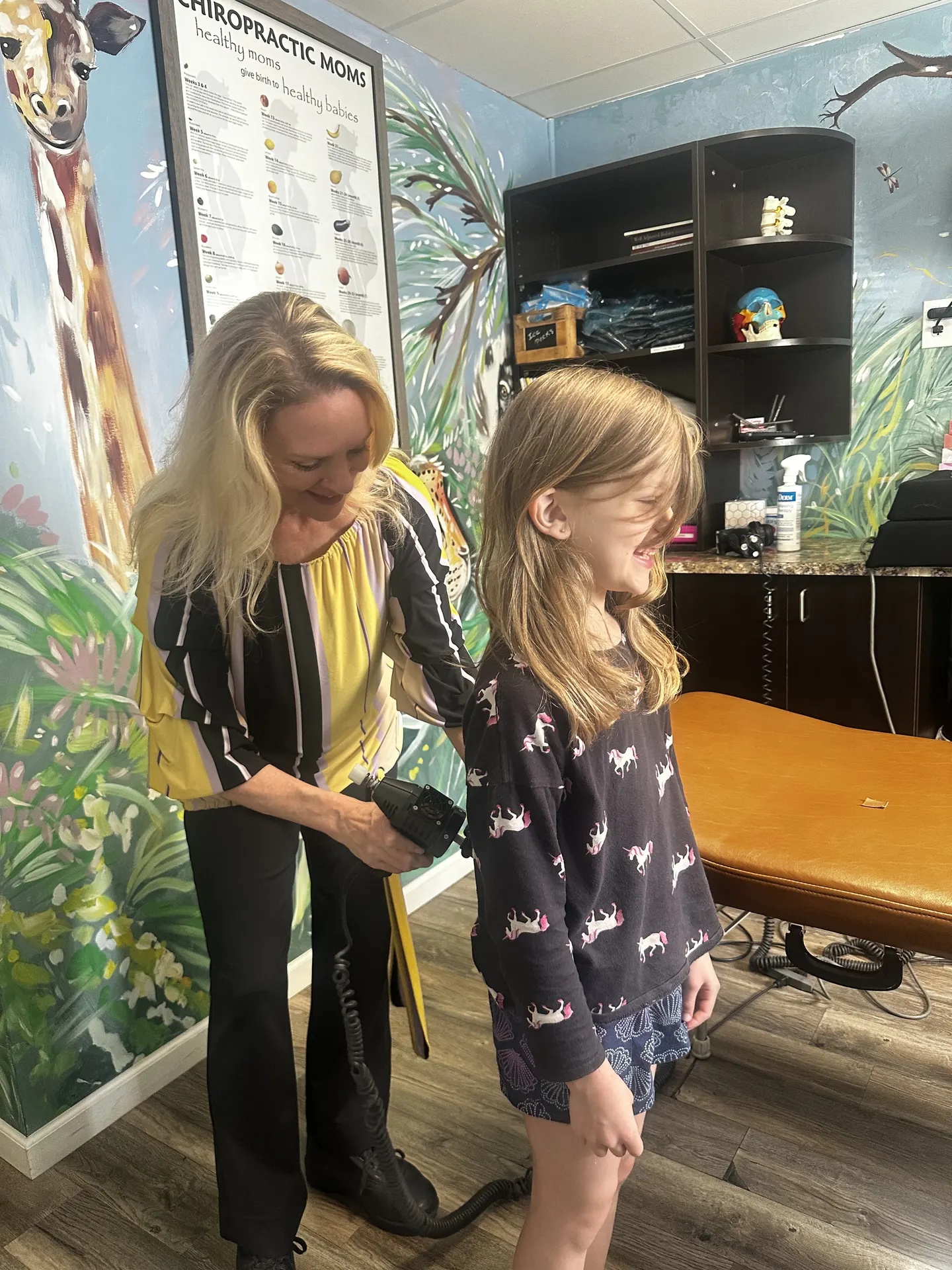
We start by hearing your child's birth history, feeding and sleep patterns, and the specific motor milestones you are watching closely. From there, a gentle exam and INSiGHT neurological scanning give us real information about how your child's nervous system is functioning, rather than guessing from the outside. Using Koren Specific Technique and Talsky Tonal Chiropractic, our doctors work with light, nervous system focused contacts along the neck, spine, and brainstem area to help ease the tension patterns that can hold gross motor progress back.
We work well alongside physical therapy, occupational therapy, and your pediatrician's own monitoring, since a nervous system with less interference tends to respond better to every other kind of support your child is getting. Families who are already deep into weekly PT sessions with slower than hoped progress sometimes find that this is the missing piece rather than a sign to add yet another therapy to the schedule. Many parents notice their child engaging more actively in therapy sessions, tolerating tummy time better, and moving through the next milestone with less struggle once tension patterns start to ease. A similar nervous system foundation matters for kids headed toward youth sports down the road, since coordination and motor planning build on the same groundwork.
Where to Go From Here
If your child's gross motor progress has felt slower or harder than it should, it is worth learning more about how we support developmental delays. We also have a free guide covering the nervous system side of missed milestones. When you are ready, you can book online with our doctors in Royal Oak, or call us at (248) 616-0900 with any questions before your first visit.