Ask a family who has been at this for a while and a pattern often emerges that no single doctor's visit ever quite connects. One kid has had ear infections since infancy and now struggles to sit still at school. A sibling deals with a sensitive stomach and trouble falling asleep. A parent has chronic tension headaches and describes feeling wound up most of the day. Four different labels, four different specialists, four different appointment calendars, and a household that is exhausted from managing all of it separately.
What Conventional Care Tends to Miss
Most healthcare is built to treat the symptom in front of it. A pediatrician manages the ear infections. A behavioral specialist addresses the focus struggles. A gastroenterologist looks at the stomach. Each of those providers is doing legitimate, useful work within their own lane. What that model is not built to ask is a bigger question: why does one household end up with so many seemingly unrelated issues showing up at once, and often getting worse during the exact same stressful stretches?
The System Most Providers Never Examine
The nervous system coordinates essentially everything else the body does, digestion, immune response, sleep, focus, emotional regulation, movement. It is also one of the least examined systems in a typical checkup. A well child visit checks height, weight, reflexes, and developmental milestones, but it rarely includes any objective look at how a person's nervous system is actually regulating stress day to day. When that system is running in a chronic, low grade state of alert, sometimes called sympathetic dominance, it can affect gut health, immune resilience, coordination, and emotional control all at once, in one person or across an entire household.
Why It Clusters Inside One Family
Genetics plays some role in why certain family members share similar patterns, and so does shared environment: the same stress at home, the same sleep schedule, the same exposure to illness passing from one person to the next. But there is also a simpler explanation that gets missed. If one family member's nervous system runs tightly wound, everyone else in the house absorbs some of that energy too. A parent under chronic stress and a child whose birth involved real physical intervention can both end up with a nervous system leaning the same direction, even though their symptoms look nothing alike on paper.
What a Root-Cause, Drug-Free Approach Looks Like in Practice
In theory, root-cause care sounds abstract. In practice, for a family, it usually looks like this:
- One provider hearing the whole family's story together, rather than four separate intake forms that never reference each other
- Objective nervous system data for each person, not just a symptom checklist, so the plan is built on what is actually happening rather than a guess
- Care that is gentle enough to work for a newborn and a grandparent in the same afternoon, since the nervous system principle is the same at every age even though the presentation looks different
- Tracking whether the underlying pattern is actually shifting over time, not just whether one symptom has temporarily quieted down
Where This Pattern Often Begins
For a lot of families, the earliest contributor traces back to pregnancy and birth. High stress during pregnancy, birth interventions such as forceps, vacuum extraction, induction, or a C-section, and early exposure to repeated illness or rounds of antibiotics can each add pressure to a developing nervous system before a child ever shows an obvious symptom. None of this is about blame. It is simply where a lot of these patterns start, and knowing that helps families stop treating each new label as an isolated surprise.
Our Approach
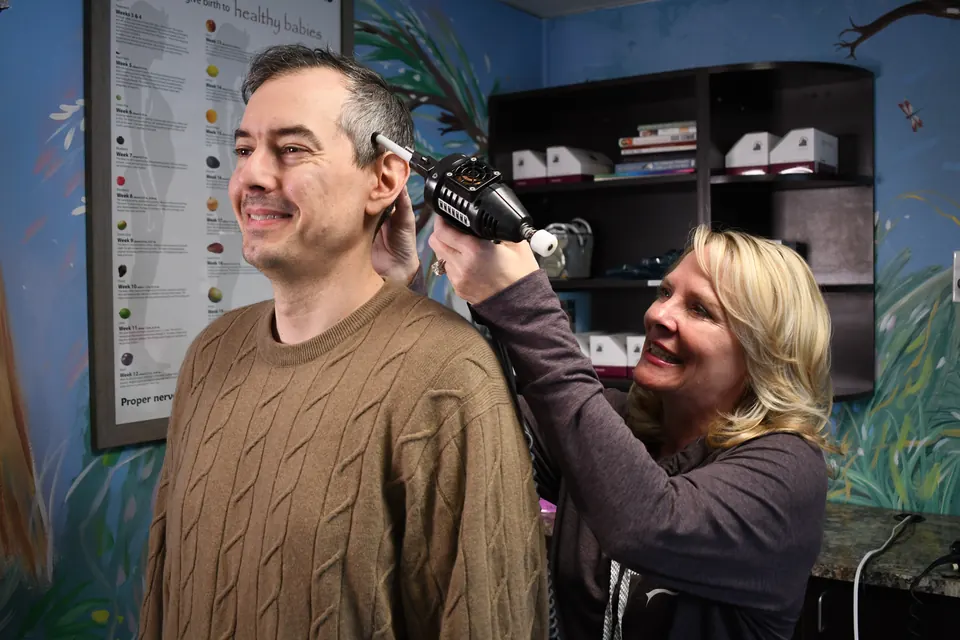
We start with each person's story, birth history, current activity level, and the specific patterns a family has noticed, so the plan actually fits the people in front of us rather than a generic template. From there, our doctors use INSiGHT scanning, thermal, heart rate variability, and sEMG readings, to see what is actually happening in each person's nervous system rather than relying on symptoms alone. Care is coordinated across the household, so a parent, a toddler, and a grandparent can each be seen in one visit, with an individual plan built for each person.
A Week That Looks Different With One Plan
Rather than a Tuesday afternoon ear infection follow-up, a Thursday focus consult, and a weekend stomach flare that nobody quite tracks anywhere, a family working from one nervous system focused plan tends to see a more connected week. Visits are scheduled together where it makes sense, so a parent is not driving to three different offices for what may turn out to be one underlying pattern. Notes on sleep, mood, and physical symptoms across the whole household get compared in the same place rather than living in separate charts that never talk to each other. Over time, that shared view often makes it easier to see which changes are actually helping and which stressors tend to set the whole household off at once.
What Families Often Notice
Kids settling into sleep and daily routines more easily, and fewer sick days moving through the household as a whole. Parents describing more resilience during stressful stretches, especially once everyone has a plan in place rather than managing separately. Better posture and comfort for kids growing quickly or spending long days at a desk. None of these show up overnight, and our doctors track each person's response so the plan can shift as needed.
Where to Go From Here
If your household feels like it is juggling several separate problems that never quite have one clear explanation, it may be worth looking at the nervous system thread running underneath all of it. Learn more about how we support family wellness at every age. When you are ready, book online with our doctors in Royal Oak, or call us at (248) 616-0900 to talk through what your family has been dealing with.