At some point, a well meaning provider likely mentioned medication for your child's meltdowns, aggression, or trouble focusing. Maybe you have already tried it. Maybe you are sitting with the decision right now, weighing a prescription against another hard week. Whatever stage you are at, it helps to understand what these medications are actually built to do, and what they were never designed to reach.
There is no medication built specifically for autism itself. What providers prescribe are antipsychotics and other psychiatric drugs approved to calm the behaviors that often come with it, aggression, self harm, severe agitation. Those medications can quiet a moment of crisis. They are not designed to change what is generating the distress signal in the first place.
What These Medications Are Actually Treating
Two antipsychotics, risperidone and aripiprazole, are approved for children as young as five to help reduce aggressive and self injurious behavior. Beyond those two, many children are prescribed other psychiatric medications off label, stimulants, antidepressants, anti anxiety drugs, aimed at whichever symptom is loudest that month.
These medications work on brain chemistry from the outside in. They can bring real, sometimes necessary relief during a genuinely difficult stretch. What they are not designed to do is address why your child's nervous system is generating that level of distress to begin with. The signal gets quieter. The underlying pattern producing the signal stays the same.
Autism as a Whole Body Pattern, Not Just a Brain Difference
Autism gets talked about almost entirely as a brain condition, something set at birth that therapy and medication can only manage around the edges. A growing body of research tells a fuller story. The nervous system, the gut, the immune system, and cellular energy production are all connected, and disruption in one area shows up in the others. Kids on the spectrum frequently deal with gut inflammation, immune imbalance, and sleep disruption right alongside the more visible social and sensory differences.
Genetics plays a real role for some children. Prenatal stress, a difficult birth, and early exposure to toxins or heavy antibiotic use can also shape how a child's nervous system develops, on top of whatever genetic groundwork was already there. Seeing autism through this wider lens changes what "addressing the root" can actually mean for a family.
The Nervous System Piece Underneath the Behavior
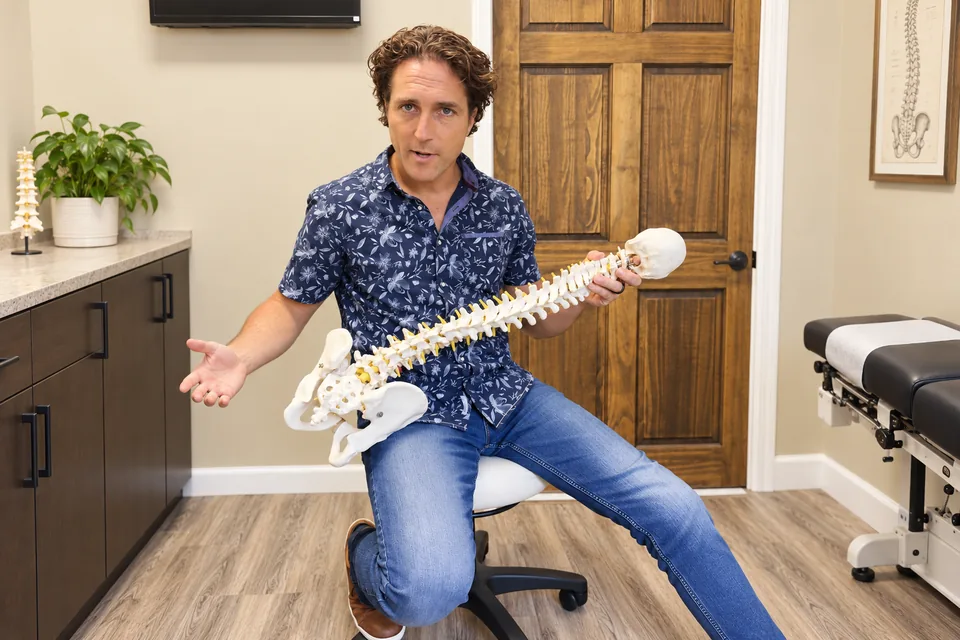
The autonomic nervous system runs on a gas pedal for alertness and a brake for calm, and in a lot of autistic kids, that brake cannot fully engage. The vagus nerve drives that braking function, and tension or interference in the upper neck and brainstem, something we call subluxation, can get in the way of the vagus nerve doing its job well. When that happens, a child stays closer to fight or flight than rest and digest, and the meltdowns, rigidity, and sensory overwhelm that follow are the nervous system doing exactly what an overloaded system does.
This is the layer medication was never built to reach. It quiets the output. It does not change the input.
The Weight Behind the Decision
Parents reaching for medication during a season of severe meltdowns, aggression, or sleepless nights are not doing anything wrong. When a child's safety or a family's ability to function day to day is on the line, that pressure is real, and pediatricians are often quick to offer a prescription as the only visible option on the table. The exhaustion and judgment parents feel in those moments deserve understanding, not criticism, from anyone trying to help.
What often gets left out of that conversation is the rest of the picture, the vagus nerve, the gut, the immune system, the cumulative effect of early stressors like a hard pregnancy or a difficult birth. None of that gets addressed by quieting behavior alone, which is exactly why so many families feel like they are managing symptoms in a loop rather than making lasting progress.
Looking at More of the Picture, Not Instead of Support Your Child Already Has
Behavioral therapy has real value in teaching skills and building structure for an autistic child's day. So does speech and occupational therapy. Where those approaches sometimes hit a ceiling is when the nervous system underneath them is still stuck in overdrive, because a dysregulated nervous system makes it harder for a child to access and generalize any new skill, no matter how well it is taught.
We do not start by asking what medication your child should try next. We start by looking directly at how well their nervous system is coordinating itself, using a hands on exam alongside INSiGHT scanning technology to map where tension is sitting in the spine and brainstem, instead of working purely off a list of behaviors on a form. That map guides Koren Specific Technique and Talsky Tonal Chiropractic, our light, nervous system focused adjustments with no cracking or twisting, aimed squarely at the upper neck tension most likely to be blocking vagus nerve signaling, and we pace every session to what your child can tolerate that day.
What Parents Often Notice
- Longer stretches of regulated behavior between meltdowns
- Better sleep, which tends to make everything else a little more manageable
- More capacity to actually use the skills being taught in therapy sessions
- Easier transitions between activities and environments
- Calmer digestion alongside calmer behavior
Some families notice small shifts within the first several visits. For others, especially with more entrenched patterns, change builds more gradually over a longer stretch of care. Our doctors track your child's progress at each visit and adjust the plan as needed.
Where to Go From Here
Understanding your child's autism through a wider, nervous system informed lens does not erase anything you are already doing for them. It adds a piece that has often been missing from the conversation. You can read more about how we support autism and neurodevelopmental care, or get our free guide on the nervous system side of autism. When you are ready, book online with our doctors in Royal Oak, or call us at (248) 616-0900 to talk through what you are seeing in your child.