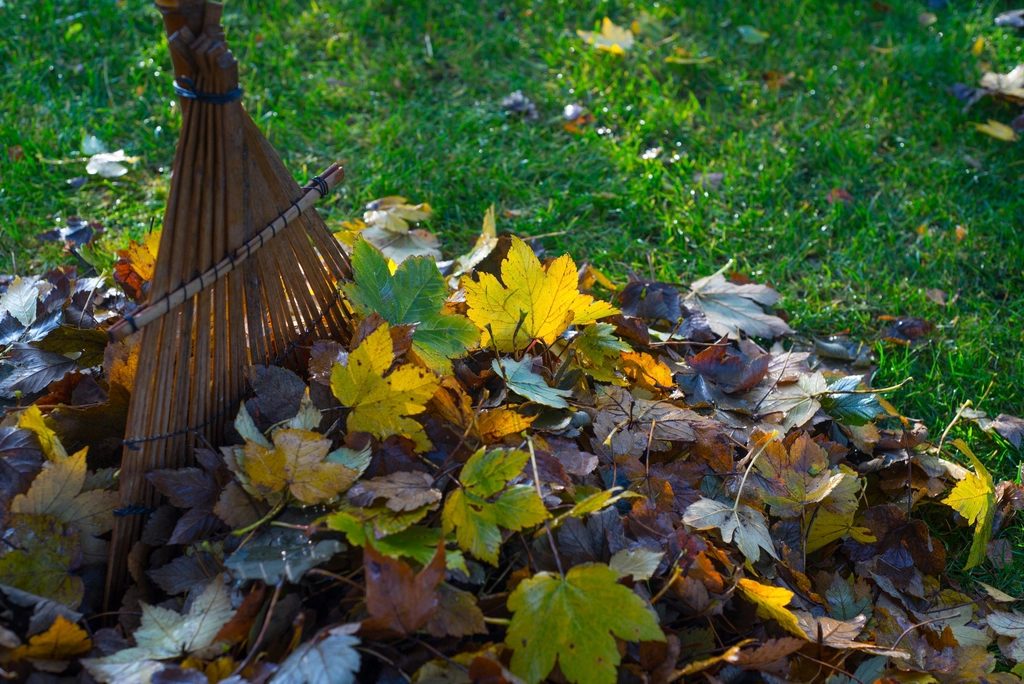
Every October, our schedule fills up with a familiar complaint. Someone spent a Saturday afternoon raking the yard, felt fine at the time, and woke up Sunday morning barely able to get out of bed. Raking does not look like strenuous exercise. There is no heavy lifting, no sudden impact, nothing that seems risky in the moment. That is exactly what makes it sneaky. An hour of the same twisting, reaching motion, repeated hundreds of times, asks a lot of your low back and shoulders even though no single motion feels like much.
You do not have to choose between a clean yard and a sore back. A few changes to how you rake, and how you pace the job, make a real difference.
Why Raking Is Harder on Your Back Than It Looks
Raking combines two things that are individually manageable and genuinely rough on your spine when combined for an hour straight: repeated forward bending and rotation through the low back. Most people rake using mostly their arms and back while keeping their feet planted, which means every stroke twists through the lumbar spine instead of using the legs and hips to do the work. Do that motion two or three hundred times over an afternoon, and even a back that felt completely fine at the start can end up strained by the end.
Cold morning air can add to the problem, since muscles are naturally tighter and less pliable before they warm up, which is part of why so many people notice raking soreness after an early fall morning session more than a warmer afternoon one.
Technique That Actually Protects Your Back
The biggest single change is using your legs and hips to generate movement instead of twisting through your low back. Face the direction you are raking toward rather than reaching across your body, and pivot your whole body with your feet rather than rotating just your torso. Keep the rake close to your body instead of reaching it far out in front of you, which puts far less leverage strain on your low back with every pull.
Switch which hand leads periodically rather than raking the entire yard in one stance. Favoring one side for an hour straight loads the same muscles and joints repeatedly, while alternating spreads the work more evenly. A rake with a handle at a comfortable height for your own posture also matters more than people expect. Hunching over a rake that is too short adds strain that a properly sized handle avoids entirely.
Pacing the Job Matters as Much as Technique
Raking an entire yard in one sitting is exactly the kind of repetitive strain that tends to catch up with people the next day. Breaking the job into shorter stretches, twenty or thirty minutes at a time with a real break in between, gives your back a chance to reset before fatigue sets in and your form starts to slip. Fatigue is when technique tends to break down without you noticing, which is often when the actual strain happens.
A short warm up before you start, a few minutes of walking and gentle stretching, helps loosen a back and neck that have been sitting still all morning before you ask them to do an hour of repetitive work. It sounds like a small thing, but a body that starts warm tends to tolerate the work better than one that goes from standing still to bent over a rake in a matter of seconds.
What Recovery Should Look Like the Next Day
Some stiffness the next morning is normal after a physical afternoon outside, especially if it has been a while since your last real yard work. Gentle movement, a short walk, some easy stretching, tends to help more than lying still all day, since motion helps keep a strained back from tightening further. Pain that is sharp, radiates down a leg, or does not ease with gentle movement over a day or two is worth having looked at rather than waiting out.
Where the Nervous System Fits In
Back pain rarely comes only from one afternoon of yard work. A day of raking often flares an area that was already carrying tension from posture habits, an old strain, or everyday stress that had not fully settled. Your spine houses the spinal cord, and nerves branch out from it to the rest of your body, so a shifted vertebra can interfere with that communication and leave a back more prone to flaring under ordinary strain, not just heavy lifting.
Our doctors use Koren Specific Technique (KST) and Talsky Tonal Chiropractic (TTC), gentle corrections with no cracking, popping, or twisting, along with INSiGHT scanning to see where your nervous system is holding stress rather than guessing from where it hurts. Because these techniques can be delivered seated, standing, or however is comfortable, a sore back from yard work is easy to work with even the same week it flares.
A Simple Checklist for Yard Work Season
- Warm up with a short walk and light stretching before you start.
- Face the direction you are raking and pivot with your feet rather than twisting your low back.
- Keep the rake close to your body and switch your leading hand periodically.
- Break the job into twenty to thirty minute stretches with real breaks between them.
- Move gently the next day rather than staying completely still if you wake up stiff.
Where to Go From Here
If a season of yard work leaves you stiff more often than it used to, that is worth a closer look rather than something to push through every October. You can read more about how our doctors approach back and neck pain, or get our free guide on the nervous system side of ongoing tension. When you are ready, book online with our doctors in Royal Oak, or call us at (248) 616-0900.