
It is rarely the big things that set off round ligament pain or symphysis pubis dysfunction, or SPD. Most women are not doing anything dramatic when the sharp catch or the deep pelvic ache hits. It is rolling over in bed. It is twisting to grab a bag from the back seat. It is stepping out of the car with one leg first instead of both. Ordinary movements, done the way you have always done them without thinking twice, suddenly send a jolt through your pelvis.
Once you know which specific movements tend to be the trigger, and why, it becomes a lot easier to adjust how you do them rather than avoiding them altogether.
The Movements That Tend to Set It Off
A few patterns come up again and again. Rolling over in bed by twisting through the middle, rather than moving as one unit, is one of the most common triggers for both round ligament pain and SPD. Standing up quickly from a low chair or the couch is another, especially when it involves any twisting on the way up. Getting in and out of a car tends to be a repeat offender too, particularly stepping out with one leg while the other stays planted, which puts uneven load straight through the pubic joint. Climbing stairs two at a time, reaching overhead while standing on one foot to get dressed, and sudden movements like a sneeze or a cough can each trigger that same sharp, catch-your-breath sensation.
Why These Specific Movements Are the Problem
What almost all of these movements have in common is asymmetry, one side of the pelvis doing more work than the other, or a twisting motion through joints and ligaments that are already carrying extra hormonal softening. Relaxin and other pregnancy hormones loosen the ligaments throughout your pelvis so your body can accommodate your growing baby and eventually deliver. That is necessary and expected, but it also means the structures holding your pelvis together have less built in stability than they did before pregnancy. A movement that would have been completely unremarkable before pregnancy can now ask more of an already loosened joint than it is prepared to give in that moment, especially when the movement happens quickly or asymmetrically.
Adjusting How You Move, Not Just How Much
The goal is not necessarily doing less. It is doing the same things differently. Rolling over as one solid unit, knees together, rather than twisting your shoulders one way and your hips the other, takes a lot of the strain off round ligament and pelvic structures during one of the most common triggers of all. Standing up by using your arms to push off rather than twisting through your trunk changes the load significantly. Stepping out of a car with both feet together rather than one leg leading keeps the load even across the pelvis instead of putting it all on one side.
Our Approach at Van Every
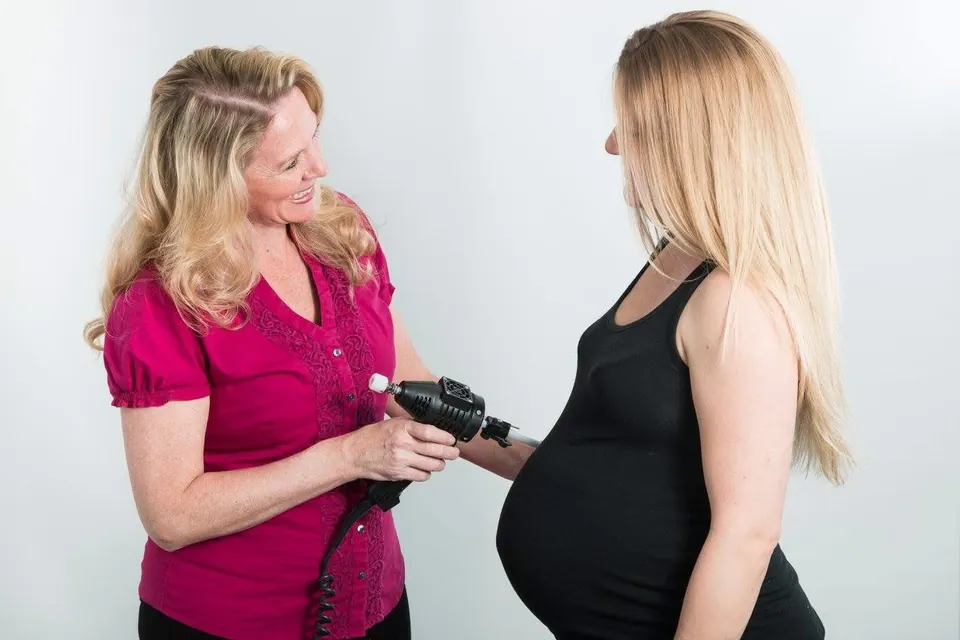
We start with INSiGHT neurological scans, thermal, heart rate variability, and sEMG, to get an objective look at how your nervous system is functioning, not just where the pain is. From there, care uses Koren Specific Technique (KST) and Talsky Tonal Chiropractic (TTC), light, nervous system-focused contacts with no cracking, no twisting, and no forceful manipulation, even when the pain is already significant. Adjustments happen seated, side-lying, or in whatever position takes the pressure off, never face down on the table. Pelvic work, including Webster certified care where it is relevant, addresses the alignment patterns behind the pain directly, alongside practical guidance on the specific movements that have been triggering your symptoms.
What Many Moms Notice
Every pregnancy responds differently, but it is common to notice a shift within the first handful of visits: walking gets easier, the nighttime catch that wakes you up rolling over shows up less often, and everyday tasks like climbing out of the car stop feeling risky. A lot of moms also tell us that once they learn which specific movements were triggering their pain, they feel more confident and less anxious about moving in general, even before the pain itself has fully settled. Visits usually run more often at the start and space out as your pelvis stabilizes, adjusted to how you are actually doing rather than locked to a set number of visits. Partners often notice the shift too, a smaller wince getting out of bed, less hesitation before a car ride, a woman who used to plan her whole day around avoiding certain movements starting to move more freely again.
Small Changes That Help Between Visits
- Log roll from side to side in bed instead of twisting through the middle, keeping your knees together as you turn
- Push up with your arms from a chair or the couch rather than twisting to gain momentum
- Step out of the car with both feet together rather than one leg leading
- Sit down to get dressed rather than balancing on one leg, since single leg balance loads the pubic joint unevenly
- Take stairs one at a time, holding the railing, rather than two at a time
- Notice which specific movement preceded a flare and mention the pattern at your next visit
Where to Go From Here
You do not have to wait out SPD or round ligament pain until after delivery. Our round ligament pain and SPD care page covers more of what this looks like day to day, and you can also grab our free guide on the nervous system side of pelvic pain for a deeper look at what is driving the discomfort. If you are ready to talk with our doctors, you can book online or call us at (248) 616-0900. We are glad to walk through what gentle, pregnancy-safe care could look like for you.