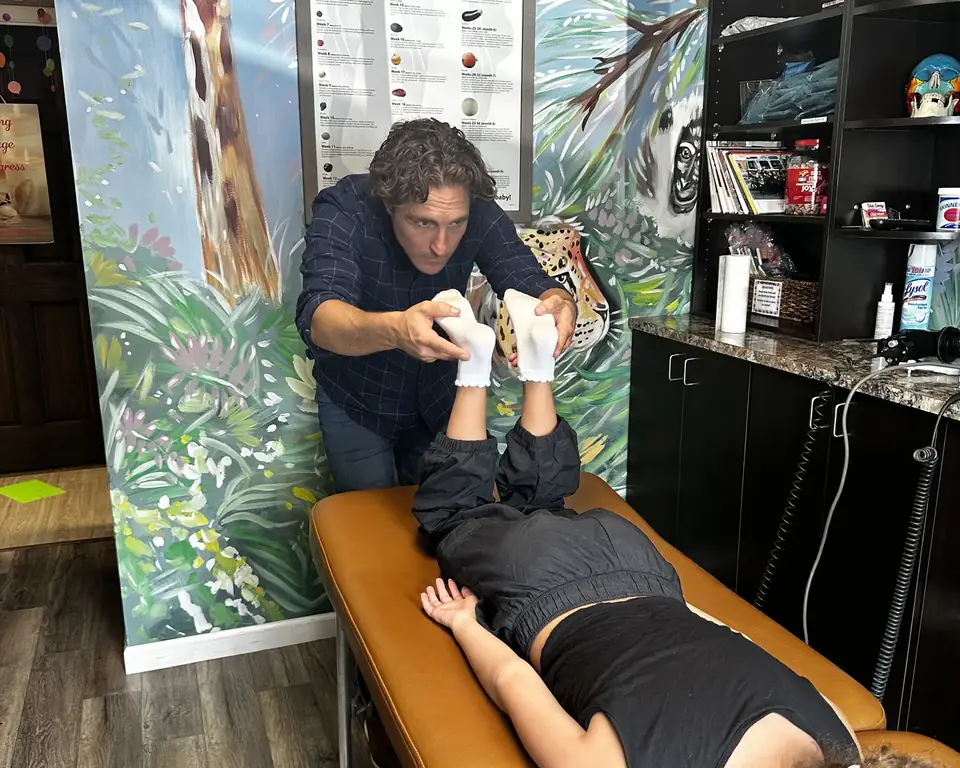
Dr. Zach Conner gently adjusting a child lying on the table in our jungle room
Pediatric

Gut Health for Children

When Diet Changes Alone Aren't Enough

Book Online

You've cut out gluten. Cut out dairy. Added the probiotics and digestive enzymes. Seen the pediatrician, maybe the GI specialist, maybe the allergist. The tests come back "normal." But your child is still in pain, still bloated, still dealing with bowel habits that swing between constipated and urgent, and you know this isn't normal, no matter what the labs say.

Digestion isn't run by the gut alone. It's run by the nervous system, specifically the vagus nerve running from the brainstem through the neck, and the network of nerves exiting the thoracic and lumbar spine that control everything from stomach acid production to intestinal motility. When that nervous system supply is under tension, digestion can misfire no matter how carefully you've dialed in the diet. At Van Every Family Chiropractic Center, our doctors look at that piece directly, alongside everything you have already tried.

How Gut Issues Show Up in Kids

Gut trouble in kids rarely stays in one lane. Some children swing between constipation and sudden urgency in the same week. Others deal with a bloated, distended belly that shows up hours after eating, or stomach aches that seem to have no clear trigger at all. Gas, reflux, and a picky or unpredictable appetite often ride along, and some kids keep reacting to foods well beyond the ones you have already pulled from the diet, usually the clearest sign that food alone is not the whole story. Flares often cluster around stress, illness, or a change in routine like starting school, timing that points toward the nervous system rather than the plate.

The vagus nerve and the nerves exiting the mid back and lower spine reach every organ involved in digestion, so tension along that pathway can undercut even the most carefully managed diet.

What's Actually Causing It

The vagus nerve runs from the brainstem through the neck and governs most of what happens in the gut, from swallowing to the release of digestive enzymes. Nerves exiting the mid back and lower spine take over from there, controlling stomach acid production, intestinal motility, and elimination. When any part of that supply is under tension, whether from birth stress, a fall, or ordinary childhood tumbles, digestion can misfire even when the diet is exactly right. That is the piece most plans built around food alone tend to miss, and it is often why kids react to foods well beyond the ones already eliminated.

Our Approach

We start with a full history: birth, feeding, when symptoms started, what has already been tried, and what a bad flare actually looks like day to day. Stress and school transitions come up often too, since flares tend to track alongside them. From there, our doctors examine the upper cervical spine along with the thoracic and lumbar regions that supply the digestive organs, using a hands-on exam and INSiGHT neurological scanning to find where tension is concentrated and how it lines up with your child's symptoms.

Using Koren Specific Technique (KST) and Talsky Tonal Chiropractic (TTC), we correct the specific areas of tension we find, with light, nervous system focused contacts and no cracking or twisting. Care works alongside the diet changes you have already made rather than asking you to undo any of them, and it fits comfortably around a full schedule of other appointments.

What to Expect

Every child's nervous system settles in at its own pace. Some families notice a change within the first several visits, while cases that have been building for months can take a bit more time to unwind. Because the adjustments are gentle, there is no added discomfort layered on top of a child who may already be uncomfortable after eating. We track how digestion is responding alongside what we see on INSiGHT scanning, so you can see the nervous system settling rather than just hoping the next meal goes better.

What Parents Often Report

Less bloating, more predictable bowel habits, and a better appetite are usually the first things to shift. Many families also notice that the diet changes they made earlier finally start to hold, since the nervous system driving digestion is no longer working against them, and flares during stressful stretches tend to ease as well. Because digestion, sleep, and mood are closely tied together in kids, a calmer nervous system tends to show up as improvement across all three, not just fewer stomach complaints.

Take the First Step If diet changes alone have not settled your child's gut, our doctors would like to take a look in Royal Oak.

Book Online

Common questions

  • Digestion is not run by the gut alone, it is run by the nervous system. The vagus nerve governs most of what happens in the gut, while nerves exiting the mid back and lower spine control stomach acid, intestinal motility, and elimination. When any part of that nerve supply is under tension, digestion can misfire even when the diet is exactly right, which is usually why kids keep reacting to foods well beyond the ones already eliminated.

  • No. Care works alongside the diet changes you have already made rather than asking you to undo any of them. Many families find that once the nervous system piece is addressed, the diet changes they made earlier finally start to hold the way they were supposed to.

  • Yes. Our doctors use Koren Specific Technique (KST) and Talsky Tonal Chiropractic (TTC), light, nervous system focused contacts with no cracking or twisting. Care is comfortable for kids of any age and fits around whatever else is already on your family's plate, including a full schedule of other appointments.

  • We start with a full history: birth, feeding, when symptoms started, what has already been tried, and what a bad flare actually looks like day to day. Stress and school transitions come up often too. From there, our doctors examine the upper cervical spine along with the thoracic and lumbar regions that supply the digestive organs, using a hands-on exam and INSiGHT neurological scanning to find where tension is concentrated.

  • Every child settles in at their own pace, but many parents notice less bloating, more predictable bowel habits, and a better appetite within the first several visits. Cases that have been building for a long time can take a bit more time to unwind, and we track the pattern with you along the way.

  • Yes. Digestion, sleep, and mood are closely tied together in kids, all run through the same nervous system. A calmer nervous system tends to show up as improvement across all three, not just fewer stomach complaints, which is why we keep an eye on the whole picture rather than the gut alone.

Gut Health for ChildrenOctober 11, 2026

What Your Child's Bathroom Habits Are Actually Telling You

Nobody warns you how much time you will spend thinking about your kid's bowel movements. Frequency, shape, and how much they strain all say something real about how their gut and nervous system are working together.

Gut Health for ChildrenJune 1, 2026

Does the GAPS Diet Work Without Nervous System Care?

You've read every page of the GAPS diet book and started the bone broth. Before you commit months to the protocol, here is the piece of your child's gut picture that diet alone can't reach.

Gut Health for ChildrenNovember 10, 2025

Signs Your Child's Gut Health Needs a Closer Look

Gut symptoms don't always look like a stomach ache. Skin flares, mood swings, and trouble focusing can all be signals worth paying attention to. Here's a simple pattern to watch for at home.

Free article

“You've Changed the Diet. The Gut Issues Keep Coming Back.”

Our doctors put together a full article on gut health for children that explains what's really behind it and what lasting relief looks like. Get instant access below.

The Perfect Storm webinar with Van Every Family Chiropractic

Van Every Family Chiropractic Center Royal Oak, Michigan

Free on-demand webinar for parents

The Perfect Storm

Looking for answers for your child?

Focus struggles. Big emotions. Restless nights. Tummy troubles. Join our doctors for a free parent webinar exploring the nervous system connection and ways to support your child.

Explore the free webinar

Free · About an hour · Watch anytime
