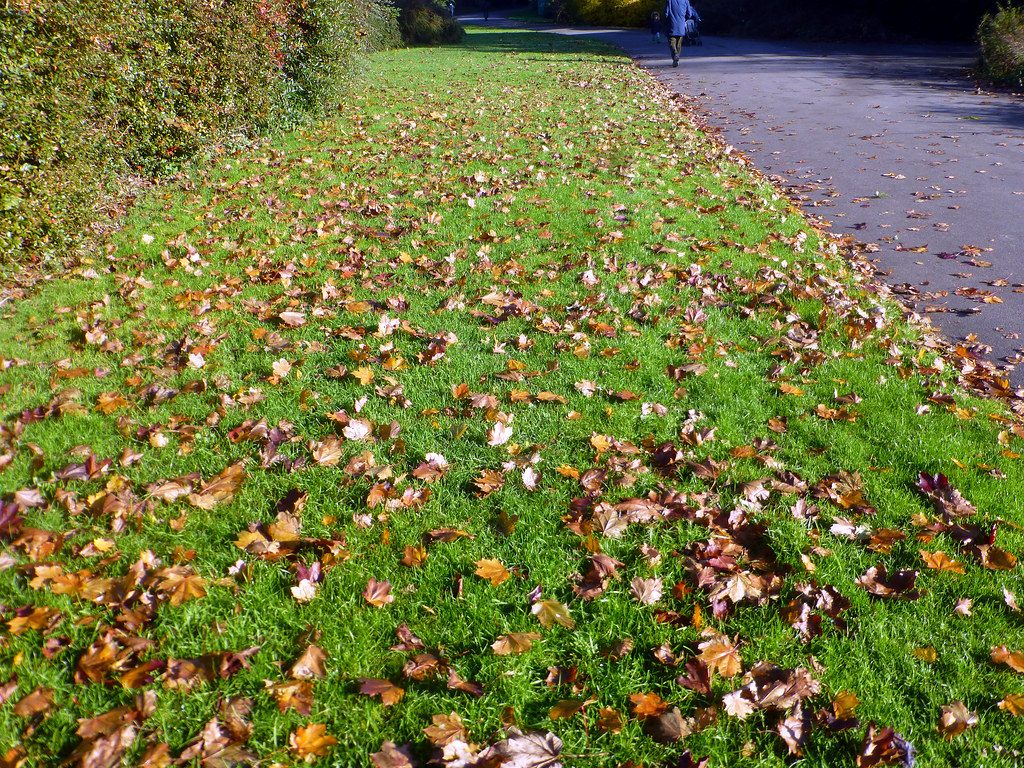
Every fall our office sees a familiar spike in sciatica complaints, and it rarely comes from raking itself. It comes from everything that happens after the leaves are already in a pile: hauling full paper bags to the curb, lifting bags of mulch or topsoil, dragging branches and yard waste across the lawn, and bending repeatedly to gather debris into containers. That combination of heavy lifting and twisting under load is a well known trigger for a sciatica flare, and fall cleanup weekends are full of exactly that combination, often for hours at a stretch.
How a Sciatica Flare Shows Up After Yard Work
Sciatica rarely looks the same twice, but a hard afternoon of yard cleanup tends to bring on a recognizable pattern. A sharp, electric jolt shooting from the low back through the buttock and down the leg. Burning along the path of the nerve, or numbness and tingling into the foot. For some people it is a leg that suddenly feels too weak for the stairs that evening, or pain that was manageable during the work itself but becomes much sharper once you finally sit down to rest. Sitting for any length of time after a day of yard work is often exactly what makes a flare announce itself.
Why Lifting and Twisting Are Such a Specific Risk
The most common driver of sciatica is a herniated or bulging disc pressing on the nerve, and a disc is most vulnerable to injury during the exact combination of movements yard cleanup involves: bending forward, lifting a load, and rotating at the same time to set it down somewhere else. Misalignment along the low back putting pressure on a nerve root, or a tight piriformis deep in the buttock clamping down on the sciatic nerve as it passes underneath, can produce that same shooting leg pain, and both of those get worse the more you bend, twist, and reach for one more bag before quitting for the day.
What makes yard cleanup particularly risky compared to a single heavy lift is the repetition. Bagging leaves, hauling branches, and moving mulch usually means dozens of similar lifts over a couple of hours, often with debris that is heavier or more awkwardly shaped than it looks, wet leaves in particular carry far more weight than dry ones. Fatigue sets in as the afternoon goes on, and fatigue is exactly when lifting form tends to slip without anyone noticing until the next twinge.
Protecting Your Hips, Low Back, and Legs During Cleanup
Lift with your legs rather than your back whenever possible, bending at the hips and knees instead of rounding forward at the waist. Keep loads close to your body instead of reaching out and lifting from an extended arm position, which multiplies the strain on your low back significantly. Avoid twisting while holding a load. Pivot with your feet to change direction instead of rotating your spine while your arms are full.
Break up heavier tasks like bagging and hauling into shorter stretches with real breaks, rather than pushing through an entire afternoon in one continuous push. Use a wheelbarrow or tarp to drag debris rather than repeatedly lifting and carrying it by hand, and consider smaller bags rather than fewer, heavier ones, since more frequent lighter lifts are easier on the sciatic nerve than fewer maximal ones.
Our Approach
Our doctors first take a close look at your spine, discs, and nerve function through a thorough exam and orthopedic and neurological testing, so we know specifically what set off the flare rather than treating every case of yard-related sciatica the same way. From there, Koren Specific Technique (KST) and Talsky Tonal Chiropractic (TTC) let our doctors make focused, gentle adjustments to the exact areas irritating your sciatic nerve. There is no cracking, popping, or forceful twisting involved, and if bending or reaching is what brings the pain on, we can check and correct you in that same position.
What to Expect If a Flare Has Already Started
Most people who come in after a rough weekend of cleanup notice some relief starting with that first visit, and the flare itself is typically well settled somewhere between four and eight weeks in. The gentle nature of the care matters here especially, since a nerve that is already inflamed from a weekend of hauling and bagging does not need more force added on top of it. The usual order of recovery is comfortable sitting first, followed by pain-free walking, and finally a return to yard work and everything else without a jolt down the leg cutting it short.
- Lift with your legs and keep loads close to your body rather than reaching and lifting at arm's length.
- Never twist your spine while holding a load. Pivot with your feet instead.
- Break yard cleanup into shorter sessions with real rest between them.
- Use a wheelbarrow or tarp for hauling instead of repeated manual lifting where you can.
- If a shooting pain down the leg starts during cleanup, stop the task rather than pushing through it.
Cases That Have Been Building for a While
Not every sciatica flare during yard cleanup season comes out of nowhere. For some patients, a demanding afternoon of lifting and hauling is less a new injury than the moment an existing, quieter pattern finally announces itself. Spinal stenosis, a narrowing of the spinal canal that tends to develop gradually, or a disc that has been mildly bulging for a while without causing obvious symptoms, can both sit fairly quiet until a weekend of repeated heavy lifting pushes them past the point of staying silent. That is part of why a flare that seems to come from one afternoon of work is worth a real evaluation rather than assuming it will settle back down exactly where it started once the soreness fades.
Where to Go From Here
You do not have to accept a sciatica flare as an inevitable part of fall cleanup season. You can read more about how our doctors approach sciatica, or get our free guide on the nervous system side of sciatic nerve pain. Learn more about how sciatica connects to back and neck pain, and when you are ready, book online with our doctors in Royal Oak, or call us at (248) 616-0900.