You've done the physical therapy. You've had the injections, maybe more than one round. You've taken the medication on schedule and even tried a chiropractor who cracked and twisted more than they helped. Some of it worked, for a while. Then the pain crept back in, sometimes in the same spot, sometimes somewhere new, and you were left wondering if this is just who you are now.
Here's the part almost nobody explains at that point: pain that lingers long after an injury has healed usually isn't about damaged tissue anymore. Scans come back clean. Exams say everything should be fine. And yet the pain is still very real, still showing up, still running your day.
At Van Every Family Chiropractic Center in Royal Oak, we see this pattern often enough that we start somewhere most offices don't: not at the site of pain, but at the nervous system carrying it.
What's Actually Going On When Pain Outlasts an Injury
Pain is not simply a measurement of tissue damage. It's an output your brain generates as a protective response, and when that response has been running for months or years, the system itself changes. The threshold for what counts as painful drops. Signals that never used to register start producing real pain, and areas of the nervous system that don't normally generate pain begin contributing to it. Researchers call this central sensitization. It isn't imagined, and it isn't a personality trait. It's a measurable change in how the nervous system processes signals, not proof that something is still broken at the original site.
The CDC estimates that roughly one in five American adults lives with chronic pain, which makes it one of the most common health conditions in the country. Most approaches still aim at the specific disc, joint, or muscle involved rather than the nervous system pattern keeping the alarm going. That mismatch is a big part of why so many people cycle through treatments that help for a little while and then quietly stop.
The Nervous System Running Underneath the Pain
Think of your nervous system as having a gas pedal and a brake pedal. The gas pedal is your sympathetic system, the one that ramps up alertness and guards against threat. The brake pedal is your parasympathetic system, the one that's supposed to let things settle once the danger has passed. In chronic pain, the gas pedal often stays floored long after the original injury is gone, and the brake pedal can't fully engage to counter it. Addressing only the pain site without addressing the system sustaining the alarm is a bit like replacing a warning light without ever checking the engine behind it.
This isn't just a metaphor. Heart rate variability, a measurable marker of the balance between those two systems, shows up reduced in the large majority of chronic pain patients across published research. That's a physiological signature of a nervous system stuck in sustained alert mode, something our doctors can actually track over time rather than take on faith.
Why Treating the Pain Site Alone Tends to Wear Off
Physical therapy, injections, and medication all have real value, and none of them are wrong to try. But each one is aimed at the output, the specific place where pain shows up, rather than the system generating and amplifying the signal. When the nervous system is still sending the same underlying message, relief from any single intervention tends to be partial or short-lived. The alarm behind the pain was never given the chance to reset. Supporting the system driving the pattern, rather than chasing the pain from spot to spot, is where our doctors focus instead.
Our Approach at Van Every
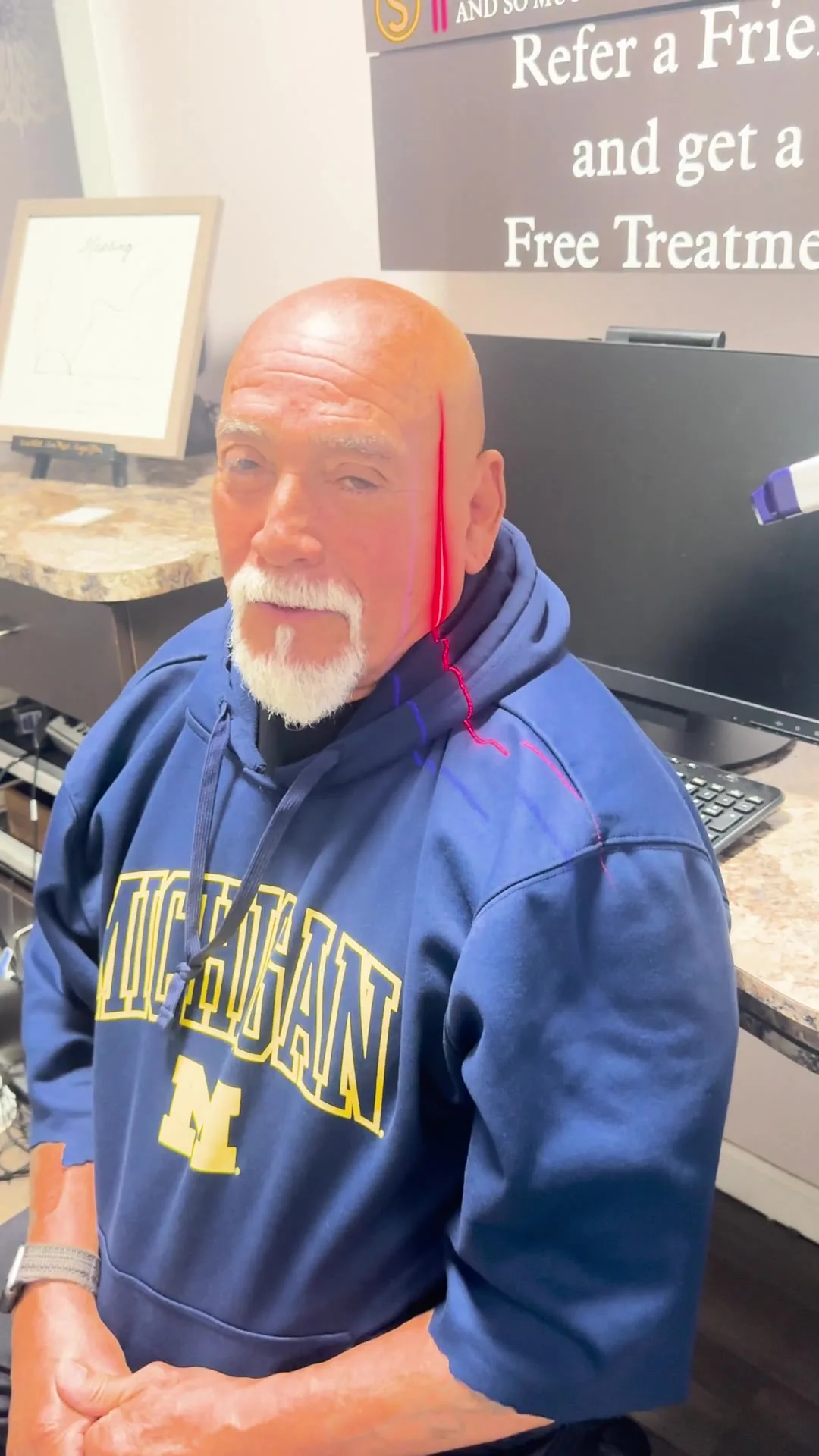
Chronic pain deserves more time than a rushed first visit allows, so we start with your full history: every treatment you've tried, when the pain began, and what tends to make it better or worse. From there, we run painless INSiGHT scans, thermal, heart rate variability, and sEMG, that show us where your nervous system is under strain, not just where it currently hurts.
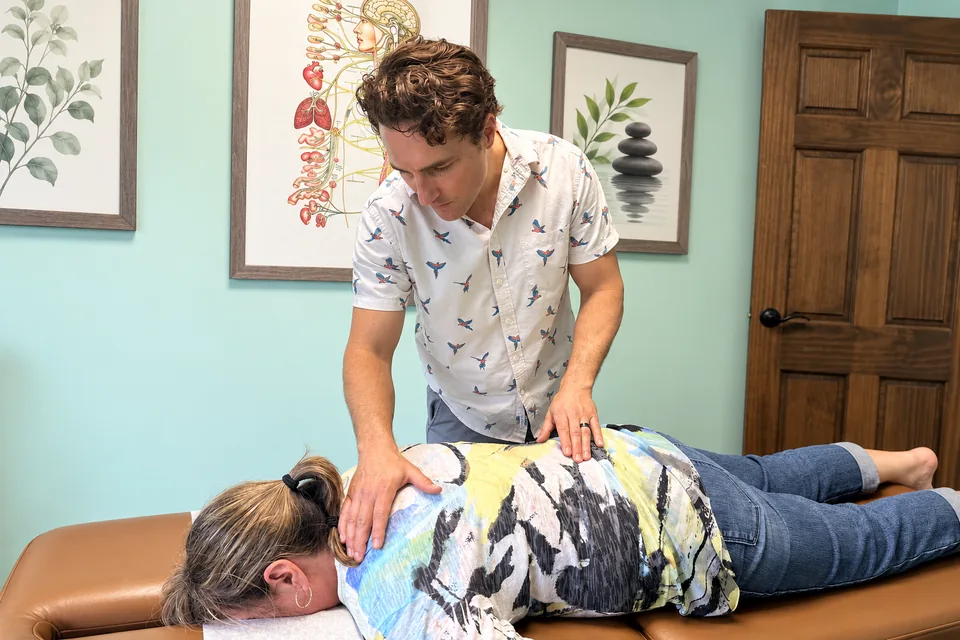
Using Koren Specific Technique (KST) and Talsky Tonal Chiropractic (TTC), our doctors apply light, nervous system-focused contacts to the areas holding the most tension, with no cracking or twisting involved. Because the adjustment can be delivered seated, standing, or lying down, whatever position actually works for you that day, patients who've struggled to tolerate being pushed or laid flat on a table often find this is the first hands-on care they can comfortably receive.
What Patients Often Notice
Patients tend to report the nervous system settling first, sleeping a little easier or feeling less on edge, before flares grow shorter and further apart. Many describe fewer and less intense flare-ups over time, along with more energy and less guarding in ordinary movement. Quite a few also tell us they finally feel believed about pain that scans couldn't explain, which changes how confident they feel managing it day to day. Progress with pain that built up over months or years tends to arrive gradually rather than all at once, and we re-check your scans along the way to confirm the plan is actually calming your nervous system rather than repeating something that already stopped working.
Habits That Support a Calmer Nervous System
Care in the office is only part of the picture. What you do between visits either reinforces that calming or works against it:
- Protect a consistent sleep and wake time, since irregular sleep keeps the stress system engaged
- Notice which weeks bring flares and whether stress, not activity, was the bigger trigger
- Build in short movement breaks rather than long stretches of guarding or bracing
- Keep a simple log of pain, sleep, and energy so patterns become visible over weeks, not just days
- Give slow, low-demand activities like walking or stretching a regular place in your week
Taking the Next Step
Looking at the nervous system underneath the pain, instead of chasing the pain itself again, is a different starting point than most offices offer. Learn more on our chronic pain page, download our free guide on the nervous system side of chronic pain, or book online with our doctors in Royal Oak. You're also welcome to call us at (248) 616-0900 with any questions before you come in.