
You can usually tell, weeks in advance, which stretches of the year are going to be hard on your joints. It is not the weather, or not only the weather. It is the weeks when work will not let up, when sleep is short, when everything feels like it is happening at once. Then the morning stiffness lasts longer than usual, the small joints in your hands and feet ache on both sides, and you are moving slower than you want to be.
You have a rheumatologist. You may be on a disease-modifying drug or a biologic. That care matters, and nothing here is about changing it. But there is a second layer to rheumatoid arthritis that rarely gets discussed with patients, one that has to do with how your body regulates the inflammation your immune system is producing in the first place.
That layer runs through your nervous system, and it is one you can actually support.
What We Hear From People Living With RA
Morning stiffness that lasts an hour or more before the joints loosen up. Symmetrical pain, often in the small joints of the hands, wrists, and feet, showing up on both sides at once. Flare-ups that seem to track reliably with the most stressful stretches of life. And a deep, whole-body fatigue that goes well beyond the joints themselves, since RA is a systemic condition and that tiredness reflects the load the whole body is carrying, not just what is happening in your hands.
The Body's Built-In Brake on Inflammation
Your nervous system has two modes that matter here. The gas pedal, your sympathetic system, ramps up inflammation and keeps the body on high alert. The brake, your parasympathetic system and specifically the vagus nerve, calms inflammation and helps the body recover. Through a pathway researchers call the cholinergic anti-inflammatory reflex, the vagus nerve signals immune cells to dial down the very inflammatory molecules that drive RA.
Research shows a majority of people with rheumatoid arthritis have measurable autonomic changes, including reduced heart rate variability and weakened vagal tone. That weakened brake is not only a side effect of RA. Reduced vagal tone tracks with disease activity, which suggests the nervous system is not just responding to the inflammation, it appears to help regulate how strongly it runs. Years of inflammation and stress can push that system into a pattern it struggles to shift out of on its own, which is why your worst flares so often line up with your hardest weeks.
What Standard RA Care Does Not Reach
Disease-modifying drugs slow the disease process. Biologics target specific molecules in the inflammatory cascade. Anti-inflammatories reduce the signal your body is producing. All of that is important work, and we encourage every patient to continue exactly what their rheumatologist prescribes. What that care does not directly address is the state of the nervous system brake itself, the vagal pathway that helps determine how strongly the inflammation runs day to day. Supporting that pathway works on a different part of the same picture, alongside the medication and treatment plan your rheumatologist already has you on, not as a stand-in for it.
Our Approach
We start with INSiGHT scans, thermal, heart rate variability, and sEMG readings, which give our doctors objective data on the sympathetic and parasympathetic balance behind how effectively your body regulates inflammation. Heart rate variability is precisely the marker so often suppressed in RA, and it is one we can measure and track over time. Every visit begins with a written report of findings, so you can see exactly what the scans are showing rather than take our word for it.
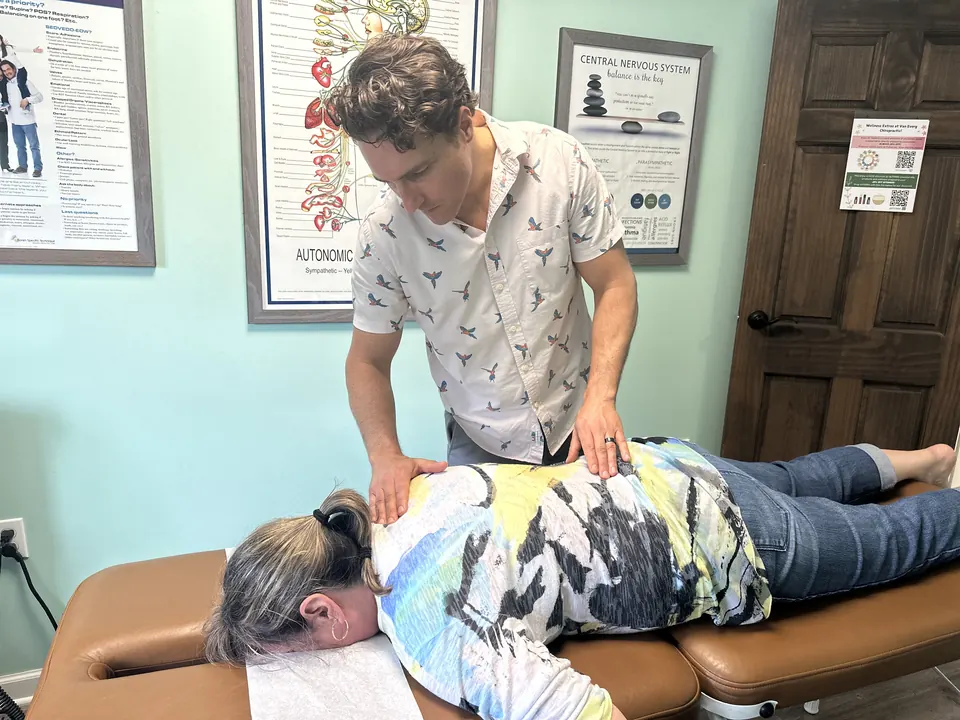
Using Koren Specific Technique and Talsky Tonal Chiropractic, our doctors work with light, nervous system-focused contacts, no cracking or twisting, and no pressure placed on inflamed or sensitized joints. The precision of these techniques lets us address the tension patterns and autonomic imbalance around your joints without stressing the joints themselves, working alongside the rheumatology care you already have. We build your care frequency around what your scans and your history show, and we adjust it as you go, checking in regularly to see how your nervous system is actually responding.
What Patients Notice
Many patients, while continuing their medical care, notice flares that come less often and feel less intense as vagal tone improves. Morning stiffness often eases over the first several weeks, with more fluid movement through the day. Sleep and energy frequently improve too, sometimes before the joints change at all, which points to a nervous system shift happening at a deeper, more systemic level than the joints alone. Many people describe a real change in how they relate to the disease itself, moving from just managing it toward having a layer they can actively support alongside their rheumatologist.
Progress with RA tends to build gradually rather than arrive all at once, and everyone responds on their own timeline. Because we rescan periodically, you and your doctors can see whether your nervous system is actually shifting over time, rather than relying on how a given week happens to feel.
Supporting the System Between Visits
A few habits tend to reinforce the nervous system shift we are working toward in the office:
- Protecting sleep as a priority, not an afterthought, since poor sleep and vagal tone are closely linked
- Building in real recovery time during your most demanding weeks, before the flare arrives rather than after
- Gentle, regular movement that your joints tolerate, rather than pushing through pain or avoiding activity entirely
- Slow, extended exhales during stressful moments, which is one of the simplest ways to engage the vagus nerve directly
- Tracking your own flare pattern against your stress and sleep, so you can see the connection for yourself
Where to Go From Here
If you are living with rheumatoid arthritis and want to understand the nervous system layer alongside your medical care, it is worth learning more about our approach to rheumatoid arthritis support. We also have a free guide that goes deeper into the vagal pathway behind RA inflammation. Learn more about the techniques our doctors use on our techniques page, or book online with our doctors in Royal Oak. Saturday appointments are available, and you can always call us at (248) 616-0900 with questions.
