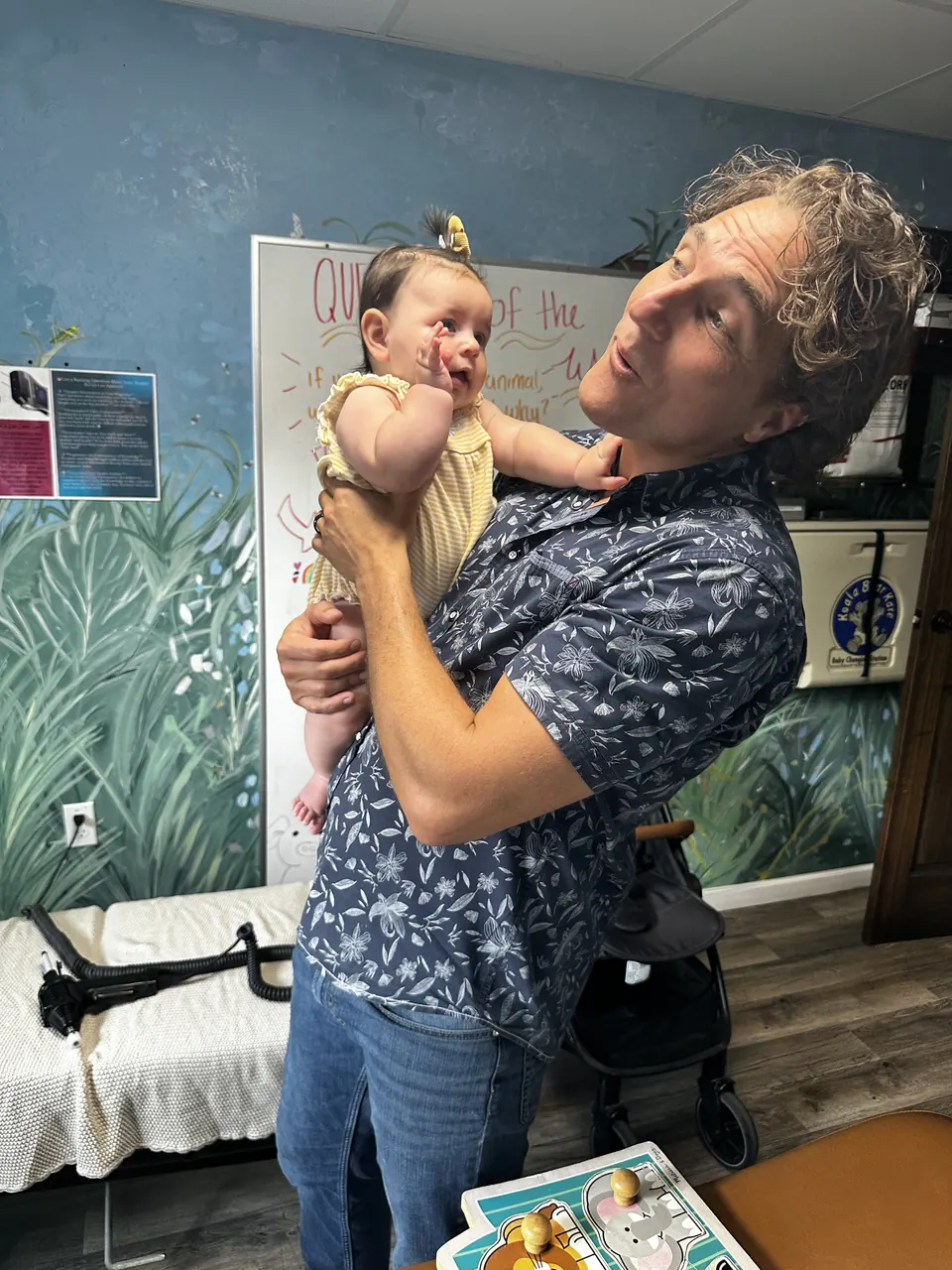
The head tilt is the first thing everyone notices, but you noticed the smaller things first. Nursing that only works well on one side. Tummy time that ends in tears every single time because your baby can only look one direction comfortably. A pediatrician pointing at the tilt at a well-baby visit and saying the word torticollis for the first time.
You have probably already started the stretches. Maybe physical therapy too. Some of it helps. And still, the head keeps drifting back to the same side, the preference keeps returning, and you are left wondering why something that sounds so simple is not resolving faster.
The piece most parents never hear at that visit is this: the tight muscle you can feel is not usually the root of the problem. It is tight because your baby's nervous system is telling it to guard. Stretching loosens the muscle for a while. It does not change the signal that is telling the muscle to hold on in the first place.
How Torticollis Shows Up
Torticollis looks a little different baby to baby, but a few patterns repeat. The head tilts to one side and stays there, even when you try to gently reposition it. Turning toward the tight side is noticeably harder, so your baby favors looking one direction. Nursing or bottle feeding goes smoothly on one side and is a struggle on the other. A flat spot can start forming on the side your baby rests against most, and if you run a finger along the side of the neck you may feel a small band of tightness where the muscle is pulling.
The condition affects a meaningful share of newborns, and in most cases it traces back to the birth process itself. A long labor, forceps or vacuum delivery, a breech position, or a C-section can all put enough pressure on a newborn's upper neck to start the guarding pattern. Tight positioning in the womb can play a role too.
The Nervous System Pattern Underneath the Muscle
During birth, whether through a long labor, vacuum extraction, forceps, or a C-section, the upper cervical spine takes on real stress. The atlas and axis vertebrae sit directly below the brainstem and are especially vulnerable during delivery. Research on newborns has found cranial and upper cervical tension in the overwhelming majority of infants examined, even after routine, uncomplicated deliveries.
When that tension is present, your baby's nervous system gets stuck with the gas pedal on. The stress response stays elevated, which keeps the neck muscles in a chronic guard mode, and the calming, parasympathetic side of the nervous system cannot fully engage. The muscle will not release because it keeps receiving a signal to protect the area. Stretching works directly on the muscle. It does not touch the signal underneath, so the tightness tends to return once the stretch is over.
Why Stretching Alone Often Plateaus
Physical therapy helps. Home stretching helps. Repositioning helps. But for a lot of families, progress reaches a certain point and then stalls there. The preference keeps drifting back. In some cases, forcing a stretch too hard can actually reinforce the guarding, because the nervous system reads that pressure as one more reason to protect the area. That plateau tends to happen because stretching addresses the tight muscle without addressing the signal that keeps telling it to stay tight.
Our Approach
We start with a thorough evaluation, including INSiGHT neurological scanning, thermal, heart rate variability, and sEMG, when appropriate for your baby's age, so we have an objective read on where the tension is sitting in the nervous system rather than guessing from the tilt alone. Using Koren Specific Technique and Talsky Tonal Chiropractic, our doctors work with light, nervous system-focused contacts, pressure lighter than you would use to check a piece of fruit for ripeness, no cracking or twisting. You hold your baby the entire time, and most babies settle right in or fall asleep during the visit.
We also teach parents specific positioning and gentle stretches to reinforce what happens in the office, along with tummy time cues that work with your baby's progress rather than against it. Stretching and nervous system care together tend to move things faster than either one alone.
What Parents Often Notice
Many parents notice their baby turning more freely in both directions within the first few weeks of care, and the head preference that felt locked in starts to soften. Nursing side preference often begins to even out as neck rotation becomes more even. Tummy time typically becomes more tolerable, then genuinely enjoyable, and parents frequently mention a calmer, more settled baby overall alongside the structural changes, sometimes before the head rotation fully evens out. Physical therapists working alongside us often comment on quicker progress once the underlying nervous system tension has started to ease, since the muscle stops fighting the guarding signal and the stretching exercises simply go further.
Making the Most of Home Care
Stretching and repositioning still matter, and combining them with care in the office is usually what moves things fastest. A few things that tend to help between visits:
- Positioning your baby's crib and changing table so they have to turn toward their non-preferred side to see you
- Offering the breast or bottle on the harder side first, when your baby is calmest and most cooperative
- Short, frequent stretches of tummy time rather than one long, forced session
- Carrying your baby with their favored side against your body less often
- Rotating toys and mobiles to the non-preferred side to encourage turning that direction
Where to Go From Here
Early evaluation makes a real difference with torticollis, and it is worth learning more about how gentle care approaches the head tilt and neck tightness your baby is showing. We have a free guide that walks through the nervous system pattern behind torticollis in more depth. You can read more about our gentle techniques or go ahead and book online for your baby in Royal Oak. You can also reach us at (248) 616-0900 with any questions before your first visit.