

When Your Child's Constipation Will Not Resolve
Diet changes, probiotics, and stool softeners can only do so much when constipation is really about the nervous system's communication with the gut.
Constipation is uncomfortable, frustrating, and for many families a problem that keeps coming back no matter what changes at the dinner table. Our doctors have helped patients of all ages, from infants to adults, find lasting relief by looking at a connection most people never expect: the nerves that run from your spine to your bowel.
The muscles that push waste through your intestine are controlled by nerve cells that take their signal from your spinal cord. When there is interference along that pathway, digestion can slow down and stools can become hard, infrequent, and difficult to pass, no matter how much fiber or water you add to your day.
Constipation looks different at every age. Infants may strain, cry, or go days between bowel movements. Older kids often describe stomachaches they cannot pinpoint, or start avoiding the bathroom altogether because going has become painful. Adults tend to notice infrequent movements, hard or pellet-like stools, straining, bloating, and a general sense that digestion has slowed to a crawl. For many families, laxatives, stool softeners, and dietary changes help for a while and then stop working, which is usually a sign the root cause was never addressed.
The nerves that push stool through your intestine take their signal from your spine, not from your gut alone.
Specialized nerve cells in your intestine, called ganglion cells, are responsible for pushing waste along toward elimination. These nerves connect to the celiac ganglion, a nerve center that also helps run your stomach, liver, gallbladder, spleen, kidneys, and the ascending and transverse portions of your colon.
The celiac ganglion, in turn, connects your brain and spinal cord to the lower thoracic and upper lumbar regions of your back. When a misalignment in this area puts pressure on those nerve roots, the signal telling your intestine to push can get interrupted, and constipation is often the result.
We start with a detailed history, consultation, and INSiGHT scans to see objectively how your nervous system is functioning, with particular attention to the lower thoracic and upper lumbar spine where the nerves feeding your intestine originate.
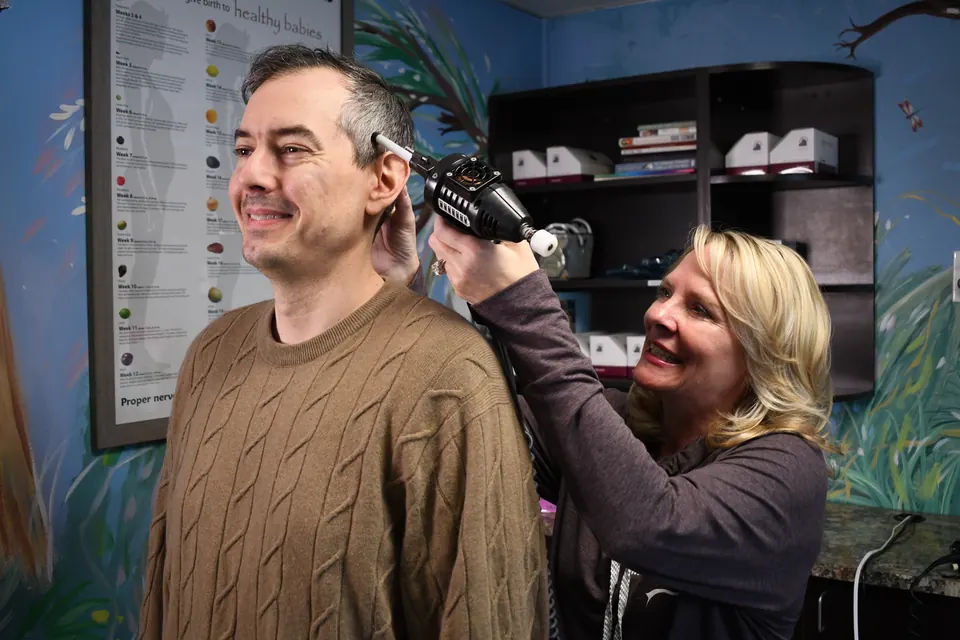
Using Koren Specific Technique (KST) and Talsky Tonal Chiropractic (TTC), our doctors correct the specific misalignments interfering with that nerve supply through light, nervous system focused contacts, no cracking, popping, or forceful manipulation. This makes the approach appropriate for patients of every age, from newborns to grandparents.
We hear it often: a child who used to dread the bathroom stops fighting it, sometimes within hours of an adjustment. Parents describe kids finally having a comfortable, complete bowel movement after months of hard, painful ones, and staying regular as care continues. Adults tend to notice the same pattern: movements that are more frequent, softer, and easier, along with less bloating and a general sense that digestion has caught up with the rest of them.
Take the First Step You do not have to keep cycling through laxatives and dietary changes that only work for a while. Our doctors see patients of all ages in Royal Oak, including Saturdays.
Book OnlineThe muscles that push stool through your intestine are controlled by ganglion cells connected to the celiac ganglion, which links back to nerve roots in your lower thoracic and upper lumbar spine. A misalignment in this area can interfere with that signal and slow digestion down, even when diet and hydration are not the problem.
It varies by person, but many parents tell us their child had a comfortable bowel movement within hours of their first adjustment. Our doctors complete a thorough history, consultation, and INSiGHT scans first, so care reflects the actual cause of your constipation rather than a guess, and we track progress from there.
Yes. Our doctors use light, nervous system focused contacts with no cracking, twisting, or forceful movement, an approach that is gentle enough for a newborn and adaptable enough for a teenager or adult. Many parents tell us they wish they had brought their child in sooner.
Many families find that chiropractic care works well alongside what your pediatrician has already suggested. Our doctors are glad to work as part of your child's care team while we address the nerve interference that may be driving the constipation in the first place.
That is one of the most common stories we hear. Laxatives and dietary changes often help temporarily because they do not address why the intestine stopped moving well in the first place. Once we correct the nerve interference at its source, many patients find the improvement finally holds.
Diet changes, probiotics, and stool softeners can only do so much when constipation is really about the nervous system's communication with the gut.
The stool softener worked, until it didn't. Here is what the different types of kids' laxatives are actually doing, why the same dose can stop being enough, and what they were never built to reach.
You've tried the diet changes, the medications, the specialists, and the stomach issues are still here. When the standard approach plateaus, it's worth looking at what's actually running digestion in the first place.
Our doctors put together a full article on constipation that explains what's really behind it and what lasting relief looks like. Get instant access below.

