
You got the imaging results and heard the word stenosis. The doctor pointed at the narrowing on the screen and explained how the canal is closing in on the nerves. Maybe injections came up next, or physical therapy, or medication that helped for a little while before wearing off. Somewhere in that conversation, the message you walked away with was probably some version of "this is what it is now, learn to manage it."
Meanwhile your world has been getting a little smaller. Shorter walks. More sitting. Activities you used to do without a second thought, cut short or given up entirely. If that sounds familiar, there's something worth knowing that doesn't always come up in that first conversation: the narrowing on your scan and how much it actually limits your day are not the same thing.
Same Scan, Very Different Days
Two people can have nearly identical imaging and live completely different lives. One can barely make it a block before their leg gives out. The other is still hiking on weekends. The difference usually comes down to how the tissue and nervous system around that narrowed canal are functioning, not the structure itself. Spinal stenosis is the narrowing of the spinal canal that crowds the spinal cord and nerve roots, and we can't widen that canal. What we can influence is everything happening around it, which turns out to matter a great deal.
How Stenosis Actually Shows Up
The most familiar pattern is neurogenic claudication, pain, heaviness, or weakness in the legs that builds while walking or standing and eases when you sit down or lean forward. Some people notice pain radiating down the legs when the narrowing is in the low back, or into the arms and hands when it's in the neck, along with numbness, tingling, or a slow weakening of the affected limb. Stiffness is common too, often worse first thing in the morning, and cervical stenosis can bring balance problems into the picture as pressure builds on the spinal cord itself.
What's Adding To The Narrowing That Never Shows Up On A Scan
Picture your nervous system running on a gas pedal and a brake pedal. The gas pedal is the stress response that keeps muscles and ligaments braced and ready. The brake pedal is what lets them release once the threat has passed. When the gas pedal gets stuck on, the muscles and ligaments surrounding the spine stay in a state of chronic elevated tension, and that tension takes up space, the exact space your nerves need.
The ligamentum flavum, a ligament that sits directly behind the spinal canal, is a good example of how much this matters. Under mechanical load, that single ligament can fill a large share of the available canal space, and research on tissue under chronic spinal stress shows it can thicken well beyond its normal size over time. That's not the bony canal narrowing further. That's the surrounding tissue adding compression on top of the structural finding you saw on your scan. Restricted spinal segments also reduce the movement-based signals your brain relies on to stay organized, which can open the door for pain signals to dominate even more.
Why Relief From Injections And Medication Doesn't Always Hold
Anti-inflammatories reduce swelling for a while. Epidural injections numb the nerve root for weeks or months. Physical therapy strengthens the muscles around the area when you're able to tolerate it. All of these have real value, and plenty of people get meaningful relief from them. But if the surrounding tissue is still being held tight by a nervous system stuck in that gas-pedal pattern, the underlying tension doesn't actually change. The muscles keep bracing. The ligament stays thickened. When the injection wears off or the therapy series ends, the symptoms tend to come back, because the approach addressed the pain without addressing what was maintaining the compression around it.
Our Approach At Van Every
We start with a thorough evaluation of your spinal alignment, range of motion, neurological function, and walking ability, along with an INSiGHT scan to objectively assess your nervous system and see where stress and tension are held from years of spinal changes and compensation. We also review any imaging you already have and coordinate with your medical team when additional studies are needed.
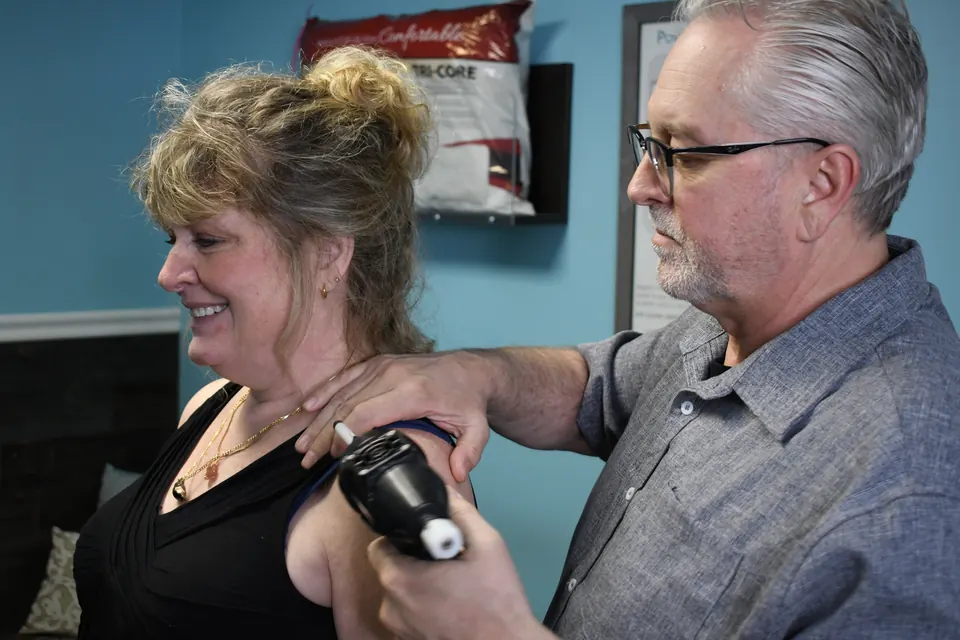
From there, our doctors use Koren Specific Technique and Talsky Tonal Chiropractic, light, nervous system-focused contacts with no cracking, popping, or forceful manipulation, since forceful adjustments simply aren't appropriate for a narrowed canal. KST uses a handheld instrument to deliver gentle, precise input and can be performed sitting or standing, the positions that actually provoke your symptoms, so the correction can address the pattern as it presents during real activity. TTC is hands-on and works with your body's own tone to help release the surrounding tension without adding any compressive force. Neither technique is trying to force anything open. The goal is to help your body use the space that's already there as well as it possibly can.
What Patients Often Notice
Walking farther before symptoms appear is usually the first thing people mention, sometimes going two blocks where they could barely manage one before. Numbness, tingling, and leg weakness often ease as the surrounding tension releases, and balance and confidence on uneven ground tend to improve alongside it. Many patients tell us sleep improves fairly early in the process, along with a general sense that they have more energy for the things they'd quietly stopped doing. Since stenosis is a chronic condition, we build a long-term plan rather than a short course of care, and a lot of our patients settle into a maintenance schedule of just a visit or two per month once things stabilize.
Supporting Progress Between Visits
A few habits tend to make a real difference alongside care:
- Leaning forward slightly or using a cart when walking longer distances, since forward flexion opens the canal a bit
- Building in regular, gentle movement rather than long stretches of sitting
- Paying attention to which activities shorten your walking tolerance and mentioning the pattern at your next visit
- Wearing supportive footwear for balance, especially on uneven ground
- Tracking how far you can walk comfortably over time, since that number tends to move before pain fully resolves
Getting A Clearer Picture
Spinal stenosis is widely recognized as the leading reason adults over 65 undergo spine surgery, but most cases can be managed conservatively, and surgery is typically reserved for severe or progressive symptoms. One estimate suggests that up to 35 percent of the functional limitation people feel with stenosis comes from tension in the tissue surrounding the canal rather than the bony narrowing alone, and that part responds to care in a way the structural finding on its own wouldn't predict. You can learn more on our spinal stenosis page, or get the full picture in our free guide. When you're ready, book online with our doctors in Royal Oak, or call us at (248) 616-0900.
