
Sunday evenings have become their own kind of dread in your house. Stomachaches that show up like clockwork on school mornings and mysteriously disappear by Saturday. Tears, pleading, or a full meltdown at drop-off that leaves you both rattled before the day has even started. This is not defiance, and it is not your child being dramatic. School refusal is a genuine nervous system response, and understanding it changes how you can help.
What School Refusal Actually Is
School refusal describes a child's ongoing struggle to get through a school day, showing up as real emotional and physical distress rather than a simple choice not to go. It is estimated to affect somewhere between two and five percent of school age children, and it looks different from truancy in one key way: kids dealing with school refusal usually want to go to school and like their friends and teachers. Their body simply will not cooperate when the moment arrives.
How It Tends to Show Up
- Physical complaints like stomach aches, headaches, nausea, or dizziness, especially Sunday evenings and school mornings
- Crying, panic, or meltdowns that escalate quickly around drop-off time
- Frequent trips to the school nurse, or begging to come home once there
- Trouble falling asleep on school nights, nightmares, or waking up already unrested
- Pulling back from friendships or activities your child used to enjoy
These symptoms tend to cluster around school specifically and ease up once the pressure of attending has passed for the day, which is one of the clues that distinguishes it from a broader medical issue.
What Is Driving It Underneath
Conventional explanations point to separation anxiety, social anxiety, academic pressure, bullying, or a recent life transition, and all of those are real and worth exploring directly. Underneath many of them sits a nervous system that has trouble telling the difference between a genuinely safe classroom and a genuinely threatening situation. The autonomic nervous system runs on a sympathetic gas pedal for alertness and a parasympathetic brake pedal for calm, driven largely by the vagus nerve. When the brake pedal is not engaging well, the body can respond to an ordinary school morning with the same physical alarm it would use for real danger, complete with a racing heart, stomach upset, and a flood of stress hormones your child has no control over.
Where This Pattern Often Starts
Many families who deal with school refusal can trace a thread of earlier nervous system sensitivity: a stressful pregnancy, a difficult birth involving forceps, vacuum extraction, or a long labor, colic or reflux as an infant, chronic ear infections, or a baseline of anxiety that showed up well before kindergarten. None of this is anyone's fault. It simply means the nervous system has been managing a heavier load for longer than school alone would explain, and school becomes the place where that load finally becomes visible to everyone around your child.
How Our Doctors Approach School Refusal
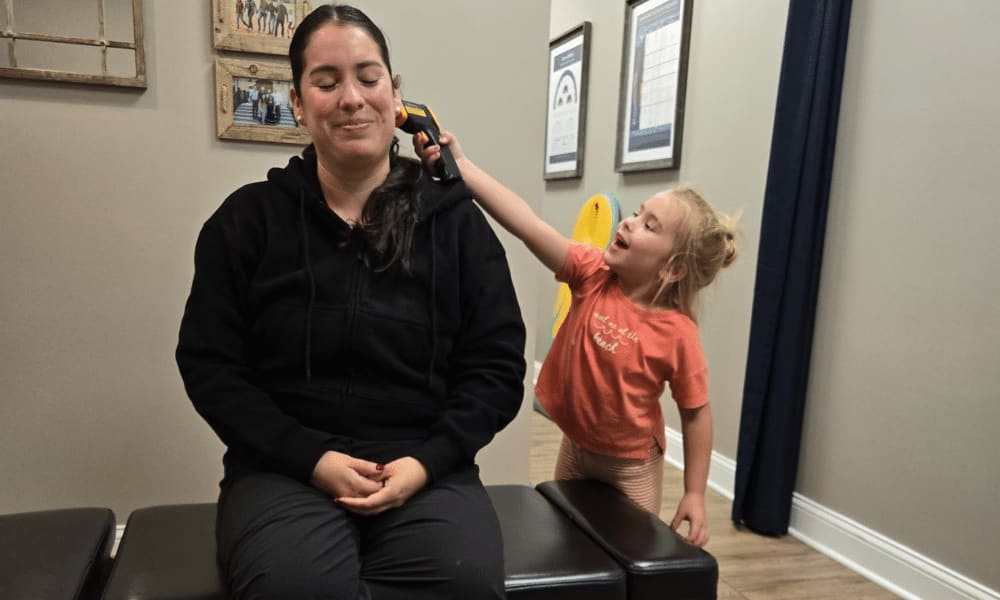
We start by hearing the full picture: when it started, what patterns you have noticed in sleep, digestion, and sensory sensitivity, and any earlier history that stands out. From there, a gentle exam and INSiGHT neurological scanning, including heart rate variability and thermal readings, give us real information about how your child's nervous system is regulating stress. Using Koren Specific Technique (KST) and Talsky Tonal Chiropractic (TTC), our doctors deliver light, nervous system focused adjustments aimed at helping your child's system move out of chronic alarm mode. Families typically notice improvement moving through sleep first, then digestion, then emotional regulation, and finally more tolerance for school itself, roughly in that order.
What Helps at Home in the Meantime
Validate that the distress is real rather than manipulative, since it genuinely is. Keep a simple log of sleep, digestion, and sensory patterns alongside school mornings to spot trends. Stay in communication with the school rather than avoiding the topic. Avoid punishment based responses to the physical symptoms, since punishing a stomachache does not make it go away. And know that forcing attendance without addressing what is underneath it usually makes the pattern worse, not better, over time.
How Long This Usually Takes
Parents understandably want a timeline, and it genuinely varies. School refusal that emerges suddenly around a specific event, like a change of teacher or a frightening incident, tends to resolve faster with the right combination of support at home, at school, and for the nervous system itself. Patterns that have been building for a longer stretch, especially ones layered on top of an anxious temperament your child has had since infancy, tend to take steadier, more patient care to unwind. What tends to hold true across both is that pushing harder on attendance alone, without addressing the underlying stress response, rarely speeds things up and often backfires. Most families notice a gradual shift rather than a single turning point, with easier mornings, then shorter meltdowns, then eventually a child who can walk into the building without the same daily dread.
Where to Go From Here
If school mornings have turned into a daily struggle, it is worth looking at what your child's nervous system is carrying rather than only managing the mornings themselves. Learn more about how we support anxiety in children, or get our free guide on the nervous system pattern behind it. Our doctors in Royal Oak are glad to talk through what you are seeing. Book a consultation online, or call us at (248) 616-0900.