
Most of what gets written about autism assumes a certain kind of child. One who can eventually live independently, hold a job, manage their own routines with enough support. If you are raising a child who needs help with every basic task of daily living, who cannot be left alone for even a few minutes, who is nonverbal or has only a handful of words, that version of the conversation was not written for your family. Profound autism describes a different reality, and it deserves its own honest conversation.
What Profound Autism Actually Means
Profound autism is the term used for the group of children carrying the heaviest support needs on the spectrum, generally defined by an IQ below 50 and being nonverbal or able to say only a few words. These children typically need hands-on help with dressing, bathing, eating, and using the bathroom, and they often cannot be left unsupervised because of real safety concerns, including wandering and self-injurious behavior.
This describes roughly one in four children who carry an autism diagnosis, though it rarely gets discussed with that kind of specificity in everyday conversation. Separating out this group matters because lumping every autism presentation into one broad category tends to leave the families with the most significant needs feeling unseen in the research, in school planning, and in general public conversation.
What Daily Life Often Looks Like
- Communication that may be entirely nonverbal, or limited to gestures, picture boards, or a communication device
- Significant intellectual differences that mean learning happens through very different approaches than typical instruction
- Self-injurious behaviors like head-banging or biting, which are usually the only way an overwhelmed nervous system has to express distress
- Intense sensory reactions, either overwhelmed by ordinary input or actively seeking out extra input through rocking, spinning, or mouthing objects
- Seizures, which occur at meaningfully higher rates in this group than in milder forms of autism
- A need for structured routines, where even small unplanned changes can trigger real distress
None of these behaviors are willful or defiant. They are usually the clearest signal available from a nervous system that is overwhelmed and does not have another way to communicate that. For a parent, learning to read these signals as communication rather than misbehavior is often one of the harder, and more important, shifts along the way.
What Actually Contributes to This Pattern
Genetics play a real role, and researchers have identified over a hundred genes connected to autism risk involving brain development. But genetics alone do not fully explain why some children end up at this end of the spectrum. Birth-related factors, including a difficult delivery, being born preterm, or a low birth weight, show up more often in children with profound autism than in milder presentations. These are physical, environmental stressors acting on a developing nervous system during an especially sensitive window, not random chance.
Why the Nervous System Deserves a Place in This Conversation
Underneath the behaviors, many children with profound autism show a nervous system stuck heavily in a stress response, with the calming, regulating side of the nervous system barely able to engage. That imbalance affects far more than mood. It touches digestion, sleep, sensory processing, and the ability to take in and use new information, all at the same time.
Conventional care, including Applied Behavior Analysis, speech therapy, occupational therapy, and medication for specific symptoms, has real value and helps many children build skills. But this approach mostly addresses what a child is doing rather than why their nervous system is responding the way it is. For some families, progress plateaus not because the therapies are wrong, but because the nervous system underneath was never given direct support of its own.
How Our Doctors Approach This
Our doctors use INSiGHT neurological scanning, including heart rate variability, muscle tension along the spine, and thermal patterns, to get an objective picture of how a child's nervous system is functioning. This matters enormously for a child who cannot easily tell you how they are feeling. The scans give parents and our doctors real data to work from instead of guesswork.
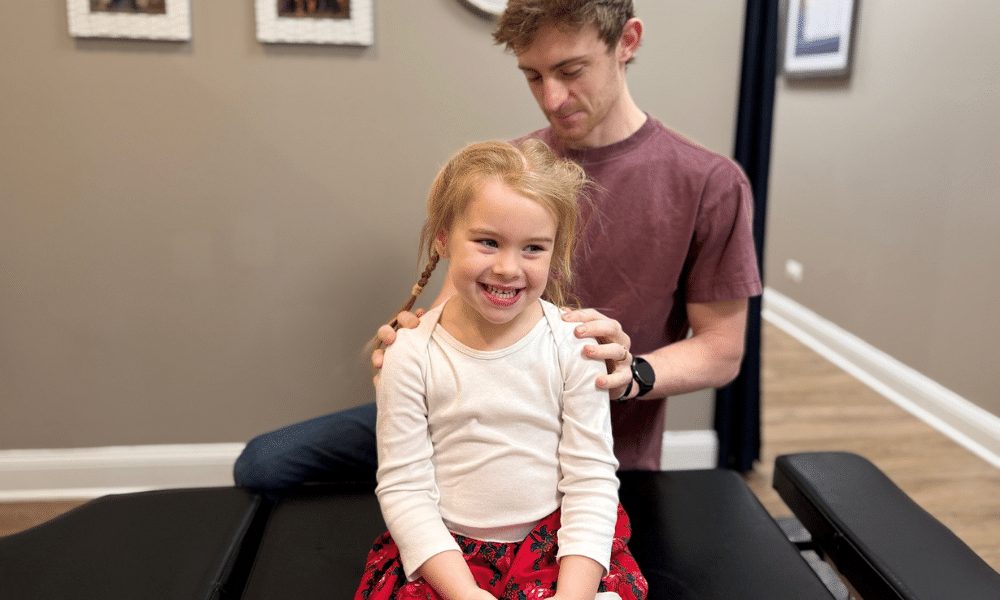
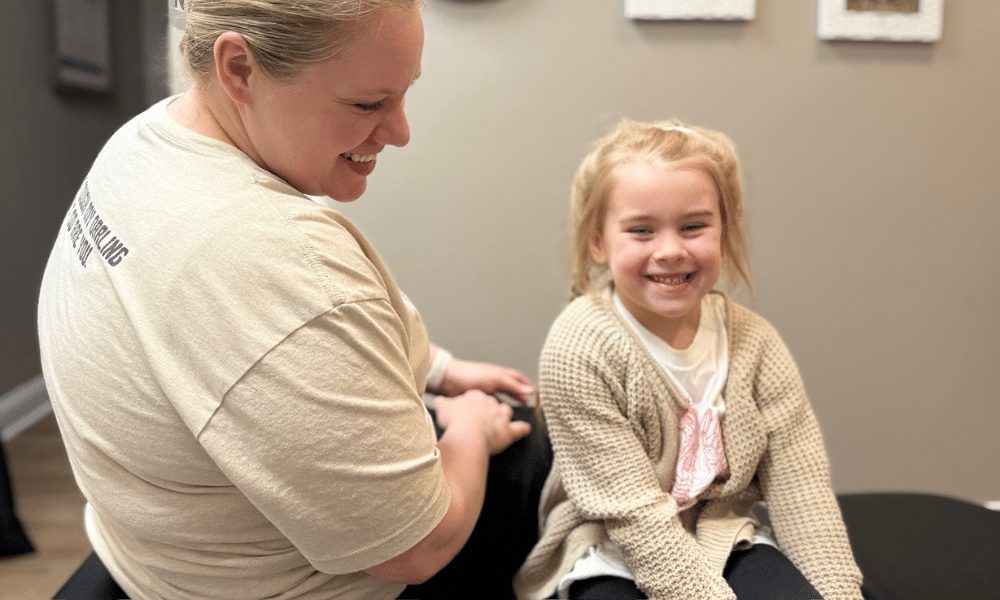
Using Koren Specific Technique and Talsky Tonal Chiropractic, our doctors provide light, nervous-system focused adjustments built specifically for each child's comfort and sensory needs, nothing forceful. The goal is not to change the autism diagnosis itself. It is to ease neurological stress patterns so a child's nervous system has a better chance of shifting out of constant alert mode, which many families find supports better sleep, digestion, and emotional regulation, and can make a child more available for the therapies already underway.
A Few Honest Notes for Parents
Progress with a nervous system that has been under this much stress for this long tends to be gradual, and it is not always a straight line. The therapies that are already helping and this kind of care tend to work best together. Every child's pace is different, and our doctors build the plan around your child rather than a rigid schedule on a calendar.
Where to Go From Here
If you are raising a child with profound autism, you already know the weight of it, the sleepless nights, the constant vigilance, the grief that can sit alongside real love, and you do not need anyone to tell you it is hard. What may help is knowing there is a nervous system piece worth exploring alongside everything else your family is already doing. Read more about our approach to autism, or get our free guide on supporting your child's nervous system. When you are ready, you can book a consultation with our doctors in Royal Oak, or call us at (248) 616-0900.