
Anxiety among teenagers has climbed sharply over the past decade, and most parents already sense it even without the statistics. What is less talked about is how much of that rise connects back to a nervous system that is carrying more input than it was built to process, hours a day hunched over a phone, less outdoor play, disrupted sleep, and a body that spends most of its waking hours looking down.
None of this means screens are the sole cause of teen anxiety. It is rarely one thing. But understanding how technology habits interact with a stressed nervous system gives parents a more useful place to start than simply taking the phone away and hoping that solves it.
What the Numbers Actually Show
Since 2010, rates of significant depression among teen girls and boys have both risen substantially, and college students have reported similarly steep increases in anxiety. These trends line up closely with the years smartphones and social media became a constant presence in daily life, though researchers are careful to note that technology use is one contributing factor among several, not the whole explanation.
What matters most for parents is understanding that no single cause explains this. A teen's nervous system responds to accumulated stress the same way regardless of where that stress comes from, whether it is academic pressure, family stress, social dynamics, or hours of screen exposure. When enough of these stressors stack up, the nervous system can settle into an ongoing state of heightened alert that does not turn off easily, even during downtime.
What Anxiety Looks Like in the Body
Anxiety shows up as more than worried thoughts. Physical signs are just as common and often missed as separate issues, a racing heart, shallow or rapid breathing, trouble concentrating or sleeping, digestive upset, and persistent tension in the neck and shoulders along with frequent headaches. Chronic anxiety can eventually lead to postural changes, ongoing muscle tension, and a pulling away from activities a teen used to enjoy. Many teens get good at hiding this. A kid who seems fine at school and melts down the moment they get home is often a teen who has spent the whole day holding a stress response together, with little left over once they finally feel safe to let it go.
How Screen Time Interacts With All of This
Teens today spend meaningfully less time in unstructured outdoor play and in-person social connection than previous generations, time that plays an important role in emotional development. Researchers who study this shift point to a few overlapping issues, lost opportunities for the kind of social interaction that builds emotional resilience, constant digital connectivity that keeps the nervous system in a low grade state of alert, and pressure to maintain a curated online image that adds its own layer of stress.
There is also a physical piece that gets less attention. Looking down at a phone for hours a day places sustained strain on the neck and upper back. That posture is not just a comfort issue. The upper neck houses nerve pathways connected to the vagus nerve and to how the brainstem communicates with the rest of the body, so sustained tension here can add to the same stress load driving anxiety symptoms in the first place.
The Nervous System Piece Most Conversations Skip
A teen's nervous system runs on two settings, a sympathetic side built for alertness and quick reaction, and a parasympathetic side, driven largely by the vagus nerve, built for calm, digestion, and recovery. In a well regulated teen, these two sides move fluidly back and forth as needed. When stress accumulates faster than the body can process it, whether from academic pressure, social dynamics, screen exposure, or physical tension from posture, the balance can tip toward the alert side staying switched on for longer than it should.
The brain develops from the back and bottom forward, meaning the more primitive, survival focused regions mature before the prefrontal cortex, which handles reasoning and emotional control. Early or ongoing physical stress in the upper neck and brainstem region can interfere with healthy signaling between these areas, making it genuinely harder for a stressed teen to think their way out of anxiety in the moment, no matter how many strategies they have learned.
How We Support a Teen's Nervous System
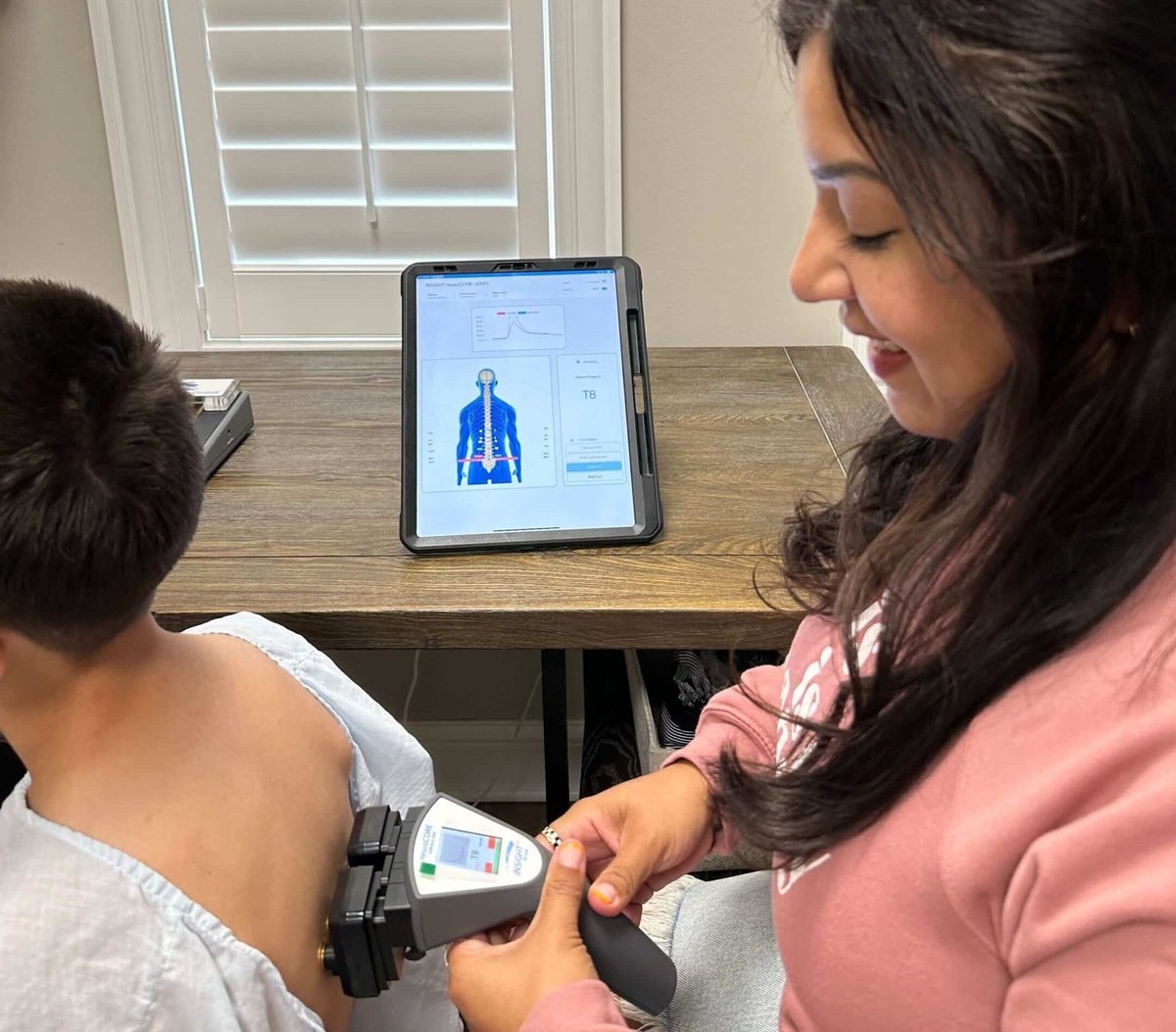
Our doctors start by understanding your teen's full picture, sleep habits, screen use, posture, stress load, and what you are noticing day to day. From there, a gentle exam along with INSiGHT scanning measures heart rate variability, muscle tension patterns, and thermal patterns to show us objectively how your teen's nervous system is regulating.
Using Koren Specific Technique and Talsky Tonal Chiropractic, our doctors work with light, nervous system focused contacts, especially in the upper neck and shoulders where screen posture places so much strain, to ease tension and support the vagus nerve's ability to bring the body back to calm. Nervous system care works well alongside therapy, counseling, and the other supports your teen may already have in place.
Building Better Habits at Home
- Set consistent screen free windows, especially the hour before bed, since blue light and stimulation both interfere with winding down
- Encourage regular movement and time outdoors, which genuinely helps regulate a stressed nervous system
- Protect a consistent sleep schedule, even on weekends
- Watch posture during homework and screen time, and build in breaks to look up and move
- Keep communication open without over-focusing on the anxiety itself, which can sometimes reinforce it
Where to Go From Here
If your teen seems stuck in a cycle of worry, exhaustion, and screen habits that are hard to break, our doctors in Royal Oak would love to help. Learn more about our approach to chiropractic care for teens, which often overlaps with anxiety in kids and teens and text neck from device use. Download our free guide for students, or book a consultation online. You can also call us at (248) 616-0900.