You brought up your concerns years ago. The eye contact that never quite landed, the meltdowns over things other kids barely noticed, the sensory sensitivities you chalked up to a strong-willed personality. Someone told you development varies, or to give it more time. Now your teen is in middle or high school, and what used to be manageable has turned into shutdowns, intensified anxiety, and rigid reactions to any change in plans. This is not typical teenage moodiness, and you know it.
Here is something worth sitting with: autism does not begin in adolescence. Those neurological differences were very likely there all along. What changes in the teen years is the load, and the coping strategies your child once used to keep up stop being enough.
The Four Areas Evaluators Look At
Autism Spectrum Disorder involves differences across four connected areas. Social communication, where conversation flow, literal interpretation of language, and missed sarcasm or implied meaning show up. Social interaction, where reading facial expressions, eye contact, and the unspoken rules of friendship feel like learning a foreign language. Restricted interests and repeated behaviors, an interest pursued with unusual intensity, routines that cannot flex, or repeated movements like rocking or hand-flapping. And sensory processing differences, where ordinary input, fluorescent lighting, a noisy cafeteria, can feel overwhelming, or certain sensations barely register at all.
According to the CDC, roughly one in thirty-one children carries an autism diagnosis today, and that number keeps rising. Boys are still diagnosed more often than girls, but that gap has been narrowing as more clinicians catch on to how well girls tend to hide their signs compared to boys.
Why Some Teens Fly Under the Radar for Years
Masking is the term for what many teens, girls especially, do to blend in: watching peers and copying their behavior, memorizing social scripts, forcing eye contact, suppressing stimming in public. It is exhausting, constant work, and it can hold up reasonably well in the early grades, back when social rules were still simple.
Middle school changes the math. Social hierarchies get more complex, academic demands rise, and transitions happen constantly. High school adds pressure to act independent and to manage friendships and dating without a script to follow. A nervous system that was already working overtime to compensate can only keep that up for so long before it runs out of runway.
What Is Actually Happening Underneath the Behavior
Masking requires the sympathetic nervous system, the body's gas pedal, to run at full throttle nearly all day. In teens with autism, that gas pedal often stays pressed down while the parasympathetic brake barely engages, keeping the body revved up in a way that makes sensory processing, emotional regulation, and social interaction all harder than they should be. What looks like symptoms suddenly appearing is often a nervous system that has simply run out of capacity to keep masking.
Beyond the behavioral checklist, teens with autism frequently show physical patterns that evaluations do not typically ask about: chronic digestive trouble, sleep disturbances going back to infancy, getting sick often despite normal labs, coordination challenges, and trouble regulating body temperature. These are not separate issues. They tend to reflect the same underlying nervous system pattern driving the social and behavioral struggles.
Signs Parents Often Recognize in Hindsight
- Colic and sleep struggles in infancy that, looking back, were an early sign of a nervous system working hard to regulate.
- Chronic ear infections or frequent illness in early childhood.
- Sensory sensitivities that got labeled as preferences.
- Delayed motor milestones that seemed minor at the time.
- Being described as sensitive or shy when something deeper was going on.
If your instincts told you something was off years before anyone else took it seriously, that instinct was very likely right. Parents are often the first ones to notice these threads long before a formal evaluation ever ties them together, and that early noticing matters, even when nobody else was ready to hear it yet.
What a Formal Evaluation Involves
A professional autism evaluation typically spans several appointments over a few weeks: an extensive developmental history interview, a structured observation of your teen in specific activities, a detailed parent interview covering language and social development from early childhood forward, and sometimes additional testing for anxiety, depression, or ADHD. What that evaluation documents well is behavior. What it is not designed to measure is autonomic nervous system balance, vagus nerve function, or how adaptable your teen's nervous system actually is, the neurological layer underneath the behavior it describes.
Where Nervous System Care Fits
Our doctors are not able to diagnose autism, and a formal diagnosis belongs with a psychologist or developmental pediatrician. What we look at is different: whether nervous system interference, sometimes called subluxation, is disrupting how clearly your teen's brain and body communicate. Using a gentle exam and INSiGHT neurological scanning, thermal, heart rate variability, and sEMG, we get objective information about autonomic balance rather than relying only on observation.
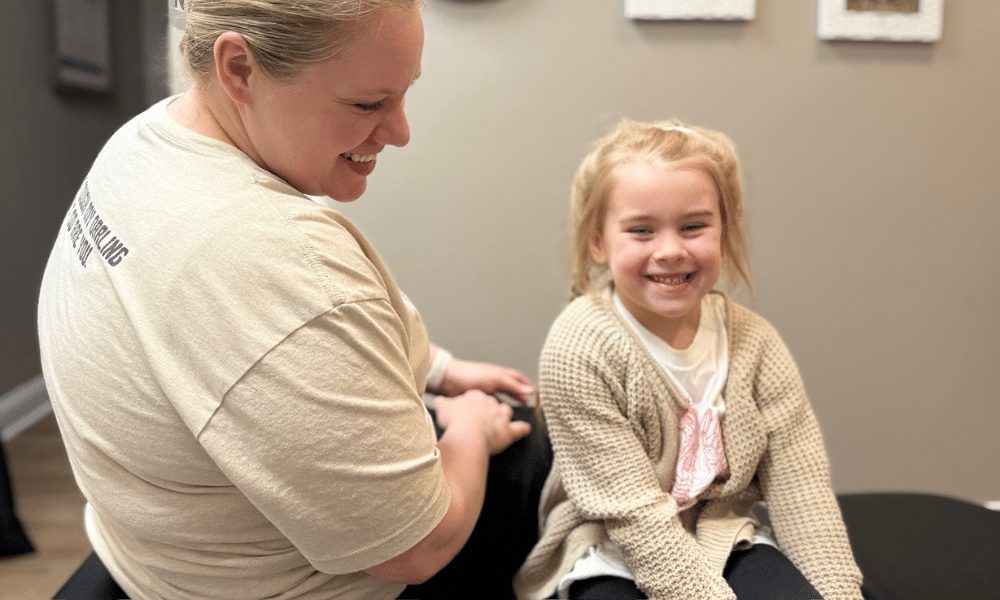
From there, using Koren Specific Technique (KST) and Talsky Tonal Chiropractic (TTC), light, nervous system focused contacts with no cracking or twisting, our doctors work to support the nervous system foundation underneath whatever else your teen's care team is already doing, speech therapy, occupational therapy, behavioral support, school accommodations. The goal is a nervous system with more room to actually use the skills those approaches are teaching.
Where to Go From Here
A late diagnosis does not mean you missed something as a parent. It usually means your teen was working incredibly hard to keep up, right up until they could not any more. You can read more about how we support autism and neurodevelopmental care, or get our free guide on the nervous system side of autism. When you are ready, book a consultation with our doctors in Royal Oak, or call us at (248) 616-0900.