POTS Chiropractor in Royal Oak: Audrey's Story
Audrey lived with POTS and dizziness every day. Here is her story and the brainstem tension we look for at our Royal Oak chiropractic office.
A clearer look at the nervous system behind the symptoms
You stand up and your heart takes off. You feel dizzy, foggy, exhausted, too hot or too cold, and your body cannot seem to settle. If you have been told it is just anxiety, we want you to hear this first: what you are feeling is real.
POTS, or Postural Orthostatic Tachycardia Syndrome, is one form of dysautonomia. Dysautonomia means the autonomic nervous system, the system that automatically coordinates heart rate, blood pressure, digestion, temperature, sleep, and energy, is not regulating smoothly. That is why POTS can feel like many separate problems even though the same system connects them.
Postural and orthostatic refer to changing position and being upright. Tachycardia means a racing heart. Syndrome means a group of symptoms that show up together. The clinical criteria include a sustained heart-rate increase of at least 30 beats per minute for adults, or 40 beats per minute for adolescents, within 10 minutes of standing, without a significant drop in blood pressure. Symptoms must be present for at least three months, and other causes such as dehydration, anemia, thyroid conditions, or medication effects need to be considered.
A medical team may use a tilt-table test or a standing test while tracking heart rate and blood pressure. That evaluation matters because POTS can overlap with other conditions and because each person's pattern can look different.
The racing heart is not the whole story. It is the body trying to cover for a regulation system that is struggling to keep up.
Every time you stand, gravity pulls blood toward your legs and abdomen. Pressure sensors send that information to the brainstem. In response, blood vessels tighten and the heart speeds up slightly so blood keeps reaching the heart and brain. Most people never notice this automatic handoff.
With POTS, the handoff is less efficient. Blood can stay pooled lower in the body, so the nervous system sounds an alarm and the heart races to compensate. Reduced blood flow toward the brain can contribute to dizziness, brain fog, vision changes, headache, and fatigue. The adrenaline response can bring shakiness, sweating, a pounding heart, a tight chest, and the wired feeling that is sometimes mistaken for anxiety.
Heart rate, blood pressure, digestion, temperature, sleep, energy, and focus are all coordinated by the autonomic nervous system. We often explain its two branches as a gas pedal and a brake pedal. The sympathetic branch is the gas pedal, helping you respond to demand. The parasympathetic branch is the brake, helping you rest, digest, recover, and return to baseline.
A healthy system moves between both sides throughout the day. With POTS, it can feel as if the gas pedal is pinned down and the fuel tank is running low. A simple change in position becomes enough demand to trigger an oversized alarm response.
POTS can begin after a virus, concussion, surgery, pregnancy, or an intense season of stress. Yet many people go through those experiences without developing POTS. In our office, that leads to a deeper question: what was your nervous system already carrying before the symptoms became obvious?
The body can increase tension when it is overwhelmed by physical, chemical, or emotional stress. That protective response is useful in the moment. Sometimes the original event passes while the nervous system continues to hold the pattern. One experience can layer over another until the body has less room to adapt. We call this the stress bucket. The event that seemed to start POTS may be the last layer that filled an already crowded bucket, rather than the whole story by itself.
The brain and spinal cord sit within a connected system of tissues anchored near the skull and at the base of the spine. We sometimes compare it to guitar strings: tension in one area changes the pull through the whole system, and muscles and posture organize around it.
Your brain also relies on information from the joints and tissues of the spine, especially the neck, to understand where your body is and how upright you are. That information is part of the conversation the nervous system uses when coordinating blood vessels and heart rate after you stand. Our assessment looks at where the body is bracing and how adaptable the nervous system appears, rather than assuming every person with POTS has the same pattern.
POTS often overlaps with hypermobility and hypermobile Ehlers-Danlos syndrome. When joints and connective tissues are looser, the nervous system may recruit more muscular bracing to create stability. That extra work can add to the overall load the body is carrying.
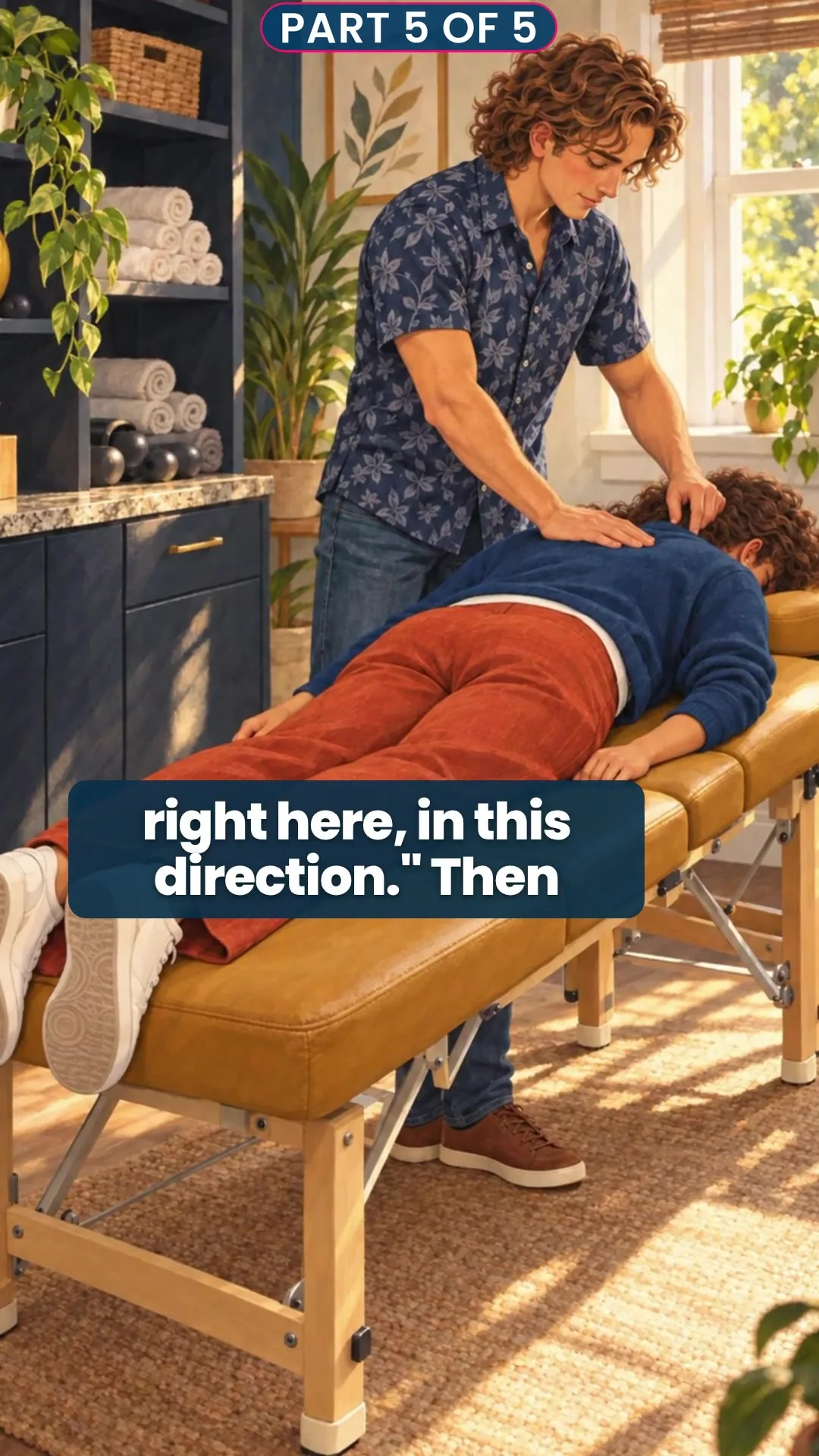
For someone who is hypermobile, force is not the goal. Our doctors use gentle contacts and adapt positioning to the person in front of us. Care can be provided lying down, without sudden movements, cracking, popping, or twisting.
We use INSiGHT scans to build an objective picture of nervous system function. The scans are non-invasive and non-radiating. Heart rate variability, or HRV, helps us look at autonomic adaptability, reserve, and whether the system is leaning toward the gas pedal, the brake pedal, or a more flexible middle range. Thermography maps temperature patterns along the spine. Surface EMG maps how muscular tension is distributed.
Each scan answers a different question. Together with your history, they help our doctors understand the pattern you are carrying and give us measurements to revisit during care.
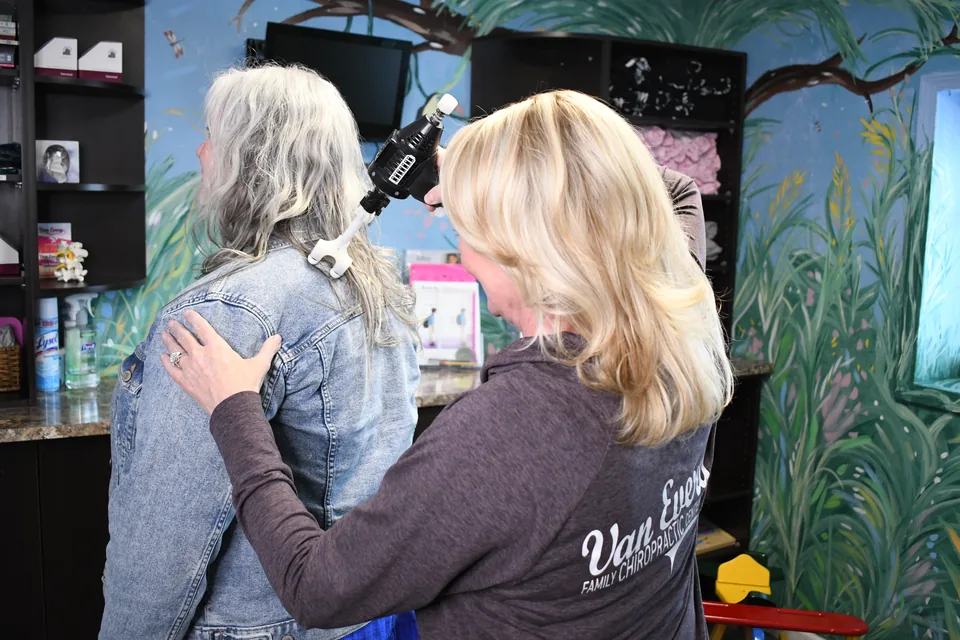
Using Koren Specific Technique and Talsky Tonal Chiropractic, our doctors use precise, gentle contacts. The intention is to give the nervous system clear input where the body is ready to respond, without forcing the spine through a range of motion.
POTS can make position changes and stimulation difficult. We can adjust you lying down, avoid sudden movements, and adapt each visit to how you are doing that day. We are also glad to communicate with your cardiologist, neurologist, or other specialists when coordinated care would be helpful.
Visit one is for your story and your measurements. We take a detailed history, talk through the experiences that may be filling your stress bucket, and complete INSiGHT scanning with HRV, thermography, and surface EMG. There is no adjustment on the first visit.
At visit two, your doctor walks you through the Report of Findings, connects the scan patterns with your history, and explains a care plan built for you or your child. You will then have the opportunity for the first gentle adjustment.
We listen for changes in the things that shape daily life: how your body responds when you stand, how quickly your heart rate settles, energy, sleep, digestion, temperature regulation, and tolerance for ordinary activity. Your experience matters, and it is considered alongside the objective scan findings.
Progress is not always a straight line. We rescan at planned points so you and your doctors can compare HRV, thermography, and surface EMG patterns with where you started. That gives the conversation something more useful than guesswork alone.
Your body is not broken. It has been working hard to protect you. Our doctors can help you look at the pattern it is holding and what gentle, paced care could look like. Call or text us at 248-616-0900 with questions before you book.
Book OnlineNo. POTS is an autonomic nervous system condition. Its adrenaline surges, racing heart, shakiness, sweating, and tight-chest sensations can feel similar to a panic response, which is one reason people are sometimes told their symptoms are anxiety. Anxiety can also develop around the disruption and uncertainty of living with POTS.
Our doctors see people with POTS, neurocardiogenic syncope, orthostatic hypotension, inappropriate sinus tachycardia, autonomic neuropathy, post-viral dysautonomia including long COVID, EDS-related dysautonomia, and mast cell activation-related dysautonomia. Each person is assessed individually.
Heart rate variability helps us look at autonomic adaptability and reserve. Thermography maps temperature patterns along the spine. Surface EMG maps the distribution of muscular tension. The scans are non-invasive and non-radiating, and our doctors use them alongside your history rather than as a standalone diagnosis.
Tell us what positions and transitions are difficult for you. Our doctors can complete parts of the visit and provide care with you lying down, avoid sudden movements, allow extra time for position changes, and adjust the pace based on how you are doing that day.
No. Visit one includes a detailed history and INSiGHT scans. Visit two is the Report of Findings, when your doctor explains the scan patterns and recommended care plan. You will have the opportunity for the first gentle adjustment at that second visit.
Yes. Our doctors are glad to communicate with your cardiologist, neurologist, or other specialists when coordinated care would be helpful.
Our doctors put together a full article on pots & dysautonomia that explains what's really behind it and what lasting relief looks like. Get instant access below.
Audrey lived with POTS and dizziness every day. Here is her story and the brainstem tension we look for at our Royal Oak chiropractic office.
What gentle chiropractic care for POTS looks like at our Royal Oak office: no cracking, no popping, no twisting, and a first visit that starts with your whole story.
Every POTS criterion fits a body in protection mode. Here is how we measure the nervous system at Van Every Family Chiropractic Center in Royal Oak, with no radiation.
See what Royal Oak families say in our Google reviews and patient stories, or browse everything we offer.