
You take something for it. The pain fades for a few hours. Then it's back, right on schedule, and you're digging through your bag for the bottle again. Maybe you've cut out wine, tracked the weather, given up your afternoon coffee, and none of it made a lasting difference. At some point you probably stopped asking why this keeps happening and just started planning around it.
That's a reasonable thing to do when nobody has explained what's actually driving the pattern. Most people who come into our office with headaches or migraines have already tried the obvious things. They've seen a doctor, taken the medication, kept the journal of triggers. What they haven't had is someone look at the neck.
Here's the piece that tends to get left out: a large share of headaches aren't caused by disease at all. They're caused by dysfunction, in the neck, the surrounding muscles, and the nervous system that runs through that area. Your upper cervical spine sits right next to the brainstem, where nerve pathways and blood flow to the head come together. When tension builds up at that level, it doesn't stay contained. It sends stress signals upward, and a headache is often how your body tells you something in that area needs attention.
What Headaches Look Like in Our Office
Headache pain rarely shows up the same way twice, and the pattern usually tells us something. A tight band circling the head with a dull, constant ache often points to tension building in the neck and shoulders. A migraine tends to throb on one side and can bring nausea, light sensitivity, or visual disturbances before the pain even starts. Some people have pain that begins at the base of the skull and radiates up and around, worse with certain neck movements, which is often cervicogenic, meaning it starts in the joints of the neck rather than the head itself. Others have headaches on fifteen or more days a month that have stopped responding to anything they've tried. Whatever your pattern looks like, it tells our doctors something about where to start looking.
Why the Usual Approach Only Goes So Far
Medication, trigger avoidance, and a dark quiet room all have a place. They also tend to work on the alarm rather than what's setting it off. Cutting caffeine or wine, tracking the weather, avoiding certain foods, these address the last straw, not the pile underneath it. That's part of why the relief is often temporary: you remove one trigger and the nervous system finds another way to reach its threshold.
Frequent use of over-the-counter pain relievers can even add a layer of its own, sometimes called rebound headaches, on top of the original pattern. None of this means medication is wrong to use. It means it's rarely the whole answer, and most people already sense that from experience, even before anyone explains why.
The Nervous System Piece Most Evaluations Miss
Picture your nervous system like a car with two pedals. The sympathetic branch is the gas pedal, the part that handles stress and alertness. The parasympathetic branch, largely run through the vagus nerve, is the brake, the part responsible for calm and recovery. In people with chronic headaches, the gas pedal tends to stay pressed down and the brake doesn't engage the way it should. After enough headache episodes, the nervous system can lower its own threshold, so smaller and smaller things are enough to set one off.
The wine, the weather, the stressful meeting, those aren't really causing the migraine. They're the final straw on a system that's already stretched thin. When that system gets some room to settle, the same triggers often stop carrying the same weight.
How Care Works at Van Every
We start by getting an objective look at what your nervous system is actually doing, not just where you feel pain. Our INSiGHT scans measure three things: a thermal scan that shows where tension is sitting along the spine, a heart rate variability reading that tells us how well the gas pedal and brake pedal are balancing each other, and a surface EMG scan that reads tension and energy patterns in the muscles along the spine. We walk through the findings with you in a report before any hands-on care begins.
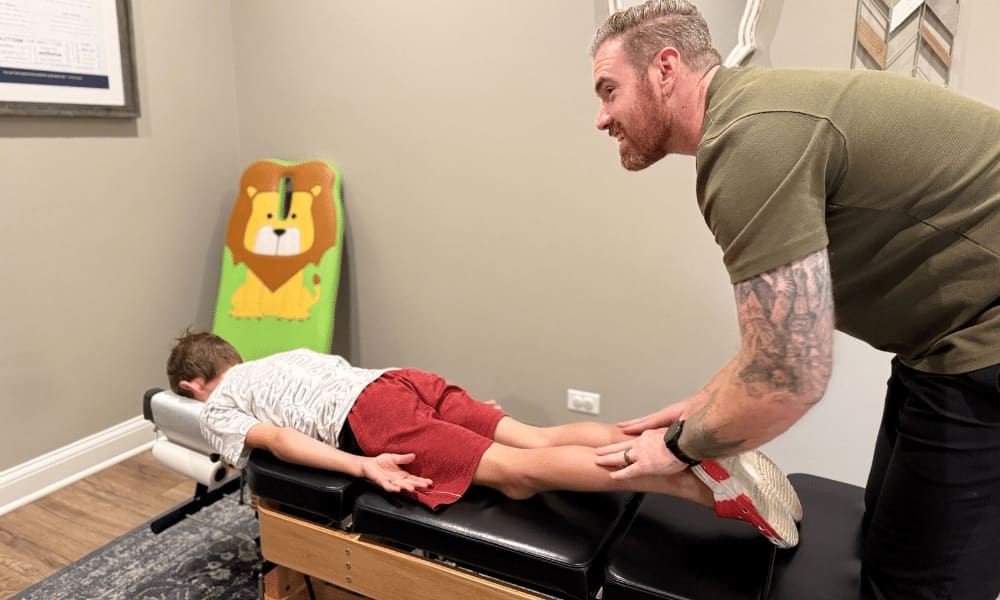
From there, our doctors use Koren Specific Technique (KST) and Talsky Tonal Chiropractic (TTC), giving specific attention to the upper cervical spine, which sits closest to the brainstem. These are light, nervous system-focused adjustments, no cracking, popping, or twisting, and we can work with you seated, standing, or in whatever position is comfortable. If you come in during an active migraine, we'll turn the lights down and keep things quiet while we work. You don't need to wait for the pain to pass to get help.
What Patients Often Notice
Many patients notice fewer headaches over the first few weeks of care, and the ones that do occur tend to be shorter and less intense. As the trigger threshold rises, things that used to reliably set off a headache, stress, a change in weather, a long day of screen time, often stop having the same effect. It's common for people to notice they're sleeping more deeply and thinking more clearly too, since the same nervous system pattern behind the headaches tends to affect sleep and focus as well. We hear a version of the same sentence often from people who've dealt with this for years: they wonder why they waited so long to have someone look at the neck.
A Few Things Worth Tracking at Home
Alongside care, a handful of habits tend to support the same goal, giving your nervous system less to react to.
- Notice where you're holding tension by the end of the day, especially at the base of the skull and across the shoulders
- Keep screens at eye level rather than looking down for long stretches
- Track headache frequency and intensity, not just what you ate that day, so patterns are easier to see over weeks
- Protect a consistent sleep schedule where you can, since disrupted sleep tends to lower the trigger threshold further
- Stay ahead of dehydration, especially on days with more screen time or stress
Next Steps
If headaches or migraines have become something you plan your life around, it may be worth having someone actually look at what's behind the pattern rather than just the pain itself. You can read more about our approach on our headaches and migraines page, or grab our free guide on the nervous system connection most evaluations miss. When you're ready, you can book online with our doctors, or call us at (248) 616-0900 to ask questions first.
