You've downloaded the cycle tracking apps. You've used the ovulation strips, timed things carefully, maybe adjusted your diet or started the supplements a friend or a naturopath recommended. Some of it may have helped. Most of it hasn't changed the month-to-month answer you keep getting.
When people think about fertility, they think hormones, and that's fair, hormonal balance really is central to conception. What almost nobody asks is a simpler question underneath that one: what actually controls your hormones in the first place?
At Van Every Family Chiropractic Center in Royal Oak, our doctors spend a lot of time with women preparing to conceive, and the piece we look at first isn't hormonal at all. It's the nervous system running the show behind them.
The Command Center Nobody Mentions
Your hypothalamus and pituitary gland are the command center for reproductive hormone signaling, and both are wired directly into your nervous system. Your autonomic nervous system regulates heart rate, digestion, immune response, and hormonal rhythms all at once, largely without you noticing any of it. When that system is carrying old tension, whether from a past injury, years of desk posture, or the accumulated stress of trying to conceive, it doesn't always announce itself clearly. It just quietly affects the systems downstream, including the one you're most focused on right now.
Why the Body Can't Run Both Systems at Once
Your body runs two competing hormonal pathways, and they don't operate at full capacity at the same time. One system governs stress and survival. The other governs reproduction. Think of it as a gas pedal and a brake pedal: when the stress response, the gas pedal, is pressed down and staying there, the reproductive system, which needs the brake pedal to engage, doesn't get the same access to the body's resources. This isn't a flaw or a failure on your part. It's the nervous system doing exactly what it's built to do, deprioritizing a metabolically expensive process like reproduction while it perceives an ongoing threat, even when that threat is really just chronic low-level stress that never fully lets up. In modern life that stress rarely looks like danger. It looks like a full calendar, a demanding job, or the emotional weight of the fertility process itself, and the nervous system doesn't always tell the difference.
Signs Your Nervous System May Need Some Support
Cycle length or ovulation timing that shifts from month to month, hard to plan anything around, even when everything else in your routine has stayed the same. A body that rarely feels fully at rest, even on days that are objectively quiet. Old pelvic or low back tension left over from a fall or injury years ago, tension that can sit there quietly without anyone ever checking for it. Sleep that doesn't come easily, or a sense of being braced even when nothing acute is happening. None of these are diagnoses. They're signs worth paying attention to, especially if you're preparing your body ahead of trying rather than troubleshooting after the fact. We hear from a lot of patients who wish they'd come in months earlier, simply because settling a nervous system that's been running hot for years takes more than a single visit.
Our Approach at Van Every
We start with your full story: cycle history, past injuries, prior pregnancies, and everything you've already tried. From there, INSiGHT scanning, thermal, heart rate variability, and sEMG, shows us objectively how your nervous system is functioning and where it may be holding onto old stress patterns rather than relying on how you feel on any given day.
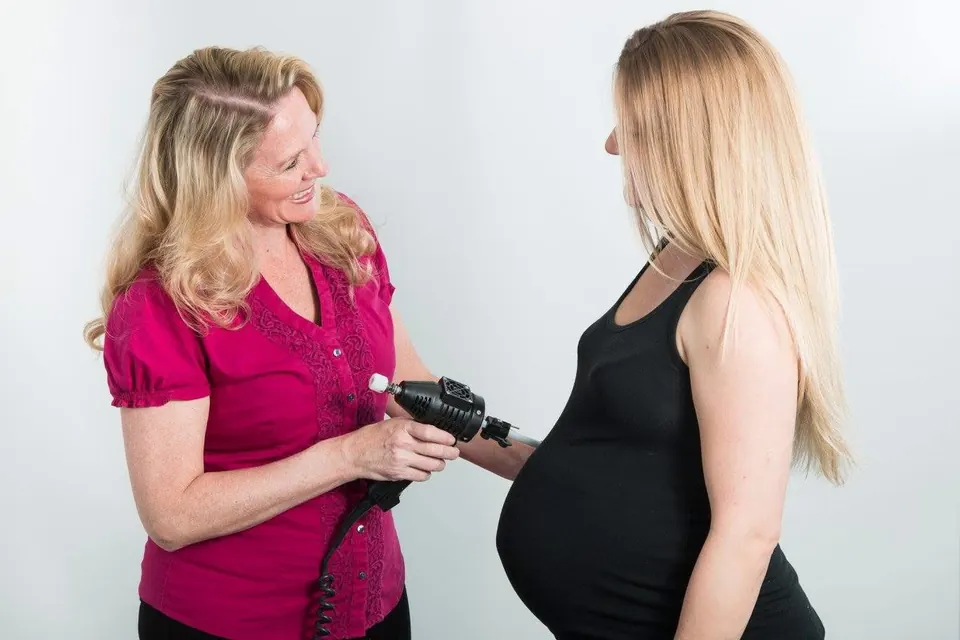
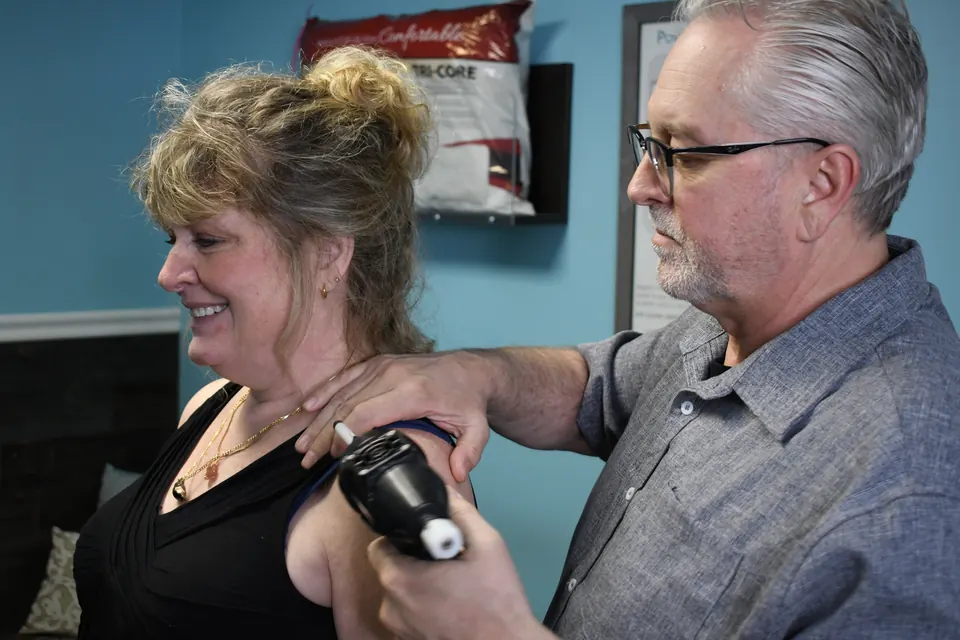
Using Koren Specific Technique (KST) and Talsky Tonal Chiropractic (TTC), our doctors work with light, nervous system-focused corrections, no cracking, no twisting. Care follows what the scans and your goals show rather than a fixed program everyone follows, and we're glad to coordinate with your OB, reproductive endocrinologist, or fertility specialist along the way, including around retrieval or transfer timing if you're working with IVF or IUI.
What Patients Often Report
A calmer, more regulated nervous system heading into their fertility window, along with less tension through the hips, low back, and pelvis, tension many patients didn't even realize they were carrying. Sleep that's noticeably better and a stronger daily sense of ease often follow. Several patients also mention their heart rate variability scores improving over the first several weeks of care, which gives both them and our doctors an objective way to track what's actually changing, alongside whatever their fertility specialist is monitoring. The goal is a stronger foundation for the systems that matter to you right now, including the ones your other care isn't set up to address directly.
Preparing Your Body Ahead of Time
A few habits tend to support this same nervous system regulation between visits:
- Protect consistent sleep and wind-down time, since sleep and hormonal rhythms share a nervous system foundation
- Notice patterns between stress and cycle changes rather than treating them as unrelated
- Keep gentle movement, like walking, in your week rather than only high-intensity exercise
- Give yourself real recovery time around fertility appointments and procedures, not just physically but around the emotional load they carry
- Build in small daily moments of genuine rest, even ten quiet minutes, since the nervous system needs consistent signals of safety, not just an occasional break
- Start earlier rather than later if you can; there's no single right window, but giving your nervous system time to settle tends to help
Taking the Next Step
If you've been doing everything right and still waiting for a different answer, it may be worth looking at the nervous system running underneath all of it. Learn more on our fertility and preconception page, download our free guide on the nervous system's role in hormonal balance, or book online with our doctors in Royal Oak. Feel free to call us at (248) 616-0900 with any questions first.