
The tantrum over a broken cracker. The meltdown when a plan changes by five minutes. The moment your toddler goes from giggling to sobbing in the space of a breath. Every parent has watched their child's emotions swing hard and fast and wondered if that is just what this age looks like, or something worth paying closer attention to.
Most of the time it is both. Big, fast emotional swings are a genuinely normal part of early childhood. They are also, underneath the surface, a window into how well a child's nervous system is developing the ability to handle what it feels.
What Emotional Development Actually Involves
Emotional development is the slow build of a child's ability to notice, express, and manage what they feel. It starts in infancy with basic responses like distress and comfort, then grows more complex with age. A baby cries and seeks a caregiver. A toddler starts naming feelings and testing new ones out through play. A school age child begins reading other people's emotions and holding their own reactions a little longer before they spill over.
None of this happens on the same schedule for every child, and every child moves through it a little differently. But the general direction is the same: less overwhelm, more capacity to notice a feeling before it becomes a full body reaction.
The Nervous System Underneath Emotional Growth
A child's brain forms an enormous number of new connections every single day in early childhood, and a lot of that wiring is dedicated to processing and managing emotion. Several brain regions work together here: one area flags anything that feels like a threat, another helps put the brakes on and think before reacting, and a third holds onto emotional memories that shape how a child responds the next time something similar happens.
These regions coordinate through the autonomic nervous system, which runs on two settings. The sympathetic side reacts fast to anything that feels threatening. The parasympathetic side, driven largely by the vagus nerve, is what allows a child to feel safe, connected, and able to settle back down. When the vagus nerve is working well, a child has an easier time returning to calm after being upset. When tension interferes with that signal, the return to calm takes longer, or does not fully happen, and the same trigger that a calm nervous system could shrug off turns into a meltdown instead.
Why Some Kids Get Stuck Here
A child's capacity for emotional regulation is shaped by more than temperament. Stress during pregnancy, a birth that involved induction, vacuum extraction, forceps, or a C-section, and physical stress in the early months can all add tension to the nervous system before a child has even started forming memories. Early illnesses, frequent antibiotics, and ordinary childhood stress can layer on top of that.
None of these on their own explains a child's emotional patterns. Stacked together during the years when the nervous system is developing the fastest, they can leave a child with less built in capacity to regulate, which shows up as bigger reactions, longer meltdowns, and a harder time recovering from ordinary frustrations that other kids seem to move past more easily.
What Parents Can Do at Home
A child's emotional regulation also mirrors what they see modeled at home, and there is real value in supporting it directly:
- Name your own emotions out loud in ordinary moments, not just the hard ones
- Offer comfort first during a meltdown, save the conversation about what happened for after
- Keep a consistent daily rhythm, predictability itself is calming for a developing nervous system
- Practice slow breathing together during calm moments, so it is familiar before it is needed
These habits genuinely help build the skills. What they cannot do on their own is ease physical tension that may already be interfering with how well a child's nervous system can settle.
How Our Doctors Support Emotional Development
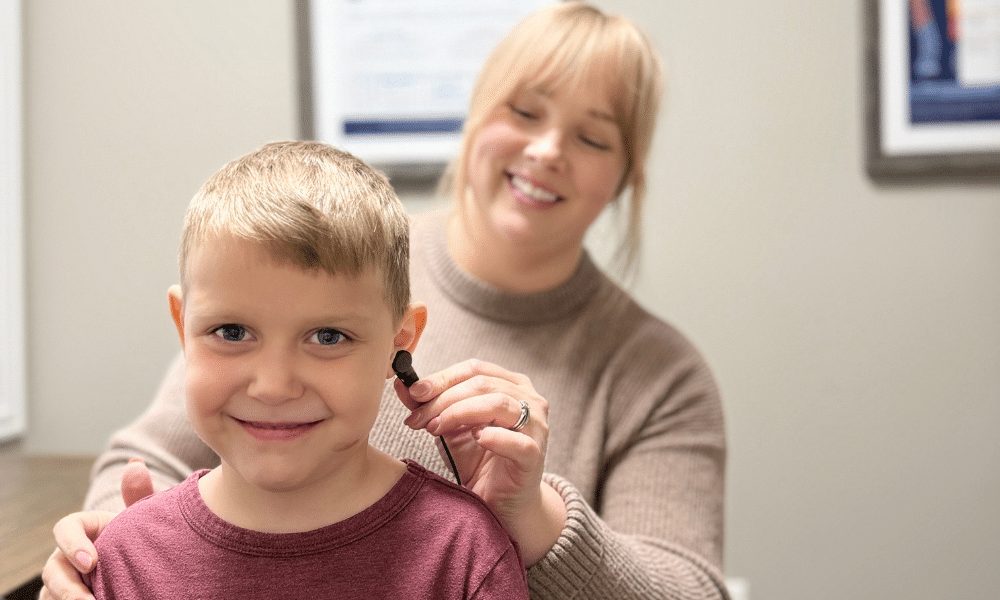
We start by hearing your child's story: pregnancy, birth, and the pattern of what you have noticed with their emotions and reactions. From there, INSiGHT neurological scanning, thermal, heart rate variability, and sEMG, gives us objective data on how your child's nervous system is regulating, rather than guessing from behavior alone.
Using Koren Specific Technique and Talsky Tonal Chiropractic, our doctors work with light, nervous system focused contacts to ease tension in the upper neck and spine, where a lot of that vagus nerve signaling begins. There is no cracking, popping, or twisting, and many children relax visibly during a session. As that tension eases, the nervous system has more room to return to calm on its own, which is the piece that supports the emotional skills your child is already learning.
What Parents Often Notice
Families often describe shorter meltdowns first, along with an easier time settling back down after a hard moment. Sleep and appetite often steady out alongside the emotional shifts, since they run through much of the same nervous system pathways. Some families notice small changes within the first several visits, while more established patterns take longer and steadier care to shift. Our doctors track your child's response with repeat scanning so care can adjust as things change.
Where to Go From Here
If your child's emotional swings feel bigger or harder to recover from than you would expect for their age, it is worth a closer look at what their nervous system is carrying. You can read more about how we support behavior and emotional regulation in kids, or get our free guide on the nervous system side of these patterns. When you are ready, you can schedule a consultation with our doctors in Royal Oak, or call us at (248) 616-0900.