
Some version of this question comes up in almost every family with young kids: what is the right approach to vaccines for my child, on what timeline, and how do I make that call with confidence instead of anxiety. It is a personal decision, and a medical one, and the best place to work through it is in conversation with your child's pediatrician, who knows your child's health history and can walk through the specifics with you. What we want to offer here is a calmer way to think about the question, and where supporting your child's overall nervous system fits into the picture alongside your pediatrician's guidance.
Why This Question Feels So Loaded
Part of what makes this topic hard is that it rarely gets discussed calmly. Parents often feel rushed in a short appointment, or feel like asking questions will be read as resistance rather than genuine curiosity. On the other side, parents who have researched heavily sometimes feel dismissed when they bring up their own reading. Neither end of that is helpful. A good pediatrician relationship should leave room for real questions, a real timeline conversation, and a real look at your specific child, not a one size fits all script delivered in a rush.
If you have questions, bring them. If you want a slightly different pacing on certain vaccines, that is worth a direct conversation with your pediatrician about the tradeoffs involved. That call belongs to you and your child's doctor.
Why Kids Respond Differently to the Same Things
One honest observation from years of working with families: children who receive the same care on the same general timeline do not always respond identically, and that is true of far more than vaccines. It is true of new foods, new environments, illnesses that pass through a household, and ordinary childhood stress. Some kids handle a new challenge easily. Others take longer to bounce back, seem more sensitive, or need more support getting back to their baseline. That variability is a normal part of how different children's bodies and nervous systems work, and it is one more reason an individualized conversation with your pediatrician matters more than a generic rule of thumb.
What Overall Resilience Looks Like
A useful way to think about a child's overall health is less as the simple absence of symptoms and more as how much a child's system can handle day to day and still bounce back comfortably. Some families call this reserve, or resilience, or capacity. Whatever the word, it tends to be shaped over time by things like how settled a pregnancy was, how a delivery went, how feeding and early sleep developed, and how well a child's nervous system has been regulating stress along the way.
None of that is about blame, and none of it is a checklist you failed. It is simply useful context, and it points toward something genuinely helpful: supporting a child's overall regulation and resilience is worthwhile for its own sake, alongside whatever medical decisions your family and your pediatrician make together, not instead of them.
How Our Doctors Support Overall Resilience
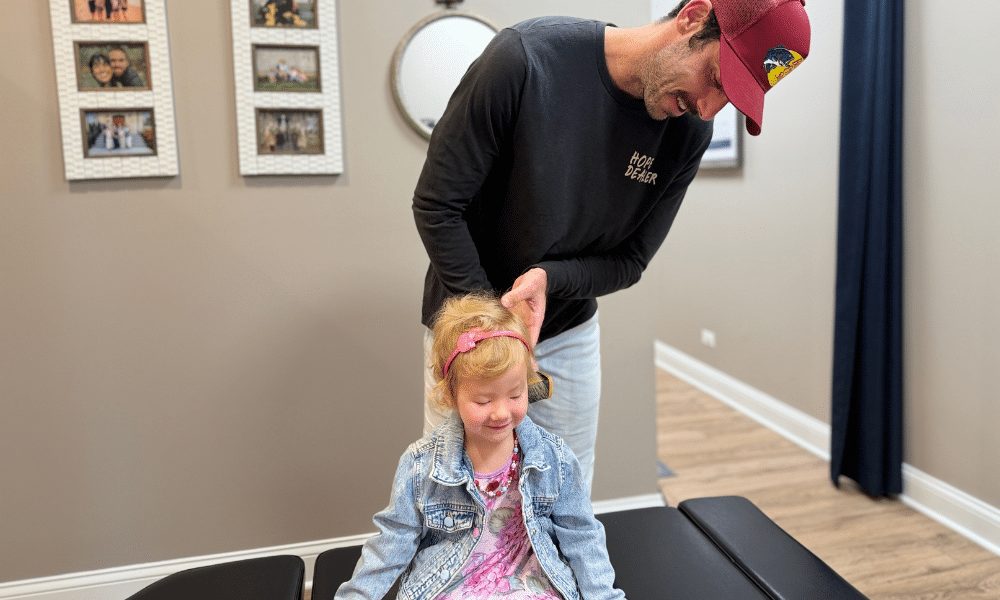
This is where our doctors' care fits, working alongside your pediatrician's guidance on immunizations and every other medical decision your family makes. Our doctors work with your child's nervous system directly, checking for tension and interference, especially in the upper neck, that can leave a child's stress response harder to settle. We start with a full history: the pregnancy, the birth, feeding and sleep patterns, and anything that has felt harder to shake than expected. From there, INSiGHT neurological scanning, including heart rate variability, gives us an objective look at how well your child's nervous system is regulating, rather than a guess.
Care itself is gentle. Our doctors use light, nervous-system focused contacts, with no cracking or twisting, aimed at easing tension in the upper neck and spine so a child's stress response can settle more easily day to day. This is not framed as protection against any specific reaction or illness, and it is not a reason to change a medical schedule on your own. It is general nervous system support, the same kind of care we would recommend for any child working through stress, poor sleep, or a body that seems to take longer than expected to recover from ordinary bumps.
What Parents Often Notice
Families who bring their child in for general nervous system support often report:
- Calmer overall demeanor and steadier moods day to day
- Better sleep and easier settling at bedtime
- Fewer digestive complaints and more regular bathroom habits
- A body that seems to bounce back a bit more easily after a cold or a rough week
These are general markers of a more regulated nervous system, not claims about any specific outcome tied to any specific decision, and every child's timeline for change looks different.
A Few Things That Help This Conversation Go Better
- Write your questions down before the appointment so a rushed visit does not crowd them out
- Ask your pediatrician directly about timing options if you want to talk through pacing
- Keep a simple log of your child's sleep, digestion, and mood in the weeks around any appointment, useful information for both your pediatrician and our doctors
- Bring your child's full birth and early history to any provider working with you, since context helps every part of their care team
Where to Go From Here
If you want a calmer, better informed version of this conversation, start with your pediatrician, who can walk through your child's specific history and the current guidance. If you would also like a look at how your child's nervous system is regulating in general, you can learn more about how our doctors support a child's immune and nervous system resilience. When you are ready, you can schedule a consultation with our doctors in Royal Oak, or call us at (248) 616-0900 to talk through what you are seeing.