
You have done the things. A clean diet, consistent sleep routines, therapies scheduled every week, supplements lined up on the counter. And your child is still stuck. Sleep is still hard. Congestion will not clear. Meltdowns keep happening on the same schedule they always have. When a family is doing everything right and still not seeing the progress that effort should produce, it is worth looking somewhere most people never think to check: the air in your own home.
An Overlooked Stressor Hiding in Plain Sight
Mold is one of the most overlooked pieces of a child's stuck symptom picture. Certain molds release mycotoxins into the air, and when a child breathes that air every day, the exposure never really stops. There is no break for the body to process the load and recover, because the source is still there in the walls, under the sink, or behind an appliance, day after day.
Not every child exposed to mold reacts the same way. Genetics play a real role in how well a body clears these toxins, which is part of why one child in a house can be affected far more than a sibling living in the exact same rooms.
Mold thrives anywhere damp and poorly ventilated. Basements, bathrooms, under a sink, or behind a washing machine are the usual hiding spots, especially anywhere water damage has occurred at some point, even if it was cleaned up on the surface.
What This Does to a Child's Nervous System
Mycotoxins are not just a respiratory irritant. They can cross into the brain and irritate the autonomic nervous system directly, including the vagus nerve, the same nerve that helps regulate digestion, sleep, mood, and immune coordination. Picture the nervous system like a car with a gas pedal and a brake. The gas pedal is the sympathetic side, built for short bursts of alertness. The brake is the parasympathetic side, built for calm, digestion, and rest. Ongoing mold exposure tends to keep that gas pedal pressed down while the brake gets worn out, leaving a child's body stuck in a state that makes it hard to settle, digest, or truly recover from anything.
This is part of why mold exposure so often shows up as a tangle of symptoms that do not look connected at first: congestion, behavior swings, fatigue, digestive trouble, and trouble concentrating, all arriving together rather than as a single clean symptom.
Patterns Worth Paying Attention To
A few patterns tend to point toward mold as part of the picture, especially when other approaches have plateaued. Parents describe this as the most frustrating part: doing everything asked of them and still watching a child cycle through the same rough patches, month after month, with no clear reason why.
- Symptoms that improve noticeably at school, on vacation, or at a grandparent's house, then return once your child is back home
- Chronic congestion, mood swings, and brain fog showing up together rather than separately
- Known water damage, a musty smell, or visible growth anywhere in the home
- Progress that has stalled across several months despite consistent care and effort
- A child who seems to catch every illness and never fully rebounds between rounds
Where the Nervous System Fits Into This Picture
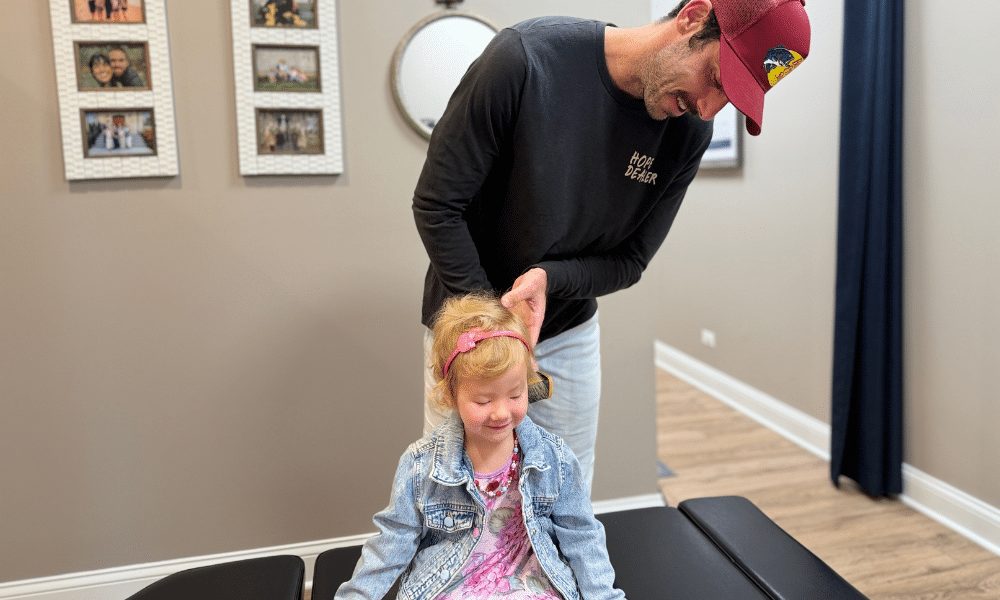
Our doctors are not in the business of environmental testing or remediation. If mold is suspected, that is a job for a qualified inspector, and clearing the source in the home is the piece nothing else can substitute for. What our care is aimed at is the nervous system carrying the load of that exposure. Using gentle, nervous system focused adjustments, we work with the upper cervical spine and the vagus nerve pathway, the same regulatory system mycotoxins interfere with, to help support your child's ability to calm, digest, and recover.
A urine test for mycotoxins can help confirm whether your child's body is actively carrying that load, alongside the environmental assessment. Families usually work through this in a rough order: clear the source first, since progress has a hard time sticking while exposure continues, then cut back for a stretch on foods that carry mold themselves, things like grains, coffee, peanuts, and aged cheeses, and support the body's own detox pathways with the basics, steady hydration and whatever helps the liver, lymphatic system, and gut do their job, worked out with your child's provider. Nervous system care continues alongside all of it, since the same system carrying the stress of the exposure is also what runs the pathways clearing it out.
We start with INSiGHT neurological scanning, which measures heart rate variability, thermal patterns along the spine, and muscle tension, giving us an objective picture of how your child's nervous system is regulating rather than a guess. For a child whose scans stay stubborn through visit after visit despite consistent care, that pattern itself is often the clue worth paying attention to.
A Nervous System That Is Already Working Hard
Every added stressor lands on a nervous system that already has a history, whether that is a stressful pregnancy, a hard birth, or ongoing illness. Mold rarely acts alone. It tends to be the piece that finally tips an already stretched system over the edge, which is part of why two children in the same house can respond so differently to the same exposure. If ongoing fatigue has been part of your child's picture alongside everything else, our page on chronic fatigue support covers more of what that pattern can look like.
What Families Notice
Once the environmental piece is addressed and nervous system care continues alongside it, families often describe real movement in places that had felt stuck for a long time: congestion clearing, sleep settling, moods leveling out, and a child who finally seems to have room to make progress in whatever therapies were already part of the plan. It rarely looks like one single thing changing. It looks like several things loosening at once, because they were connected the whole time.
If your child's progress has stalled and something in the home has felt like a lingering question mark, our doctors in Royal Oak would be glad to take a look at what your child's nervous system is carrying. Learn more about our approach to a developing immune system, book a consultation online, or call us at (248) 616-0900.